Log 014: AI is not killing art. Here's the proof, read this if you want to win any argument about it.
From photography to cinema to gaming, every tool that threatened art made it stronger. A historical framework to win any AI vs. art debate.
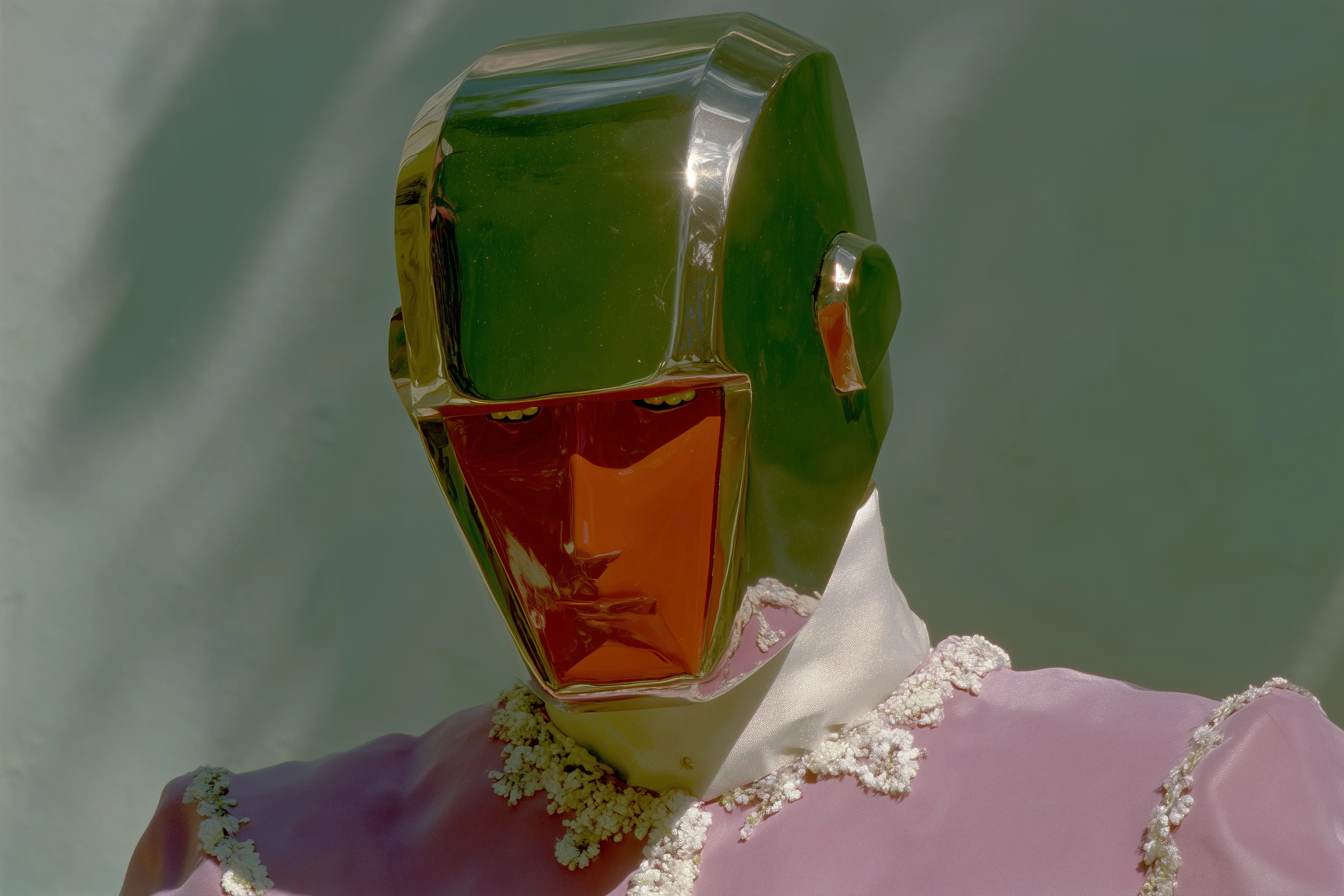
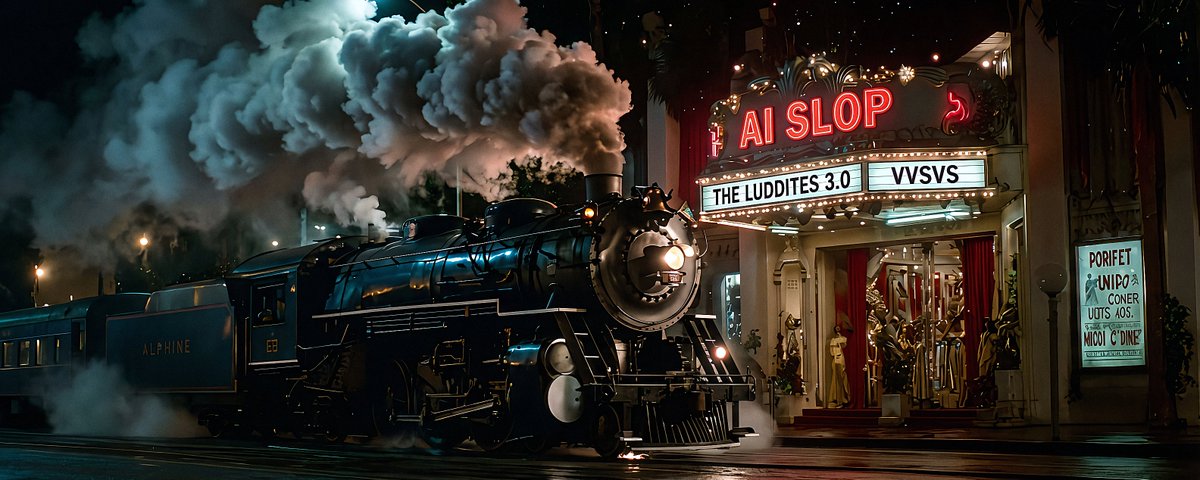
Every week someone with a large audience posts the same thought in a different costume. The machine is doing everything. If you didn't suffer for it, if your hands didn't physically make it, it isn't real. It doesn't count.
You've seen it. You'll see it again next week.
The fear is understandable. The conclusion has been wrong every single time in history. Not most of the time. Every single time.
Here's the record. And then a framework you can use in any conversation, any era, because it's built on what actually happened -- not on what fear predicts.
The Pattern
In December 28, 1895. The Lumière brothers screen a film in a Paris café. A train moves toward the camera. The audience screams and runs from the room. They thought it was real.
Two reactions.
Most people focused on what the machine could now do and asked what was left for humans.
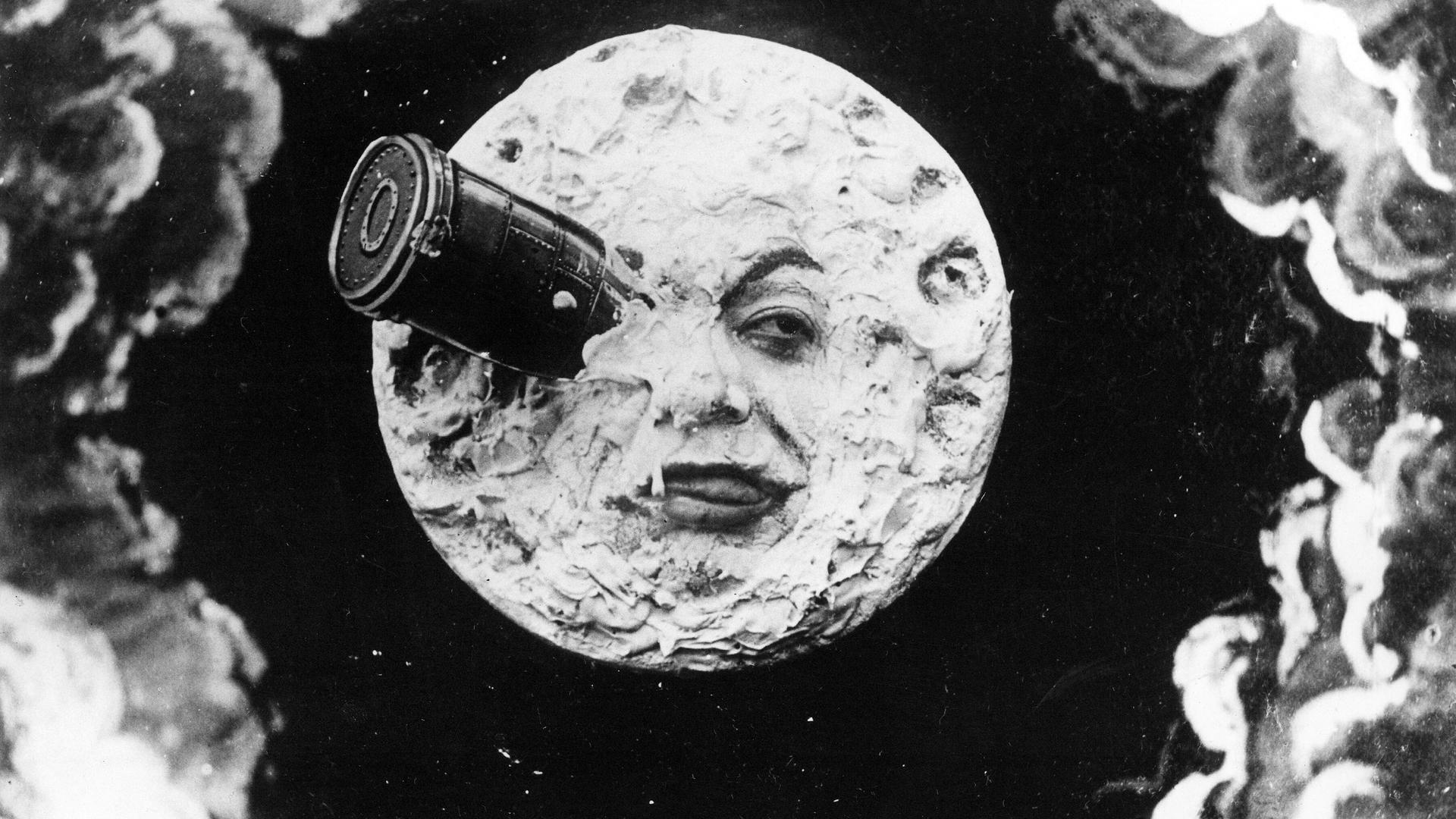
A man named Georges Méliès stayed in his seat and asked what was now possible that wasn't before. He picked up a camera, built a studio, invented the special effect, the narrative film, the science fiction genre. He made A Trip to the Moon in 1902.
> That split is the most reliable pattern in the history of art and technology. It has never broken.
Photography arrived and painters lost the monopoly on visual documentation. The ones who were only ever doing documentation were displaced. Monet, Cézanne, Hopper went somewhere a camera couldn't follow. None of them exist without photography forcing the question: if the machine captures what things look like, what is a painter actually for? The Impressionists, the Expressionists, the Cubists are all answers to that question. The most fertile period in painting's history came directly out of the technology that was supposed to kill it.
The printing press gave everyone access to text and the prediction was immediate: serious writing will be diluted, standards will collapse. What followed was Shakespeare, Cervantes, the novel as a form.
3D printing drops the fabrication barrier for sculpture. The chisel was never the point. Rodin's value was never that he could work bronze. It was that he understood psychological weight, that the angle of a head carries an entire emotional state, that two figures in space can contain everything about human longing. Give him a printer, he's still Rodin. Give the chisel to someone with nothing to say and you get technically competent nothing.
And then there's gaming...
Nobody in the AI kills art conversation mentions gaming, which is telling, because gaming breaks the argument completely.
More revenue than music and film combined.
The most technologically aggressive creative medium ever built.
It produced The Last of Us, Dark Souls, Red Dead Redemption. Work as emotionally serious as anything in any other medium. The medium that most embraced tools is the largest and most alive entertainment form on the planet.
The experiment has already been run.
The result is the wrong one for the critics.
> The loudest voices against AI in creative spaces come almost entirely from Hollywood and, ironically, the games industry.
The same industries that replaced practical effects with CGI, that built entire production pipelines around digital tools, that automated every layer of their process that could be automated, are now drawing a line at this particular tool and calling it a threat to human creativity.
The games industry that procedurally generates entire worlds, that uses AI for NPC behavior and environmental storytelling, is sending legal letters about AI art.
The cognitive dissonance is not incidental. It's about where the disruption lands this time. Previous tool changes automated below them. This one automates at their level.
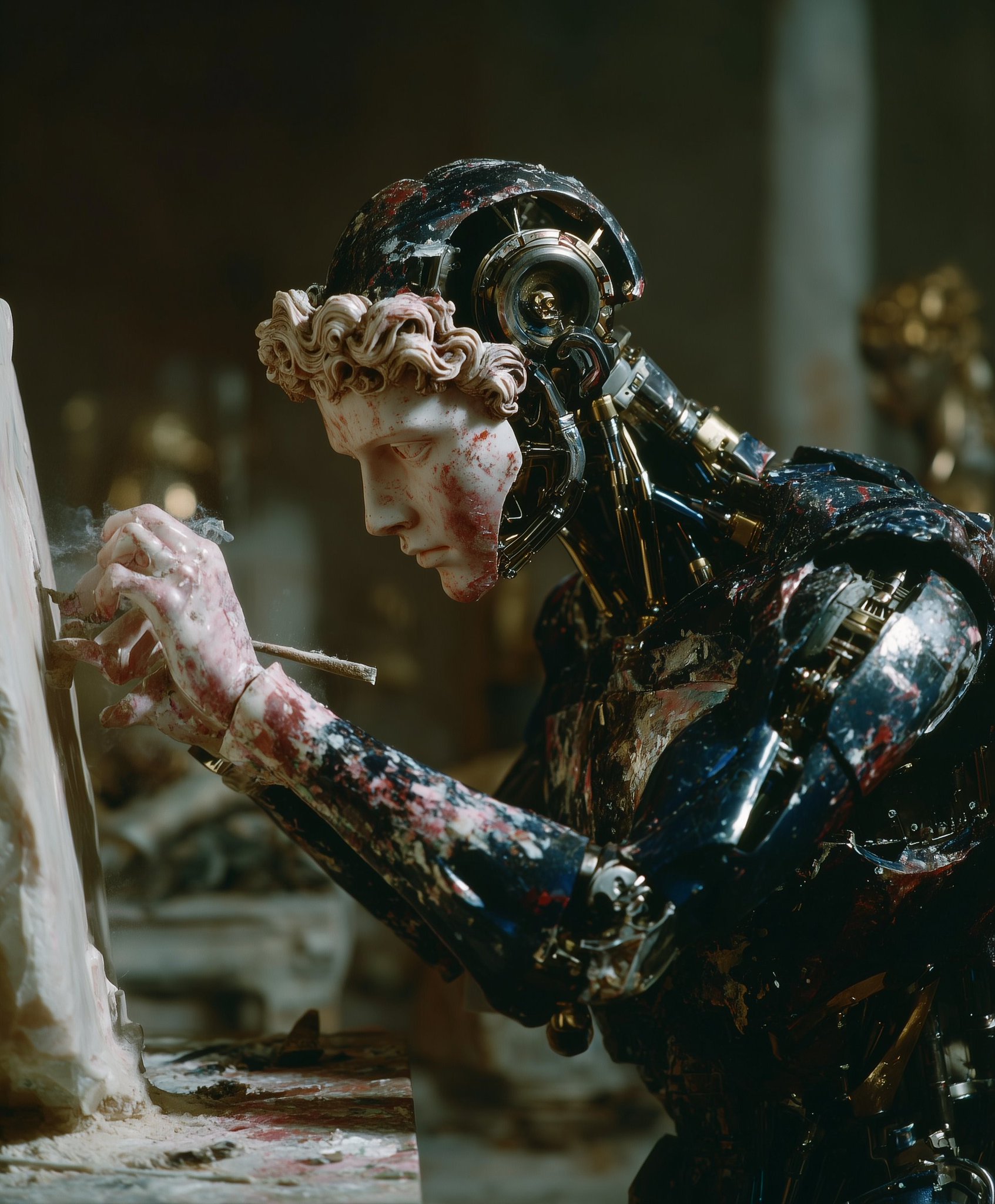
The Framework
This is what you actually use when the argument comes up. Not to win a debate. To think clearly from fundamental principles.
The tool takes the craft. It cannot take what the craft built
Craft is the technical execution required to get an idea out of your head and into the world. Vision is knowing what idea is worth getting out.
These are not the same thing, but they are not unrelated either.
The years of craft matter. They compound.
Every hour spent understanding light, composition, pacing, structure, the grammar of a medium, that time builds something in the eye and the mind that cannot be downloaded.
It changes how you see before you see.
It's why a director with twenty years of experience looks at a frame and immediately feels what's wrong with it before they can articulate why. The craft training produced the vision.
You cannot skip it and arrive at the same place.
But the craft training is not the destination.
It's the road. What it builds in you, the judgment, the taste, the ability to make ten thousand small decisions and have them cohere into something, that's what AI cannot touch. Not because the tool isn't powerful enough but because that judgment lives in a specific person shaped by a specific history.
> In my World Building Codex series, I help help artists learn these fundamentals and leverage AI tools to create coherent worlds and stories.
AI automates the execution layer. That's it.
The question it cannot answer is: what should I make, and why this instead of the thousand other things I could make? That's the director's question.
It has no technical answer. It requires someone who has developed enough through their craft to know what they believe, what they see, what only they can say.
The people most threatened are the ones who stopped at the craft and never asked the next question. The craft was real.
The wall it built was not about art.
When the wall comes down, those two things sort themselves immediately.
Beauty is moral
This is the argument that does the most damage and it needs to be dismantled directly.
David Deutsch, in The Beginning of Infinity, points out that flowers are beautiful to humans not because of cultural conditioning but because flowering plants and pollinators co-evolved.
The visual features we find beautiful in flowers track real structure in the world.
Symmetry. Proportion. Contrast. Our aesthetic response is tuned to something that actually exists, not something we invented.
Beauty is not subjective in the sense of equally valid for everyone regardless of content. A well-composed frame and a poorly composed frame are not equivalent. You know this before you can articulate it, because the response is in your nervous system before it reaches your reasoning.
The "beauty is subjective" argument was sold as liberation from elitist gatekeeping. What it actually produced was permission to stop caring whether your work moved anyone.
If all judgments are equally valid, nothing can fail, nothing can improve.
> AI didn't create this problem. It just made it impossible to hide.
When a machine can generate work that meets the stated standards of institutional contemporary art, and it can, the question becomes: what were the standards actually protecting? The answer, most of the time, is access.
Art generates knowledge you cannot get anywhere else
This is Deutsch again and it's the deepest argument.
Good knowledge, in his framework, is hard to vary. It's specific.
Change it and you lose what it was doing.
Bad knowledge is easy to vary.
Swap one version for another and nothing is lost because nothing was there.
Real art is hard to vary. Fincher's Seven tells you something specific about inevitability and moral rot that lives in the form, not separable from it. The ending doesn't work without everything before it. The color, the pacing, the specific way dread accumulates across two hours. Change what Fincher did and the knowledge disappears. It's not a story about a serial killer. It's a specific act of attention by a specific person, shaped by a specific sensibility, rendered in a specific form that only existed because he made those exact choices.
> The problem with AI is that it produces easy-to-vary content at scale.
Competent, generic, swappable.
This is real and it displaces real work. But it cannot produce hard-to-vary knowledge because hard-to-vary knowledge requires a specific person.
The model has no person. It has the statistical residue of many people, which produces the average, and the average is by construction easy to vary. As Naval says, there is no market for average.
The question is never whether AI can produce something that looks like art. It can. The question is whether it generates knowledge that couldn't have come from anywhere else. And it can't, structurally, because that kind of knowledge requires a specific somewhere. The answers might be inside the model, but you need a human with vision to extract it and present it to the world.
The fundamentals don't move
Every few years there's a new tool, a new model, a new workflow.
The people who chase mastery of each tool reset every time the tool changes. The people who understand why something works, at the level underneath the tool, carry that understanding into every new environment. That is why a lot of people that are already carrying years of craft in design, architecture, photography, product or artistic mediums can exploit and curate iterations faster.
Composition doesn't change when the software changes.
Neither does narrative structure, color theory, pacing, the psychology of how a frame makes you feel before you know why. These predate every tool and will outlast every tool because they're not about execution. They're about why certain things move people and certain things don't.
In the end, they just remove and leave the hardest part of the process in evidence: thinking.
I keep experiencing this. Problems I'm solving in 2026 with tools that didn't exist five years ago are problems I solved before in motion design, in a different language with different software. The thinking carries. The software was always just the current surface of something older.
The wrapper closes the speed gap. It never closes the vision gap. The people who only knew the mechanical layer will generate a lot of content and wonder why nobody cares.
The sorting is the point
Technology doesn't kill art. It sorts it.
Every rupture separates the people whose value was in the mechanical layer from the people whose value was in the vision.
The first group gets displaced. The second group gets liberated.
This has happened with every significant tool in creative history without a single exception.
The creative industry isn't dying. It's sorting. The distance between those two outcomes is widening fast because the tools are accelerating. What used to take years to sort is now taking months.
The people screaming loudest are usually the ones who feel the sorting happening to them. That's a real feeling and it deserves honesty. But it's not an argument against the technology. It's a description of where they stood in relation to the work.
Why the Arguments Don't Hold
Most anti-AI arguments in art follow a small number of structures. Here is why each one fails.
"It's not real art because a human didn't make it by hand." This is a definition of art built around the tool, not the work. By this logic, photography isn't art, cinema isn't art, electronic music isn't art. Every time the definition has been applied to a new tool it has been wrong, and the work it tried to exclude became canonical. The question was never which tool. It was always whether the work generates something real in the person experiencing it.
"Anyone can do it now, so it has no value." Gutenberg meant anyone could print text. The printing press didn't destroy literature, it produced the conditions for it. Access expanding does not dilute value. It raises the floor and, in doing so, makes genuine vision more visible, not less, because it no longer hides behind the craft barrier.
"The machine is doing all the work." The machine is doing the execution. It is not deciding what to make, why it matters, what it means, or whether the thousand micro-decisions that make something cohere are the right ones. That work is entirely human and it is the hardest work in any creative process. The people saying the machine does everything have usually never tried to direct one.
"It's going to replace artists." It is replacing the production of easy-to-vary content. Generic stock, competent commercial illustration, formulaic writing. This is real displacement and it deserves honest acknowledgment. But the work that generates knowledge that couldn't come from anywhere else, that is hard to vary, that could only have been made by a specific person, that work is not being replaced. It is being freed from the surrounding noise that used to make it hard to find.
"Pick a pencil" cool. now what?
The Tool Was Always for the Mind
AI is a tool for the mind. It takes over what the mind can execute and leaves the vision free to do what only a specific human vision can do.
The camera was for the eye. It took over documentation and liberated painting to go somewhere documentation couldn't follow. Same structure. Same result.
The human is not being removed from art. The human is being moved to the only part of the process that was ever irreplaceable. The deciding. The seeing. The specific knowledge that couldn't have come from anywhere else.
Every generation has someone who stays in their seat when the train comes out of the screen, picks up the tool, and asks what's now possible. Every generation, that person makes something the previous generation couldn't imagine.
The door is the same door.
— Ivan / vvsvs.pro
If you want to go deeper on the vision side, I spent six months building the World Building Codex. 2 Books, more than 200 pages on visual architecture, narrative structure, and how to build worlds that survive tool changes. Free.