Log 010: The Life Changing Secrets of Personal Brands
Your timeline is your portfolio. A 20-year creative director explains why personal brand is the new trust infrastructure in an AI-native world.
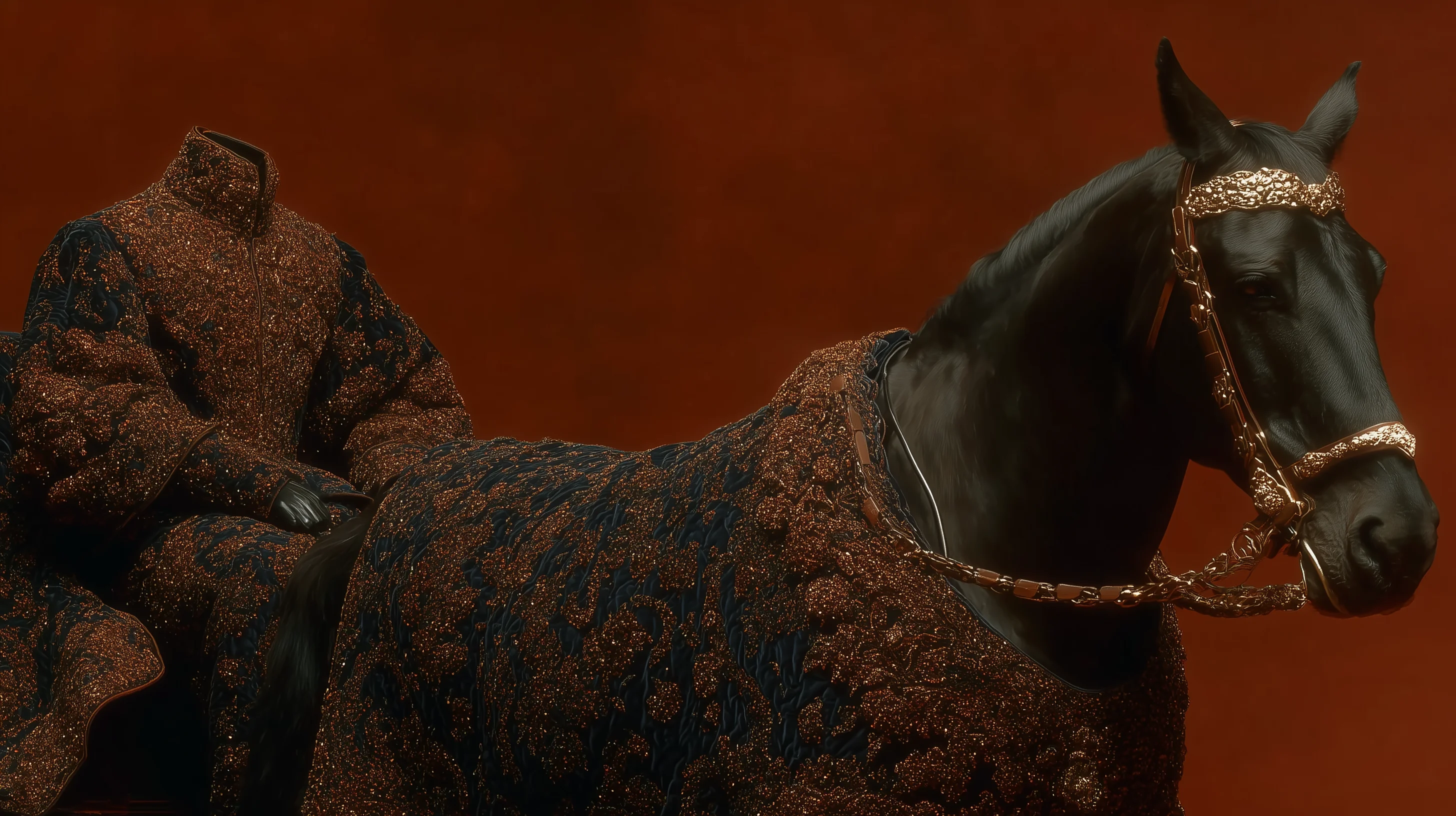

The Timeline Is the Artwork
There's a question I keep returning to. Why do some people online feel trustworthy before you've ever worked with them, bought from them, or even talked to them?
It's not their credentials. It's not their follower count. It's something else entirely. A coherence you sense when you scroll their feed. A world they've built that you recognize, even if you can't articulate what makes it distinct. You land on their profile and within thirty seconds you feel like you understand something about them. Not because they've told you directly, but because everything they've put out there adds up to something.
I've spent years building brands for other people. MTV, BMW, Jaguar Land Rover, Riot Games. I understand how long it takes to craft something that feels like itself. The strategy decks, the moodboards, the endless iterations until a visual language clicks into place. I've sat in rooms where we debated the exact shade of a color for hours because we knew it mattered. I've seen how the smallest choices accumulate into something that either feels coherent or doesn't.
And now I'm doing something I never expected. Building a personal brand from scratch. My own. At 42 (f*ck).
Two years ago I pivoted all-in on AI. Not as a novelty, but as the medium I want to work in for the rest of my career. Specifically, I became obsessed with World Building. Creating coherent visual universes that have their own logic, their own aesthetic DNA, their own feeling. And somewhere along the way I realized that building my personal brand and building these worlds were the same discipline. The same muscles. The same way of thinking.
This essay is about what I've learned. It's about what I think is changing about trust, work, and how we find each other online. And it's about why I believe personal brand is becoming one of the most important things you can build, whether you're running a company or just trying to do meaningful work in the world.
The Old Systems Are Failing
> Here's the shift I keep seeing, and I don't think it's temporary.
People used to trust institutions. You worked at a known company, and that company vouched for you. You had a degree from a respected university, and that degree vouched for you. Your CV was a chain of stamps from organizations that had already been vetted by someone else. The trust was transitive. If I trust the institution, and the institution trusts you, then I can trust you.
That chain is breaking. Not completely. Institutions still matter. But the weight has shifted toward something more direct. What are you actually building? Can I see it? Can I see how you think? Can I watch you work through problems in real time?
This is why personal brand matters now in a way it didn't before. It's not vanity. It's not "personal branding tips for influencers." It's not about becoming famous or building an audience for its own sake. It's the new infrastructure of trust in a world where the old infrastructure is crumbling.
> When someone lands on your timeline, they're asking a question they may not even be conscious of. Can I trust this person? Do they know what they're talking about? Do they actually do the things they claim to do? Do they deliver?
Your timeline answers that question before you ever get to pitch them. Before you send them a proposal. Before you get on a call. The work is already done, or not done, by the time they reach out.
I think about this constantly now. Every time I post something, I'm adding to an answer. Every time I ship something I said I would ship, I'm adding to an answer. The timeline is accumulating evidence, and people are reading it whether I intend them to or not. And of course shitposting, or just being yourself signals your values, humour and how you see the world.
The Timeline Becomes the Artwork
Here's what I mean by World Building in the context of personal brand.
A real personal brand isn't just takes and selfies. It's not just "content" in the way that word gets thrown around. It's not a collection of random posts that happen to come from the same account. It's a world. Coherent takes, coherent visuals. A narrative that runs underneath everything, connecting pieces that might seem unrelated on the surface. A voice that's recognizable even when you're talking about completely different topics.
When someone scrolls your feed, they should feel a common thread. An opinion that shows up again and again, approached from different angles. A sensibility that's yours and not anyone else's. And this is where my background kicks in. That voice, that sensibility, can be enhanced and enriched with imagery. It can be made visible, not just readable.
> Aesthetics is everything.
I don't mean aesthetics as decoration. I don't mean making things pretty for the sake of pretty. I mean aesthetics as meaning. The way something looks carries information. It signals taste, care, point of view, attention to detail. When your visuals are coherent with your ideas, the whole thing becomes more than the sum of its parts. People feel it even if they can't name it. They sense that there's a mind behind this, a perspective, a world.
The timeline becomes the artwork.Not any single post. The accumulation. The body of work that builds over months and years. Each individual piece might be small, but together they form something larger. A portrait of how you see the world and what you care about.
This is why I think World Building and personal brand are the same discipline. In both cases, you're constructing a coherent universe. You're making choices that reinforce each other. You're building something that people can enter and explore, something that rewards attention.
The Authenticity Paradox
Now here's where it gets complicated, and I don't think there are easy answers.
Voice can be crafted or authentic. Or both. Or neither. Sometimes something highly crafted sounds more authentic than someone "just being themselves." I've seen this again and again. Someone who has thought carefully about how to express their ideas, who has edited and refined and shaped their message, comes across as more genuine than someone who posts their raw unfiltered thoughts. The crafting doesn't create distance. It creates clarity.
And sometimes "authentic" content feels hollow. Performed vulnerability. Manufactured relatability. The appearance of being real without any actual substance underneath. You can sense when someone is doing the moves without having the thing the moves are supposed to represent.
I don't have a clean answer for this tension. I'm a designer. I've spent my career crafting things. I understand that a brand is a constructed artifact, not a found object. You make choices. You edit. You shape. You decide what to include and what to leave out. That's the work.
But I also know that the best brands, personal or corporate, have something real underneath. A genuine point of view that exists independent of the strategy. An actual obsession that would be there whether or not anyone was watching. Something you can't fake because it would take too much energy to sustain the lie for years.
The tension between building deliberately and just being yourself doesn't resolve. You have to hold both.
- You craft, and you also tell the truth.
- You edit, but you don't lie.
You make strategic choices about what to share, but the things you share are actually true. This is harder than it sounds. It requires knowing yourself well enough to know what's actually true about you, and then having the skill to communicate that truth in a way that lands.
The Content Pump vs. The Slow Craft
There are two modes I see people operating in online, and they're increasingly in tension with each other.
Mode one is the content pump. Constant output. Building in public. Shipping every day, sometimes multiple times a day. Using AI to multiply your presence. Putting your face inside generated images. Automating threads. Maximizing volume. The theory here is that more surface area means more chances to connect, more chances to be discovered.
Mode two is the slow craft. Careful curation. Quality over quantity. Letting things develop over time before you share them. Posting only when you have something worth posting. The theory here is that attention is precious and you should only ask for it when you've earned it.
I'm not going to tell you one is right and the other is wrong. I see people succeeding with both approaches. I see people failing with both approaches. The mode that works depends on who you are, what you're building, and what your audience values.
But I will say this. There's a collision happening between these two modes, and it's changing the landscape for everyone.
People are making their personality their brand.Their daily thoughts, their face, their hot takes, their moment-to-moment experiences. They're iterating in real-time, adjusting based on what gets engagement, becoming a kind of ongoing performance. Meanwhile, the kind of brand work I've done for twenty years operates on a completely different timeline. Months of development before anything ships. Strategy before execution. Craft before deployment. Research, iteration, refinement, and only then a launch.
These two approaches are now competing in the same space. A solo creator with a phone can out-maneuver a company with a hundred-person marketing team. Not because their work is better in some objective sense, but because personal trust beats institutional trust in the current environment. People would rather follow a person than a logo. They'd rather hear from someone with a face and a name and opinions than from a brand voice that was designed by committee.
Big corporations are struggling with this. They can't move fast enough, and they can't be personal enough. The economics of attention have shifted toward individuals who can compress distribution, marketing, and product into a single human presence. One person can now do what used to require an entire department, at least in terms of reaching people and building trust.
This is both an opportunity and a problem. The opportunity is obvious. The problem is that it rewards a certain kind of personality and a certain kind of output. It rewards people who are comfortable being public, who can produce constantly, who don't mind their lives being content. Not everyone wants that. Not everyone should want that.
Personal Brand as the New CV
Here's the practical reality that I think a lot of people haven't fully absorbed yet.
There is a whole economy now, and it's growing, based on how people perceive you online rather than what's on your resume.
Before they hire you, they scroll your timeline. Before they invest in you, they see what you're building in public. Before they collaborate with you, they watch what you ship and how you talk about your work. The old sequence was: meet someone, get their resume, verify their credentials, then decide to work with them. The new sequence is: discover someone online, absorb their body of work, develop a sense of who they are, and then reach out already half-convinced.
Your personal brand is your CV. But it's a living CV, updated in real time, showing not just what you've done but how you think. It's three-dimensional in a way a piece of paper never could be. People can see your judgment, your taste, your ability to communicate, your consistency over time. They can see whether you actually do the things you say you do.
This isn't true for every industry yet. There are still plenty of fields where credentials and institutions matter more than online presence. But it's becoming true for more of them every year. And if you work in anything creative, anything tech-adjacent, anything where ideas and execution matter more than titles, it's already true for you. The people who are going to hire you, invest in you, or collaborate with you are looking at your timeline right now. They're forming opinions before you even know they exist.
My Own Position
I should be honest about where I'm at with all of this, because I think clarity about your own strengths and weaknesses is actually part of building trust.
Things I do well. Visual systems. Coherence. Building worlds that feel like themselves. I understand that aesthetics isn't surface. It's structure. When I look at a body of work, I can see whether it hangs together or not. I can see the choices that make it feel unified. And I can make those choices myself.
I also understand methodology. How to break down a creative process into steps that can be repeated and refined. How to build frameworks that help you produce consistent output without starting from zero every time. This is what the World Building Codex is. Two 120-page documents that captures my methodology for creating consistent visual worlds with AI. It's been downloaded over 700 times. I mention this not to pitch it (well, yes, a little bit) but to illustrate something. This is what a personal brand asset looks like. It's not just posts. It's something with leverage. Something that can be shared, that introduces people to your world, that does work while you sleep.
> Your personal brand needs artifacts like this. Things that can travel. Things that have distribution power beyond the timeline.
Things I do okay. Writing. Finding my voice in words rather than images. I'm getting better, but it's not where my background is. I came from motion and image, not text. Every essay is practice. Every newsletter is me learning how to say things in a new medium. And I admit it, I use a lot of AI to help me write these long form texts. But I treat it the same way as I treat digital art with AI, I'm the master director and curator, and the LLMs are just tools that help me refine my message.
Things I struggle with. Consistency of output. The daily grind of content, taking my time to think on the perfect hook, the perfect image, the perfect sequence of output. The algorithm rewards consistency. The audience expects regularity. And I'm fighting against my own nature every time I try to maintain a posting schedule.
I'm also mid at self-promotion. I can build the thing, but shouting about the thing feels unnatural. I'd rather let the work speak for itself, which is a nice ideal but not actually how distribution works in practice. You have to tell people the thing exists. You have to tell them multiple times. This doesn't come naturally to me. I'm working on it. Here, I'm working a lot with data, my downloads charts, and my newsletter subscribers all signal that for example, if I promote heavily the Codex on X, I do get more downloads. And if I don'ts visit to the website drop drastically. A hit post will bring traffic to my profile, but it doesn't convert, so I need to be constantly optimizing for this.
The reason I'm telling you this is because personal brand isn't about pretending you're good at everything. It's about being clear about what you bring and what you don't. That clarity is actually part of the trust equation. When someone knows your limitations, they can trust your strengths more. They know you're not overselling. And it's a hard line to walk. But in the end, I believe people will reward and respect the professional approach and the hustle if you can be elegant about it.
Building From Scratch
A note on time, because I think this is where a lot of people get discouraged.
This takes longer than people tell you.
The "grow your audience in 30 days" content is mostly noise. It's optimized for engagement, not for truth. Real personal brands, the ones that carry actual trust, build over years. You're not optimizing for a viral moment. You're not trying to hack the algorithm for a quick spike. You're building a body of work that compounds. Each piece adds to the whole. Each year of consistency makes the next year more powerful.
I started seriously building my own brand about a couple of months ago, at least intentionally. Before that, I had twenty years of experience, but it was all in service of other people's brands. My name wasn't attached to anything in a way that built my own reputation. I was the person behind the work, invisible.
Pivoting to AI gave me a reason to start fresh. To build something that was mine from the beginning. I wanted to become the person companies think of when they need to develop visual universes, aesthetics at scale, coherent imagery that tells a story. I called the project VVSVS. I started a newsletter. I started posting my process. I started building in public.
It's working, slowly. I have a newsletter with about 80 subscribers :) I have over 6,000 followers on X. I have the Codex, which has been a proof of concept for how a personal brand can produce artifacts with leverage. People download it, get value from it, and then some of them become readers, followers, potential collaborators.
But it took 12 months to get here. And I'm still early. The compounding is just starting to kick in. If I had quit after six months because I wasn't seeing results, I would have missed everything that's happening now.
A Note on Anonymity
One more thing that doesn't get discussed enough in conversations about personal brand.
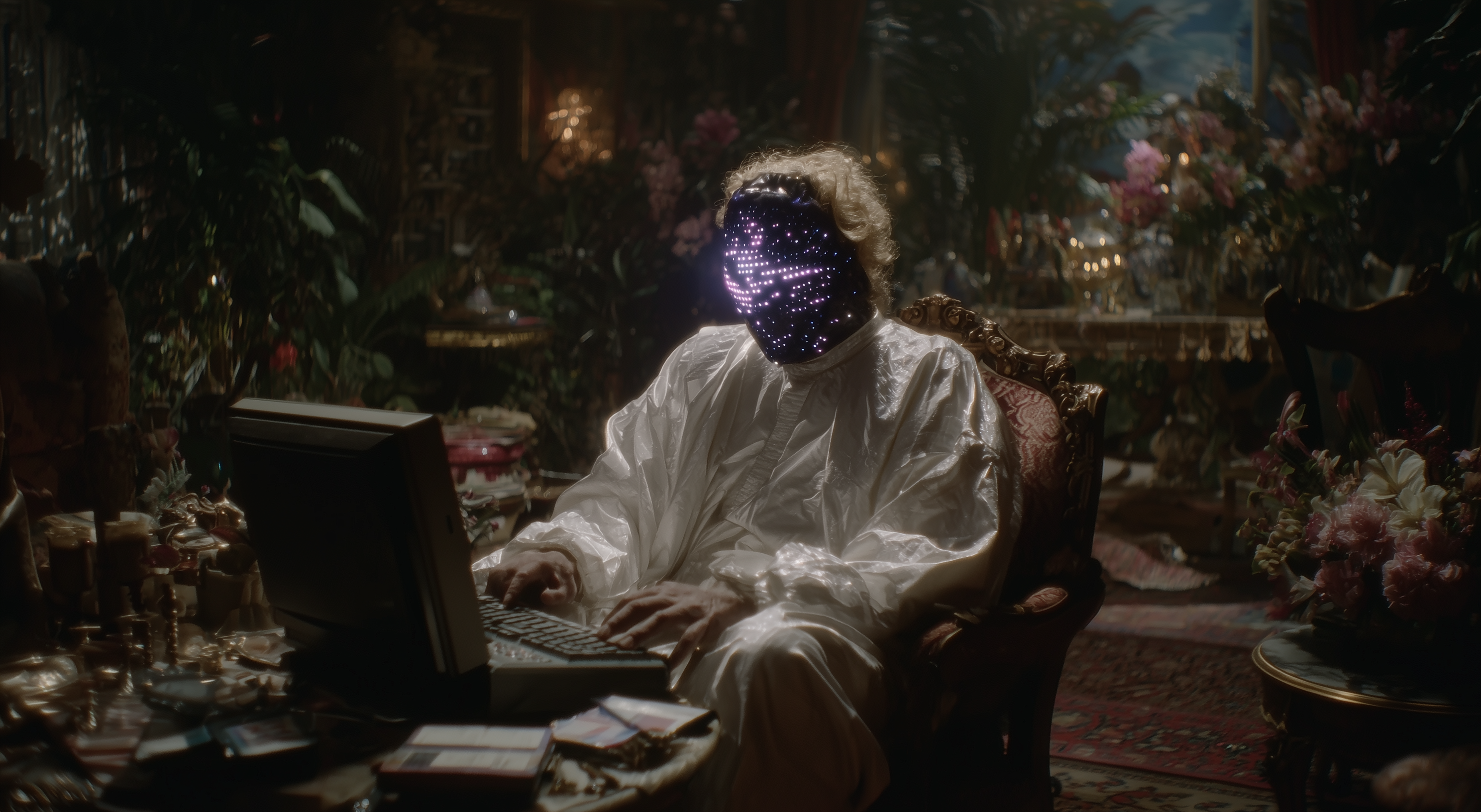
You can build a personal brand as an anon.
Not everyone wants their face attached to their ideas. Not everyone can. There are professional constraints, privacy concerns, personal preferences that make it impossible or unwise to build in public under your real name. That's completely legitimate. The "personal" in personal brand doesn't have to mean your legal name and your selfies.
What matters is consistency. A recognizable voice. A coherent world. A body of work that accumulates over time and builds trust with an audience. You can construct all of that with a pseudonym and generated imagery just as well as with your face and your real name.
> Maybe even better, in some ways. An anon identity can be more focused, more pure. It doesn't have to carry the baggage of your previous career or your family obligations or the other parts of your life that aren't relevant to what you're building.
Anon isn't hiding. It's a mode of being. Some of the most trusted people in certain corners of the internet are accounts nobody has ever seen in person. They've built that trust through consistency, through delivering value, through showing up again and again with useful ideas and insights. The identity is real even if the name isn't.
I think we're going to see more of this as the landscape evolves. More people building real influence under names that aren't on their driver's license. More people separating their professional identity from their personal identity in ways that let them do work they couldn't do otherwise.
Part Two: Frameworks
Okay. Enough observation and truth-telling. Let's get practical.
If you're building a personal brand, or thinking about starting, here's how I'd approach it. These are the principles I've developed through my own work, through years of building brands for others, and through watching what actually works in the current environment. Bear in mind, the social media game is new to me, so these are just observations from a different place.
1. Start With the World, Not the Content
Most people start by asking "what should I post?" This is the wrong question. It puts you in a reactive mode, always scrambling for the next piece of content, never quite sure if it fits with what came before.
Start instead by asking: what's the world I'm building? What does it look like? What does it feel like? What's the narrative underneath? What are the themes that keep coming up? What's the aesthetic sensibility that ties everything together?
> This is World Building. You're not creating content. You're building a universe, and then you're showing people different parts of it.
Once you have the world, content becomes much easier. You're not generating posts from nothing. You're not staring at a blank screen wondering what to say. You're showing different facets of a world that already exists in your head. Some posts might be about process. Some might be about principles. Some might just be images that feel right. They all fit because they all come from the same place.
Take time to define your world before you start creating content.
- What are its colors?
- What are its textures?
- What are its themes?
- What questions does it ask?
- What does it believe?
The clearer you are about the world, the easier everything else becomes.
2. Find Your Visual Thread
Your timeline should be recognizable. Not every post needs to look identical, but there should be a visual coherence that makes people know it's you before they even see your name.
This doesn't mean you need to be a designer. It doesn't mean you need expensive tools or years of training. It means you need to make choices and stick to them. Color palette. Image style. Typography if you use text in images. The way you crop things. The mood you're going for. These choices accumulate into a feeling.
Think about it from the other side. When you scroll through your feed and you see a post that could only come from one person, what makes it recognizable? Usually it's not one thing. It's a combination of small choices that have been applied consistently over time. That consistency is what you're building toward.
Start by noticing what you're drawn to. Collect images that feel right, even if you can't explain why. Look for patterns in what you collect. Those patterns are clues about your own sensibility. Then start making choices that reflect what you've learned about yourself.
3. Voice Is Built, Not Found
People talk about "finding your voice" like it's a discovery, they will sell you the free frameworks in PDF form and email sequences. Like your voice is out there somewhere waiting to be found, and you just need to look in the right place.
It's not. It's a construction.
You build your voice by writing a lot and seeing what resonates. By trying different approaches and noticing which ones feel natural and which ones feel forced. By keeping what works and discarding what doesn't. By reading your own work with fresh eyes and asking whether it sounds like you or like someone you're imitating.
Over time, patterns emerge. Certain phrases you keep using. Certain structures that feel comfortable. Certain topics you keep returning to. Those patterns are your voice. They weren't there at the beginning. You created them through the work.
Don't wait until your voice is "ready." It becomes ready by using it. The only way to develop your voice is to practice using it, in public, even when it feels uncertain. The uncertainty is part of the process. It goes away eventually, but only if you keep going.
4. Create Artifacts With Leverage
Posts disappear into the feed. They have a half-life of hours, maybe a day if you're lucky. Someone might like them, share them, but then they're gone. The algorithm moves on. Your audience moves on.
Artifacts last. A PDF guide. A template. A tool. A course. A framework document. Something that can be shared, bookmarked, returned to. Something that exists outside the timeline and can be discovered by people who weren't following you when you first posted about it.
Your personal brand should produce artifacts that travel beyond your timeline. These are the things that do work while you sleep. They're how people find you who would never have scrolled past your posts. They're how you demonstrate depth, not just presence.
The Codex was this for me. 120 pages of methodology. Something I could point to and say "this is how I think about World Building." People download it, get value from it, and then some of them become part of my audience. It has leverage that no single post could ever have.
Think about what your artifact could be. What do you know that could be captured in a document, a template, a tool? What could you create once and have it work for you indefinitely?
5. Ship and Deliver
This is the part that actually builds trust.Do what you say you're going to do.
Talk about what you're building, then build it. Make promises, then keep them. Announce a deadline, then hit it. Say you'll ship something by Friday, then ship it by Friday.
The gap between what you claim and what you deliver is where trust lives or dies. When the gap is small, when you consistently do what you say, trust accumulates. When the gap is large, when you overpromise and underdeliver, trust erodes.
People are watching.They're tracking, even unconsciously, whether you follow through. They might not remember the specific promises you made, but they have a feeling about you. That feeling is based on hundreds of small observations about whether you're someone who delivers.
Every time you ship something you said you would ship, you're making a deposit in the trust bank. Every time you fail to deliver, you're making a withdrawal. Over time, the balance shows. It shows in how people talk about you, whether they recommend you, whether they want to work with you.
6. Play the Long Game
You're not optimizing for this month. You're building something that compounds over years.
This means you can afford to be patient. You don't need to chase every trend. You don't need to post when you have nothing to say. You don't need to panic when growth is slow. You're building a body of work, not a streak.
The people who win at this are usually the ones who simply didn't quit. They kept showing up, kept building the world, kept refining the voice. Three years later, they're "overnight successes." But they know, and anyone who was paying attention knows, that the overnight success was built one day at a time for years. And this is personally the hardest part, because its hard to deal with the uncertainty and anxiety. I cannot even tell you how many times I'm thinking to myself "I need to move faster, I need to ship better, why is my audience not growing?"
This can be liberating if you let it be.
> It means any individual post doesn't matter that much. Any individual week doesn't matter that much. What matters is the direction and the consistency over time. You can have off days. You can have off weeks. As long as you keep going, you're still on the path.
Why This Is Fun
I want to end with something that gets lost in all the strategy talk.
This is fun.
Building a personal brand, if you do it right, is an ongoing creative project where you are the medium.You're not just making things. You're making yourself, or at least a version of yourself that exists in public. You're crafting how you show up in the world, what you stand for, what people experience when they encounter your work.
That's genuinely interesting as a creative challenge. It's not a grind you have to suffer through to reach some goal. It's the work itself. The process of figuring out what you think, what you care about, how to express it, what resonates with others. That process is inherently interesting if you approach it with curiosity rather than desperation.
I spent twenty years making brands for other people (I sound like a broken record but it helps deliver the message). Now I get to make one for myself. Same skills, different canvas. And I get to do it in public, learning as I go, building the world in real time.Every post is an experiment. Every essay is a chance to figure out what I actually believe. Every piece of the world I share is a test of whether it connects.
> The timeline is the artwork.
You're already making it, whether you realize it or not. Every time you post something, you're adding to it. Every time you engage with someone, you're adding to it. The only question is whether you're making it on purpose, with intention and direction, or whether you're just letting it happen to you.
I vote for intention. I vote for craft. I vote for building a world that's yours and no one else's, and then inviting people in.
That's what personal brand is, at its best. Not self-promotion. Not vanity metrics. A world you build, one piece at a time, that lets the right people find you and trust you.
And if you get it right, it's one of the most satisfying creative projects you'll ever work on.
*If you want to see how I approach World Building specifically, the World Building Codex is free. It's 120 pages of methodology for creating coherent visual universes with AI. Consider it a piece of my world that you can take with you.
I also created a short film this week called Harvest. Based on one of the Archetypes from the Codex. Enjoy Here.*