LOG 011: In 2026, decision-making is the only skill that can't be outsourced: The Director's Moment.
Hollywood's monopoly on filmmaking is broken. In 2026, decision-making is the only creative skill AI cannot replace. The Director's Moment is here.
Hollywood Right Now
A major studio director released an AI-generated series and the internet divided because its full of people with a lot of time to goon. That moment is less important than what it proves: the tool is no longer the differentiator.
I reposted a trailer I made two weeks ago and it went viral. Same tools available to everyone. Same production capabilities. Different result.
Why? Because someone made a decision about what mattered.
This is the statement: The future belongs to the directors.
Not because they have access to better tools. Because they make decisions. And in 2026, decision-making is the only skill that can't be outsourced.
The monopoly is broken.
The Three Things That Mattered
For 100 years, Hollywood directors had a monopoly on exactly three things:
- Access to tools (cameras, studios, post-production facilities, technology that cost millions)
- Production infrastructure (crews, budgets, distribution networks, the ability to execute at scale)
- Distribution channels (theaters, networks, gatekeepers who decided what people got to see)
That monopoly protected them. It made "Hollywood director" mean something. It meant access to resources no one else had.
It also made gatekeeping possible. If you wanted to make a film, you needed permission. You needed a studio. You needed money. You needed the system.
Why That Monopoly Is Now Irrelevant
That monopoly is completely broken.
With AI and modern tools, you don't need:
- A traditional crew (the tool handles production)
- A 6 to 12-month timeline (you can compress years of output into weeks)
- A studio backing (though one might help with distribution)
- Millions in equipment (software is cheaper than coffee)
One person can now do what used to require 50 people, $50 million, and 18 months. Yes, that is my claim. Don't believe me today? Let's talk in 12 months.
> "You are essentially compressing years and teams of experience and production output into one single person."
This is the actual revolution. Not "AI makes filmmaking easier." But "The structural barriers to entry have collapsed."
What This Means for You
The old mentality was: "I need permission and resources before I can create."
The new mentality has to be: "I have the tools. I have the knowledge. The only thing missing is clarity about what I want to make."
That's a mindset shift. Not a tool shift.
For you as a creator, this means:
- Stop waiting for the "perfect" setup
- Stop blaming resource constraints
- Stop treating tools as the limiting factor
- Start treating your clarity of vision as the only real constraint
The bottleneck moved from production to decision-making.
It was always about this
The Skill Myth
Hollywood directors had something people wanted: "foundation and experience." Years of cinematic knowledge. That seemed like magic only accessible to the initiated.
But it was never magic. It was learnable.
You can now learn cinematography on the internet. You can study:
- Color theory and why certain palettes work
- Shot composition and the grammar of visual storytelling
- Pacing and how rhythm affects emotion
- Narrative structure and why some stories stick
- How light shapes mood
- How sound builds tension
- How editing creates meaning
All of it is available. Free or cheap. Now.
The technical skills are no longer the differentiator. They're table stakes.
The Real Skill: Decision-Making
What you can't automate is the question: "What should I make?"
And the follow-up: "Why?"
And the harder one: "Why that instead of the thousand other things I could make?"
That's the director's work. That's the skill that separates the signal from the noise.
Generic content fails because there's no taste behind it. No one decided anything. It's just output. Happens in AI (at scale), also happens in hollywood > Why is there an Antman Trilogy?
The Real Competition
You're no longer competing on technical skill. The gap between "Hollywood production" and "solo creator production" is closing to zero.
You're competing on taste. On clarity. On the ability to know what matters and articulate it.
Your framework for this:
- Know what you like and why (build a taste library, not a random collection of influences)
- Know what's missing from the market (what do you want to see that doesn't exist?)
- Know why only you can make it (what's your specific angle, your specific sensibility?)
If you can answer those three questions clearly, you can make something that matters.
If you can't, you're making content. Not creating.
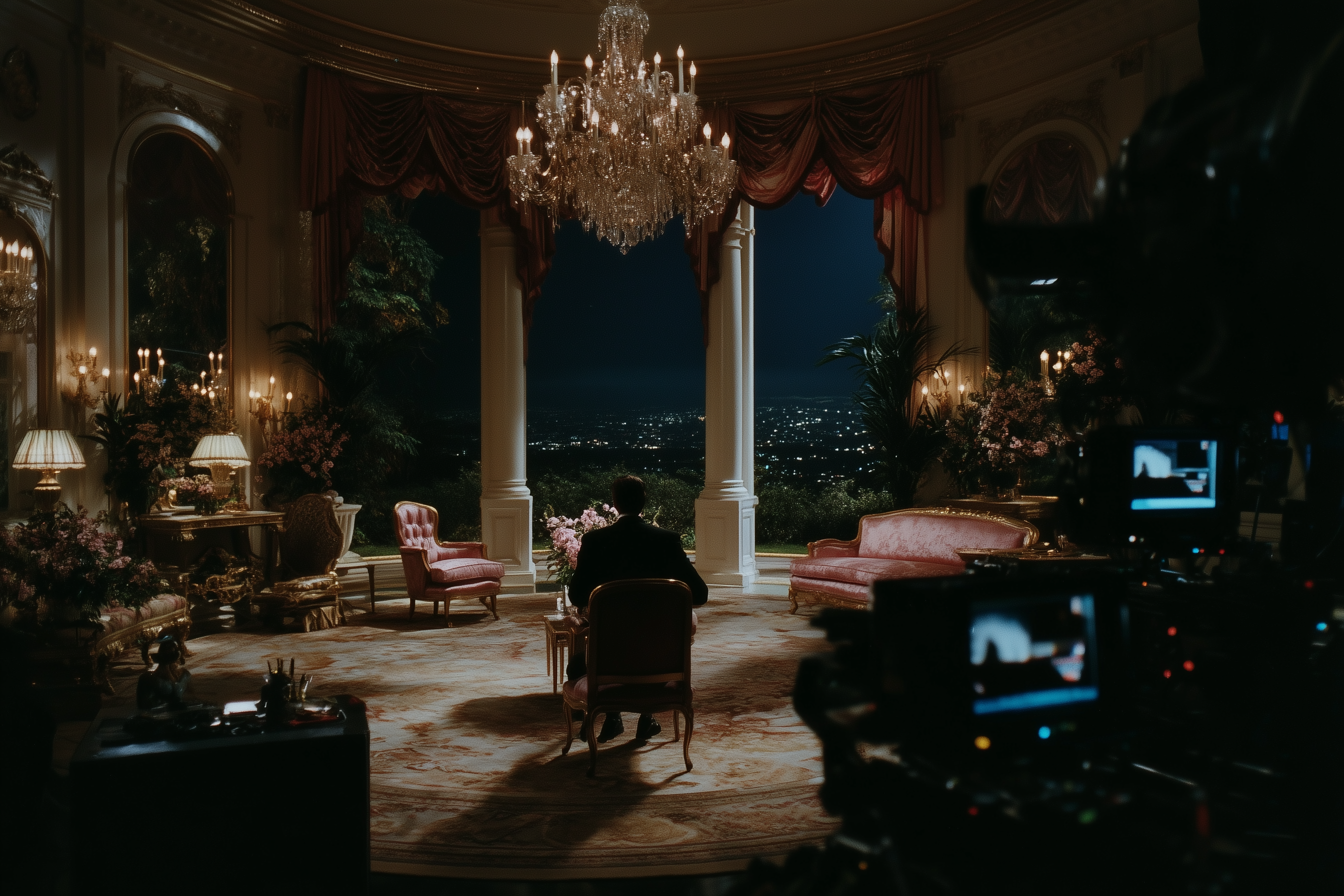
Remember: Reality is a hallucination you are willingly participating of.
There are no adults in the room.
The Paradox We're Living In
Right now, simultaneously:
- Tools are free or cheap
- Knowledge is accessible
- Distribution is open
- There's no gatekeeper
- There's also no parent company backing you
> For people waiting for permission, this is terrifying.
For directors, it's liberation.
The Xenophon Moment
In 401 BC, 10,000 Greek soldiers were hired to help a Persian prince seize the throne from his brother. They were deep in enemy territory, hundreds of miles from the coast. When their leaders were murdered in an act of betrayal, the army collapsed. Soldiers lay on the ground refusing to eat, waiting to die.
Then a young Athenian named Xenophon, who was not a general just a guest with the army, had an awakening in the middle of the night. He asked himself: "Why do I lie here? The night is advancing and at daybreak the enemy will be upon us. If we fall into the King's hands, what prevents us from seeing terrible things and suffering terrible torments before being put to death? Yet no one is making any preparations. We just lie here as though we could go on enjoying leisure. From what city do I expect a commander to come to save us? I will never be saved by waiting for someone else. If I want safety, I must start doing something about it myself right now."
He got up. He called together the surviving officers. He gave a speech. He got elected as one of the new leaders. He kick-started the retreat of the Ten Thousand all the way back to the Black Sea coast.
That question, "Why do I lie here?" is the moment of realizing there is no adult coming to fix this. No king. No general. No cavalry. No deus ex machina.
Either you organize yourself right now, make decisions, and move, or you die.
That applies right now. The tools are there. The knowledge is accessible. The distribution is open. But no one is coming to give you permission. No studio executive is calling. No gatekeeper is opening doors.
> The cavalry is not coming. And that's the point.
What This Means for Your Mindset
The old system rewarded you for being picked. For being chosen. For getting permission. It rewarded the outlier expression, but now that path is open for everyone.
The new system punishes you for waiting.
The shift you need to make:
From: "Who can I convince to back my idea?" To: "What am I going to build whether anyone backs it or not?"
From: "Is this commercially viable enough?" To: "Do I believe in this enough to be consistent?"
From: "Am I ready?" To: "I'm ready because I've decided to start."
The tools are there. The knowledge is there. The distribution exists. The only thing missing is your decision to move.
The Voracity of the Market
The Three New Currencies
The old system rewarded:
- Budget size
- Studio backing
- Access to distribution
- Box office performance
Those were proxies for quality. They were gatekeeping metrics.
The new system rewards three things directly: Taste, Consistency, and Brand.
1. TASTE
Does this mean something? Does it have a point of view? Can you feel the hand of a human decision-maker?
When someone sees your work, do they feel a sensibility? Or do they feel like they could have gotten this from any tool?
Taste is the first filter. Everything else flows from that.
Your framework for building taste:
- Study work that moves you. Not to copy it, but to understand what moves you about it.
- Identify patterns in what you like. What's the through-line?
- Build a philosophy about what matters. Why do you care about this instead of that?
- Document it. Write it down. Make it explicit. This becomes your creative north star.
2. CONSISTENCY
Do you show up? Do you keep building? Do you ship repeatedly?
This is where most people fail. They make one great thing and then disappear. Or they make one viral thing and chase that forever.
The market doesn't reward virality. It rewards sustained creation.
The creator who makes 50 pieces over a year, each with intention, each building on the last, compounds. That person becomes recognizable. That person becomes trusted.
Your framework for consistency:
- Choose a cadence you can sustain (daily, weekly, whatever). Don't choose something you'll quit.
- Make it non-negotiable. This is your practice. Treat it like an athlete treats training.
- Build in public. Show the work. Show the iteration. People follow people who are serious about their craft.
- Track it. You need to see the compounding. You need proof that consistency works.
Consistency is how you build signal over noise. In a world where everyone has access to tools, the person who ships 50 times beats the person who ships once and waits for luck.
3. BRAND CONSISTENCY
Does everything feel like it comes from the same sensibility?
When people see your work, do they know it's yours? Not because of a watermark (watermarks help, make a cool logo and stamp it everywhere), but because the taste is consistent?
That's brand. That's how you become unmistakable.
Your framework for brand:
- Define what you stand for in one sentence, you don't need to make this public.
- Make sure every piece you create serves that thesis, even if it's in different formats.
- Don't chase trends, but play with them if they give you access to the zeitgeist. Trends are noise. Brand is signal. Stamp everything with your brand.
- When you see something you don't want to be associated with, say no. Brand is also what you refuse.
Why These Three Matter More Than Tools
You could argue: "Muh. But tools matter. Muh. Better rendering muh muh, better AI models, better software, muh."
Sure. Tools matter for execution speed.
But taste? Consistency? Brand? Those are harder than tools. Those are personal.
That's why they're scarce. That's why the market rewards them.
The person with taste but mediocre tools beats the person with amazing tools but no taste. Every time.
The IP acceleration cycle
The New Production Model

You can make art with the computer sir!
The old model was: Make a big film. Hope it makes money. Maybe make a sequel or 3, slap a big celeb.
Linear. Slow. High risk.
The new model is: Create repeatedly. Iterate. Build an audience. Leverage that audience into longer-form, bigger work. Build IP. Gather data!
Creators are now:
- Making short-form content (X, TikTok, Reels)
- Building an audience through consistency
- Extending into longer form (essays, video essays, podcasts)
- Backing projects with that audience (Kickstarter, Patreon, pre-orders)
- Building actual IP (characters, worlds, franchises), even about themselves.
It's a cycle, not a ladder. You don't wait until you have a big enough audience to start longer-form work. You use short-form as a testing ground, a proof of concept, a way to find your people.
Imagination is the Only Unfair Advantage
"Hollywood might back some directors. New production tech will emerge. But imagination? That's the only scarce resource left."
Tools will get better. AI models will improve. Production tech will accelerate. But imagination is fundamentally human. It can't be outsourced to a tool.
The directors who win are the ones with a clear imagination. A vision of a world they want to see. A point of view about what matters.
That's worth backing. That's worth following.
Your framework for imagination:
- What world do you want to see that doesn't exist?
- What's the emotional truth at the core of that world?
- How does that world change people who experience it?
If you can't answer those questions, you're making content. If you can, you're building IP.
From Consume to Director
The Shift
I don't watch movies anymore. I create what I want to see.
Most people are consumers. They ask: "What should I watch? What's good? What's trending?" Directors flip the question: "What do I want to see that doesn't exist yet?"
That question changes everything.
A consumer is looking for someone else's vision to align with their taste. A director is building their own vision and inviting people to see it.
Your framework for making this shift:
- Stop consuming so much. Not entirely, but with intention. You're researching, not escaping.
- Every time you consume something, ask: "Why does this work? What would I have done differently?"
- Document your answer. Write it down. Now you're not consuming. You're studying.
- Use what you learned to make something new. Not a copy. A response.
When you shift from consumer to director, you're not just changing what you do. You're changing how you perceive the world.
Everything becomes raw material for your vision.
The Consistency Requirement
In order to succeed I need to be consistent.
This is where the real work is.
One great trailer doesn't make you a director.
One great film doesn't make you a director. One viral moment doesn't make you a director.
Fifty great trailers or short films, each with a clear point of view, each showing intentionality, each building on the last. That's when you become recognizable as a director.
Consistency is how you stop being a one-hit wonder and start being a presence.
It's unglamorous work. It doesn't get talked about as much as "going viral." But it's where the actual value gets built.
Your framework for consistency in the long term:
- Choose your medium (or two). Master it. Don't be everywhere.
- Choose your cadence. Daily, weekly, whatever. Just make it sustainable.
- Build a system. Make it so easy to create that not creating becomes harder than creating.
- Track progress. You need to see the compounding.
- Celebrate milestones. Make the work feel rewarding, not just obligatory.
The medium is also your timeline. The format is now out of the 16:9 frame. It's what people see on your timeline when they scroll. When they interact with each one of your online touchpoints. It's all the breadcrumbs that are spilled over that point into your direction. It's how you present yourself to the world.
The Ultimate Flex
> Right now it feels like a giant playground and lock people to stable content will be the ultimate flex.
This is the insight that cuts through all the noise.
Everyone has access. Everyone is playing. The tools are free. The knowledge is free. The distribution is technically open.
But most people are inconsistent. They make something good and then disappear. They chase trends. They optimize for virality instead of vision.
The ones who commit to a direction and deliver consistently? They stand out immediately.
In a playground full of noise, stable content becomes the scarcity. Coherent vision becomes the luxury.
That's the ultimate flex: "I know what I'm doing. I'm going to keep doing it. You can trust what comes next because it's going to reflect the same sensibility."
That's how you build a following. That's how you build IP. That's how you become a director.
Your framework for the ultimate flex:
- Have a thesis. Know what you stand for. (I stand for robots, luxury and taste, with a pinch of dystopia)
- Defend it through your work. Every piece should be in service of that thesis.
- Don't deviate because of trends. Trends are temporary. Vision is permanent.
- Show up even when no one's watching. Especially then. That's when you're building real credibility.
- When success comes, it will come from the consistency, not the viral moment.
The Framework
The Three Questions
If you're going to step into the director role, you're answering three questions:
- What do I want to see that doesn't exist yet? (Imagination)
- Why is only my vision the right vision for this? (Point of View)
- Am I willing to be consistent until the market notices? (Agency)
If you can't answer those three questions clearly, you're not ready to be a director yet. You're still a consumer with ideas.
If you can answer them, you know what to build.
The Concrete Work
Being a director means:
Develop your taste. Know why you like what you like. Study the work that moves you. Build a taste library. Don't be random. Be intentional. Write down your taste principles. Use them to make decisions.
Learn your tools. Whether it's cinematography, visual design, writing, AI prompting, whatever you're working in, get good at the mechanics. Make the tool disappear. This is table stakes. Don't use "I'm not good at X" as an excuse.
Build your brand. Create consistently. Make it clear what you stand for. Be unmistakable. When people see your work, they should know it's you. Not because of a logo, but because of sensibility.
Stay the course. The market is slow to notice. Consistency compounds over time. Don't optimize for virality. Optimize for signal. A loyal audience of 100 people who trust you beats 10,000 people who might check in once.
Make decisions. Because no one else will. You own this. The tools are available. The knowledge is accessible. The only thing that separates you from someone else is the decisions you make.
That's the director's job.
How to Know You're on the Right Track
You're on the right track when:
- People recognize your work (not because of the tool, but because of the sensibility)
- You're getting clearer, not more confused (your vision is sharpening, not fragmenting)
- Each piece is better than the last (not technically necessarily, but more clear, more intentional)
- People are building on your work (they're remixing it, responding to it, building their own thing based on your thesis)
- You're enjoying the process more than the outcome (if you're only happy when something goes viral, you'll burn out)
- You get invited to the best group chats.
Those are the real metrics.
This Is Your Moment (And It Matters)
The Structural Reality
Right now:
- A major studio director used AI to create a long-form work
- The debate isn't about whether it's possible. It's happening.
- Tools are cheap or free
- Knowledge is accessible
- Distribution is algorithmic
- There's no gatekeeper
The Question
In this moment, are you going to be a director or a consumer?
Are you going to ask "what should I watch?" or "what should I make?"
Are you going to wait for someone else to build the future or are you going to build it?
The Mindset You Need
The future belongs to the directors not because they have better tools. But because they make decisions.
In an AI-native world, the skill that matters most is the ability to:
- See what's missing
- Imagine a way to fill it
- Make it real (with whatever tools are available)
- Iterate and improve
- Be consistent until it compounds
That skill is available to you right now. It's not gatekept. It's not expensive. It's not requiring permission.
It just requires that you decide to be a director instead of waiting to be picked.
The Aronofsky moment, my repost going viral, the existence of AI tools, the open distribution. These aren't separate things.
They're all proof of the same shift:
The monopoly is broken. The bottleneck moved. Scarcity is now on the human side.
That changes everything.
For directors, it's the best time to build. You have the tools. You have the knowledge. You have the distribution. The only thing missing is the decision to move.
For everyone else, it's terrifying. Because there's nowhere left to hide. No more excuses. No more waiting for permission.
The choice is yours. Hope you are hyped now!
Make it.
— Ivan
I built the World Building Codex as a 120-page systematic framework for exactly this shift. Not to make you dependent on frameworks, but to give you a working map while you figure out your own path.
The Codex walks you through how to build a coherent visual and narrative universe that survives tools and trends. It's the taste library made explicit. It's what happens when you document your sensibility so you can defend it, iterate on it, and scale it.
I'm building an Academy for people who want to go deeper. Not another course. A workspace where directors gather to think about World Building, strategy, and how to turn imagination into compounding creative work. It's still in the works.