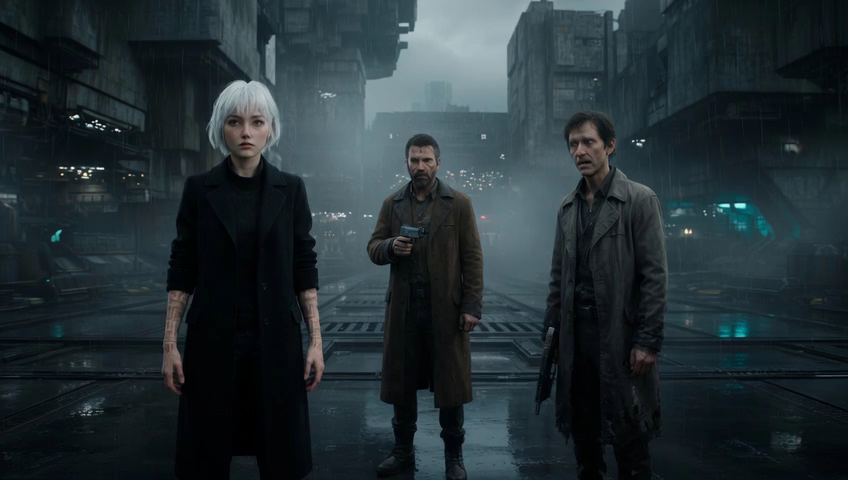
A shot framing three subjects, often used to show group dynamics, alliances, or the odd-one-out tension within a trio. Sergio Leone perfected the three-shot in the climactic standoff of "The Good, the Bad and the Ugly," cycling between three armed men in a graveyard to create one of cinema's most iconic compositions. Akira Kurosawa uses triangular three-shots in "Rashomon" to stage conflicting testimonies, and the Coen Brothers frequently compose three-shots in their ensemble comedies like "The Big Lebowski" to play dynamics of alliance and exclusion within a group.
By Ivan Flugelman · Reviewed 16 July 2026
Prompt template
Three-shot of [Subject] arranged in a triangular composition across the widescreen frame, each occupying their own third, the triangular formation revealing tension between completely different energies colliding at a single point, shot on anamorphic 50mm with the wide frame emphasizing space between the three figures
Replace [Subject] with your own character or scene. The prompt is technology-agnostic and works as a starting point for AI image or video generators.
When to use Three-Shot
Choose a three-shot when the drama comes from a trio rather than three separate characters. Triangular placement can reveal two against one, a mediator caught between rivals, or unstable alliances that change inside the scene. It suits standoffs, negotiations, comedy, and family tension. Avoid lining everyone up equally unless neutrality is intentional; the arrangement should make the group's emotional geometry visible.
Directing the AI
Place three subjects at distinct points of a triangle across the widescreen frame, varying depth or height to establish hierarchy. Give each person a readable eyeline and body orientation toward or away from the others. Keep the spaces between them clear so alliance and exclusion can shift through movement. Use an anamorphic field without crowding the edges. In video, specify the gesture or step that changes the triangle and redistributes visual weight.
Common mistakes
Arranging the trio in a flat shoulder-to-shoulder row, which hides alliances and makes the composition feel posed.
Giving all three characters equal visual weight when the scene depends on one person being isolated or dominant.
Allowing eyelines to point randomly, making the characters appear disconnected from the conversation or standoff.