← Cinematique Camera Work · Intermediate

Push In Prompt for AI Image & Video

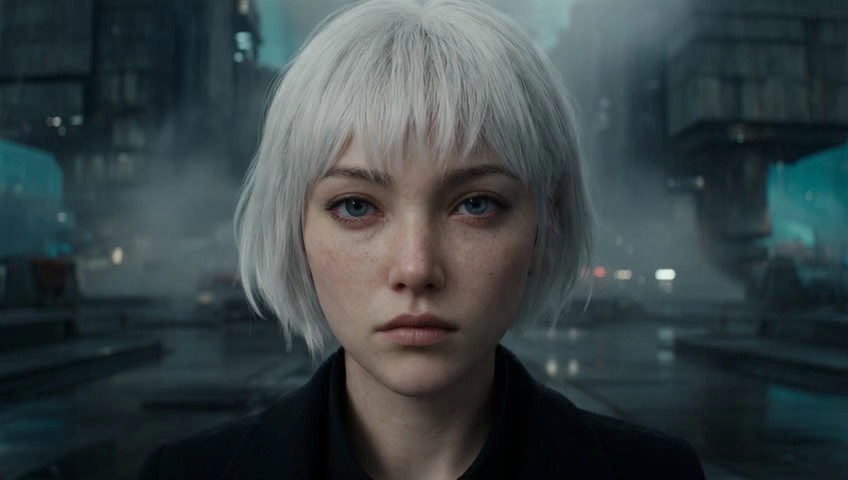
Push In cinematic example

A slow, deliberate camera movement toward the subject, physically closing distance to intensify focus and emotional weight, drawing the audience deeper into a moment or realization. Jonathan Demme's slow push-in to Clarice Starling's face during her final conversation with Hannibal Lecter in "Silence of the Lambs" is a masterclass in the technique. Kubrick used glacial push-ins toward Jack Nicholson in "The Shining" to build unbearable psychological pressure, and Paul Thomas Anderson employs the slow push-in as a recurring emotional punctuation mark throughout "There Will Be Blood" and "Phantom Thread."

By Ivan Flugelman · Reviewed 16 July 2026

Prompt template

Imperceptibly slow push-in toward [Subject], the camera beginning in a medium shot and gradually closing to a medium close-up, the push-in so gradual viewers may not consciously register the camera moving yet feel the emotional walls closing in, shot on a 50mm Cooke Speed Panchro vintage lens with gentle focus breathing, Kodak 5219 warmth

Replace [Subject] with your own character or scene. The prompt is technology-agnostic and works as a starting point for AI image or video generators.

When to use Push In

Use a push-in when a realization, decision, threat, or confession grows more important while the shot continues. Physical camera movement narrows the viewer's world and can create pressure before they consciously notice why. It suits patient drama better than abrupt surprise. Define what changes during the move; pushing toward a static face without an emotional turn often feels like empty emphasis.

Directing the AI

Begin at a clear medium distance and move the camera slowly toward a medium close-up while keeping the lens perspective consistent. The background should shift through natural parallax, proving physical travel rather than a digital zoom. Use gentle vintage focus breathing and warm restrained color, but keep the subject's eyes steadily sharp. Time the approach to a specific thought or line, ending just as the emotional beat lands, then hold instead of continuing indefinitely.

Common mistakes

  1. Changing focal length without camera travel, producing a zoom that lacks the spatial pressure of a true push-in.
  2. Moving too quickly for a quiet realization, announcing the emotion before the performance has time to develop.
  3. Starting already too tight, leaving no meaningful distance for the camera to close during the beat.
Sources and further reading

  1. 50+ Types of Camera Shots, Angles, and Techniques — StudioBinder
  2. Types of Camera Movements in Film Explained — StudioBinder

A shot is not a world

Learn the fourteen fundamentals for building consistent characters, environments, visual logic, and stories that expand beyond one beautiful frame. Get World Building Codex 3.0 free, or explore the World Building Academy.

Related techniques

Dolly Shot

A smooth camera movement where the entire camera physically moves toward, away from, or alongside the subject on a wheeled platform or track, creating an immersive sense of movement through space. Orson Welles used dolly shots to navigate the deep-focus interiors of "Citizen Kane," while Spike Lee invented his signature double-dolly shot — mounting both actor and camera on the same platform — to create a floating, surreal glide seen in "Do the Right Thing" and "25th Hour." Martin Scorsese's famous Copacabana shot in "Goodfellas" tracks Henry Hill through the back entrance of a nightclub in one fluid dolly movement.

Medium Close-Up

Frames the subject from the chest up, tighter than a medium shot but not as intimate as a close-up, ideal for emotional dialogue while retaining some body language context. This framing became the default for television drama and is the backbone of prestige TV from "The Sopranos" to "Breaking Bad." In cinema, Michael Mann favors the medium close-up in "Heat" and "Collateral" to maintain both the intensity of facial performance and the physical awareness of characters in dangerous environments. Jonathan Demme's slightly-off-center medium close-ups became his signature from "Silence of the Lambs" through "Rachel Getting Married."

Vertigo Effect

Also called a dolly zoom — the camera dollies in while zooming out (or vice versa), causing the background to warp while the subject stays the same size, creating a visceral sense of disorientation. Invented by cameraman Irmin Roberts for Alfred Hitchcock's "Vertigo" (1958) to visualize James Stewart's acrophobia, the technique was later used to devastating effect by Steven Spielberg in "Jaws" — the moment Chief Brody sees the shark attack from the beach. Peter Jackson employed it in "The Lord of the Rings" when Frodo senses the Ringwraiths approaching, and Sam Raimi made it a horror staple in the "Evil Dead" films.