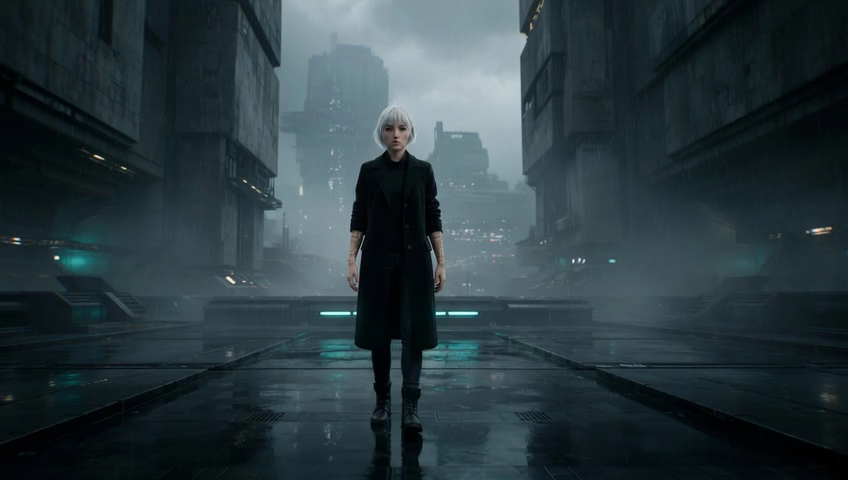
A smooth camera movement where the entire camera physically moves toward, away from, or alongside the subject on a wheeled platform or track, creating an immersive sense of movement through space. Orson Welles used dolly shots to navigate the deep-focus interiors of "Citizen Kane," while Spike Lee invented his signature double-dolly shot — mounting both actor and camera on the same platform — to create a floating, surreal glide seen in "Do the Right Thing" and "25th Hour." Martin Scorsese's famous Copacabana shot in "Goodfellas" tracks Henry Hill through the back entrance of a nightclub in one fluid dolly movement.
By Ivan Flugelman · Reviewed 16 July 2026
Prompt template
Smooth dolly shot gliding toward [Subject], the camera at eye level moving with buttery precision on dolly track, parallax effect separating foreground elements from the mid-ground subject from far-ground details, shot on 35mm with Panavision Primo lenses, rich blacks and saturated warm tones, the elegant motion of precision dolly track work
Replace [Subject] with your own character or scene. The prompt is technology-agnostic and works as a starting point for AI image or video generators.
When to use Dolly Shot
Use a dolly-in when a realization, threat, or emotional detail needs to become unavoidable. Dolly out when context should overwhelm the subject or create emotional distance. Move alongside a character when the audience should travel with them rather than simply observe them.
Directing the AI
Describe physical camera travel, direction, speed, subject lock, and foreground-to-background separation. “Dolly toward” is more useful than “cinematic movement.” Give the model visible layers for parallax — a foreground obstruction, the subject in the middle distance, and a readable background — so the move changes spatial relationships instead of behaving like a digital zoom.
Common mistakes
Calling for a dolly and a zoom at the same time without intentionally asking for a dolly zoom.
Describing camera movement without foreground or background layers, leaving no parallax for the model to express.
Stacking “smooth,” “dynamic,” “epic,” and multiple conflicting camera directions instead of specifying one controlled move.