← Cinematique Camera Work · Basic

Medium Close-Up Prompt for AI Image & Video

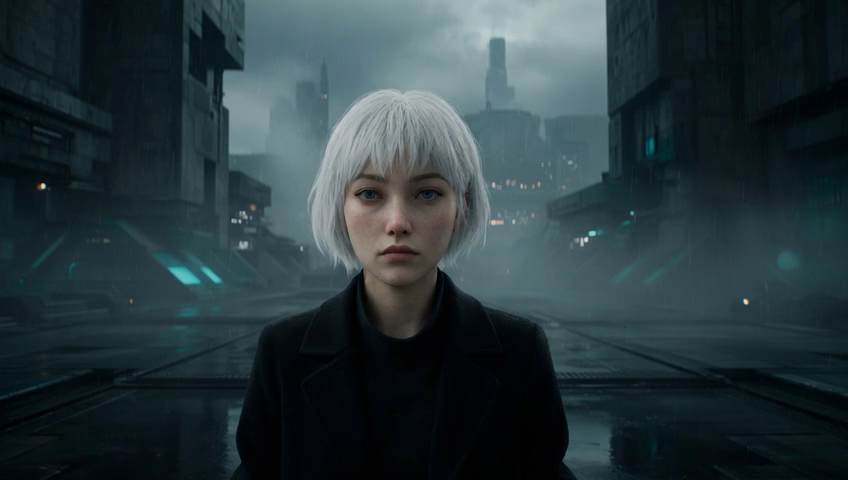
Medium Close-Up cinematic example

Frames the subject from the chest up, tighter than a medium shot but not as intimate as a close-up, ideal for emotional dialogue while retaining some body language context. This framing became the default for television drama and is the backbone of prestige TV from "The Sopranos" to "Breaking Bad." In cinema, Michael Mann favors the medium close-up in "Heat" and "Collateral" to maintain both the intensity of facial performance and the physical awareness of characters in dangerous environments. Jonathan Demme's slightly-off-center medium close-ups became his signature from "Silence of the Lambs" through "Rachel Getting Married."

By Ivan Flugelman · Reviewed 16 July 2026

Prompt template

Medium close-up of [Subject] from the chest up, the intimate distance perfect for reading micro-expressions while body language of tension remains visible in the shoulders and hands, shot on a 75mm Cooke S4 at T2, noir-inflected color palette of deep blues and intermittent warm accents

Replace [Subject] with your own character or scene. The prompt is technology-agnostic and works as a starting point for AI image or video generators.

When to use Medium Close-Up

Choose a medium close-up when emotional dialogue needs intimacy without the pressure of a full close-up. Chest-up framing keeps micro-expressions legible while shoulders and upper-body tension remain available. It is strong for interviews, confession, restrained conflict, and reaction beats. Pull wider when hands or spatial relations matter; move tighter when the face must become the entire dramatic landscape.

Directing the AI

Frame from the chest upward, keeping the shoulders fully present and the eyes near the upper third. Use a slightly longer portrait perspective, moderate background blur, and controlled contrast that preserves skin detail. Let small changes in jaw, breath, and shoulder position carry the performance. Include only enough environment to anchor location. For video, avoid automatic zooming; hold the intimate distance and let the actor's micro-expressions create the variation.

Common mistakes

  1. Cropping beneath the chin or above the shoulders, which turns the intended frame into a tight close-up.
  2. Leaving too much torso visible, weakening facial emphasis and drifting back toward a conventional medium shot.
  3. Smoothing skin and expression so aggressively that the subtle performance cues the framing exists to capture disappear.
Sources and further reading

  1. 50+ Types of Camera Shots, Angles, and Techniques — StudioBinder
  2. Types of Camera Movements in Film Explained — StudioBinder

A shot is not a world

Learn the fourteen fundamentals for building consistent characters, environments, visual logic, and stories that expand beyond one beautiful frame. Get World Building Codex 3.0 free, or explore the World Building Academy.

Related techniques

Medium Shot

Frames the subject from roughly the waist up, the workhorse of dialogue scenes — close enough to read expressions but wide enough to capture body language and gestures. Howard Hawks built his entire directorial style around the medium shot in films like "His Girl Friday" and "The Big Sleep," trusting the perfect middle distance to convey rapid-fire dialogue and physical chemistry. Aaron Sorkin's walk-and-talk scenes in "The West Wing" rely on moving medium shots, and Sofia Coppola uses static medium shots in "Lost in Translation" to capture the quiet body language of disconnection.

Choker Shot

A very tight shot framing the face from forehead to chin, eliminating nearly all background, more claustrophobic than a standard close-up and often used for moments of extreme emotion. Ingmar Bergman used the choker shot relentlessly in "Persona" and "Cries and Whispers," trapping his actors' faces in frames that feel like emotional prisons. Darren Aronofsky adopted this approach in "Black Swan," keeping Natalie Portman's face in suffocating proximity, and Steve McQueen uses sustained choker shots in "Hunger" and "Shame" to force viewers into uncomfortable intimacy with his characters' pain.

Eye Light

A small, dedicated light source positioned to create a catchlight — a bright reflection in the subject's eyes — that brings eyes to life and creates a vital connection with the viewer. The eye light has been an essential tool since Hollywood's Golden Age, when cinematographers like Lee Garmes used tiny "inky" lights to add sparkle to Marlene Dietrich's eyes. Eyes without catchlights appear dead on screen — a fact horror filmmakers exploit deliberately. Steven Spielberg's cinematographers are known for precise eye lights; Janusz Kamiński's eye lights in "Schindler's List" are often the only bright element in otherwise dark compositions.