LOG 019: The Solved Image Problem
Midjourney V8.2 preview makes the single image feel almost solved. The next frontier is not prettier outputs — it is curation, coherence, character consistency, and world building.
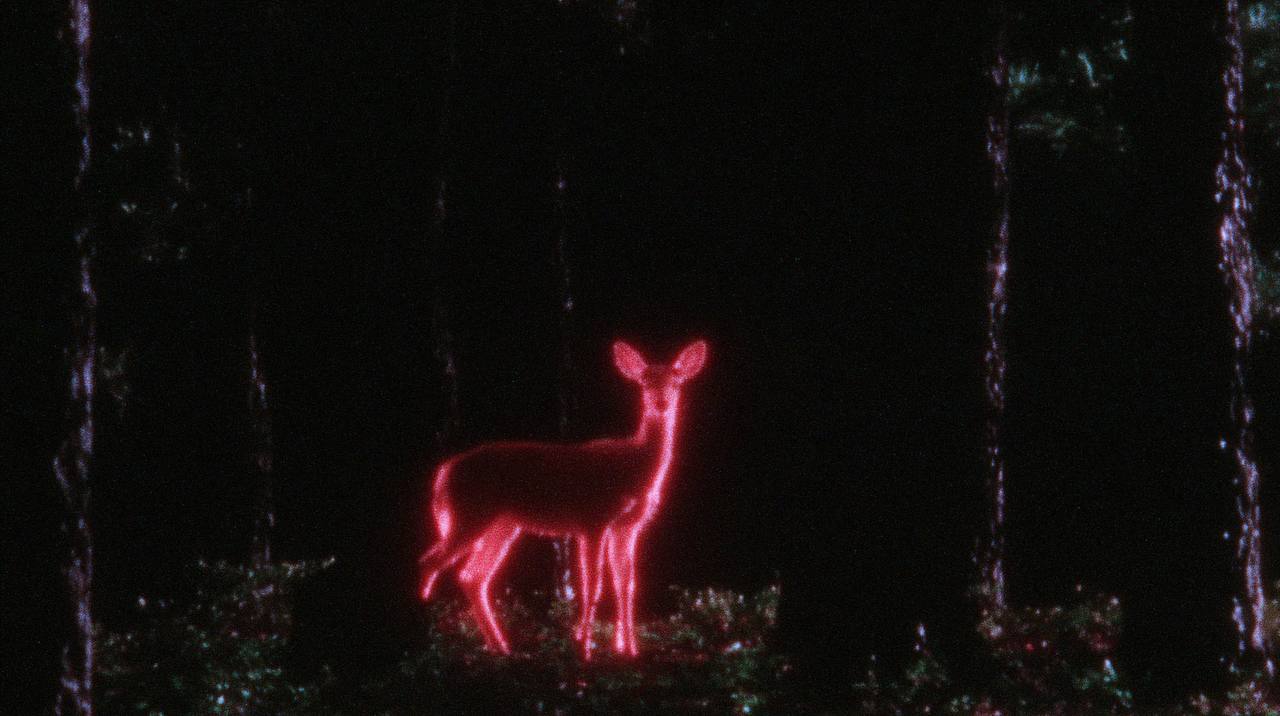
I am on holiday right now, which means I should probably be looking at buildings, food, people, light, weather, my family.
Instead I keep seeing the same thing on my timeline.
Midjourney V8.2 preview.
Or whatever name we want to give the thing currently hiding behind --preview.
People are testing old prompts. Comparing V7, V8, V8.1, V8.2. Posting grids. Talking about detail, contrast, cinematic quality, style fidelity, prompt adherence, faces, texture, atmosphere.
And I understand why.
It is a jump.
V8.1 already mattered because it carried a lot of the old work forward. Style references, prompt structures, visual systems, things built across V7 and V8 still had continuity. That was important. It meant the work was not dead every time the model changed. Some of the libraries, references, and style systems we built could survive the update.
That matters if your work is not just random prompting, but building a visual language.
But V8.2 feels like a different insanely scary animal.
I do not mean that in the normal “new model is better” way. We say that every few months. The timeline says it every few months. Everyone loses their mind for three days, then everything becomes normal again.
This feels different because the single image problem is starting to feel solved.
Not completely. Nothing is ever completely solved.
But solved enough to drive cold sweat through your spine.
The model understands too much now.
Composition. Light. Camera language. Texture. Color tension. Cinematic mood. Depth. Subject separation. The small tricks that used to make an image feel expensive.
It knows them.
And that changes the job.
The camera for the mind
The first time I used Midjourney 6.1 seriously, it felt like I had found a camera for my mind.
There was a specific kind of shock in that moment. Something private and internal could suddenly be externalized with enough fidelity that it became almost uncomfortable. You could move through latent space and come back with evidence.
V8.2 has that feeling again, but _stranger_.
It is sharper. More cinematic. More detailed. More contrasty. Sometimes too contrasty. Sometimes too eager to make everything look like an expensive still from a prestige streaming show.
But the feeling is there. It is giving you a finished image.
And that is the scary part.
Because if the model can give everyone a finished image, the finished image stops being the thing that separates you.
The model learned the fundamentals
For years, the advice was obvious.
Learn the fundamentals.
Composition. Light. Color. Shape. Rhythm. Negative space. Contrast. Hierarchy. Framing. Texture. Mood.
And that advice was true.
It is still true.
But we need to be precise about what has changed.
The model has learned a huge amount of those fundamentals.
It knows the rule of thirds. It knows cinematic backlight. It knows how to place a subject against a readable background. It knows how to create depth. It knows what “editorial” usually means. It knows what “fashion campaign” usually means. It knows what “dark cinematic” usually means. It knows what “shot on film” usually means.
You can still direct those things.
You can specify the light. The palette. The lens. The angle. The emotional temperature. The density of the world. The level of contrast.
Or you can write something vague and let the model do what it does.
And increasingly, what it does is pretty good.
That is the uncomfortable truth.
A beginner can now ask for a beautiful image and often get one.
Not always a meaningful image. Not always a coherent image. Not always an image that belongs to anything. But beautiful? Yes. Often.
So if everyone can access the surface-level fundamentals, then the next question becomes more interesting.
What are we actually playing with?
The curation wall
The first wall was execution.
Can you make the image?
Most people could not.
Then AI moved the wall.
The next wall was prompting.
Can you describe the image?
Then the models got better.
The next wall was style.
Can you create a recognizable look?
Then style references, personalization, moodboards, and model memory started carrying more of that load.
Now we are arriving at the next wall.
Curation.
Not curation as in _“I have good taste and save nice images and like to go to an underground art exhibition on Sundays”_
I mean curation as an operating system.
The ability to know what belongs and what does not. The ability to reject an image that is technically incredible because it does not fit the world. The ability to see when a character is almost right but not _spiritually_ right. The ability to feel when the palette is beautiful but not native to the system you are building.
This is where most people will break.
Because when the average output was bad, curation was easy. You rejected the broken hands, the plastic faces, the nonsense details, the obvious slop.
But what happens when almost everything is good?
What happens when every grid has four images that would have been mind-blowing a year ago?
What happens when the machine gives you too many winners?
That is the curation wall.
And it is much harder than fixing bad outputs.
The single image is no longer enough
This is the core shift.
A single image used to be proof.
Proof that you had taste. Proof that you understood the model. Proof that you could prompt. Proof that you could make something visually impressive.
That proof is decaying.
The single image is becoming too easy.
You can connect Midjourney, Nano Banana, upscalers, video wrappers, editing tools, and a dozen small workflows to push fidelity even further. And that is useful. I do it too. The stack still matters.
But at the level of the single image, the problem is mostly solved.
Which means the value moves somewhere else.
It moves to continuity.
Can the character survive ten images?
Can the world survive fifty?
Can the light system hold?
Can the costume language repeat without becoming boring?
Can the architecture belong to the same civilization?
Can the objects feel designed by the same culture?
Can the story pressure remain visible across scenes?
Can the work feel like a world instead of a folder?
This is where the fundamentals return, but at a higher level.
Not the fundamentals of making one image.
The fundamentals of building a world.
The Codex thesis is becoming unavoidable
This is why I keep coming back to the third Codex.
Not because I want to keep repeating my own framework. Because the models keep proving the point.
The future is not prompt mastery.
Prompt mastery is perishable. Model behavior changes. Syntax changes. Parameters change. What worked in V6 becomes strange in V7. What worked in V8.1 might become too heavy in V8.2. Every tool-specific trick has an expiration date.
The fundamentals of world building age differently.
A world is not a style.
A world is a system.
Light. Texture. Color. Architecture. Character. Costume. Object logic. Emotional pressure. Narrative gravity. Repetition. Variation. Constraint.
That is what survives.
When the model improves, a weak prompt gets prettier. A strong world gets deeper.
That is the difference.
Most people will use V8.2 to make prettier isolated images.
The better move is to use it to pressure-test your world.
Take an old prompt from V5, V6, V7, V8.1. Run it again. Not as nostalgia. As diagnosis.
What survived?
What got better?
What broke?
Did your style reference carry forward?
Did the character remain intact?
Did the world become richer, or did the model replace your world with its own default idea of beauty?
That last question matters.
Because the more powerful the model becomes, the more seductive its defaults become.
And the defaults are always trying to eat your voice.
The director after the image
This is where the word director becomes less metaphorical.
The director is not the person who can generate the best frame.
The director is the person who knows what the frame is for.
A beautiful image can still be useless.
It can fail the world. It can fail the character. It can fail the sequence. It can fail the body of work.
The director has to see beyond the image.
That is the new skill.
Not because images do not matter. They matter even more now. But the image is no longer the final object. It is a unit inside a larger system.
A shot.
A fragment.
A signal.
A piece of evidence from a world that may or may not actually exist.
Use the preview. Do not worship it.
So yes, use it.
Add --preview. Run the old prompts. Compare the outputs. Test your style references. See what happens when your old worlds pass through the new model.
It is fun.
It is also useful.
But do not mistake the test for the work.
The models are getting better at the part we used to hide behind.
They are learning the visible fundamentals. They are swallowing the execution layer. They are making beauty abundant.
Good.
That means the work moves where it always belonged.
To taste.
To structure.
To coherence.
To world building.
To the decisions that survive after the model changes.
The single image is close to solved.
Now build something the image belongs to.