From Zero to First Dollar: A World Builder's Guide to Monetizing Digital Art
How I got 500+ downloads and made my first dollar selling digital art online — the real workflow behind launching a paid Midjourney product from scratch.

When I launched my World Building Codex last year, I was in a complete rush. I had this domain sitting there, and I'd just spent months creating what I thought was a collection of high-end Midjourney codes. But somewhere in the process, I realized I couldn't just dump prompt codes on people. That's not value. That's just noise in an already noisy market.

So I did something that probably seemed stupid at the time. I took even more time to write stories around each style. Ten styles, ten narratives, ten pieces of lore designed to inspire people to create with meaning, not just technique. I wanted to differentiate myself, sure, but more than that, I wanted to actually share what I know about building worlds and experiences. Twenty years of solving creative problems across motion, 3D, live action, and immersive work, distilled into a PDF.
The launch worked. 600+ downloads in the first few weeks. Forty newsletter subscribers. And eventually, my first paid subscription. Eight dollars that felt different than any paycheck I'd ever received as an Executive Creative Director.
But then I did what every entrepreneur does when something works: I tried to make it "better." I rebuilt everything. Added systems. Created complexity. And watched my conversion rate drop by 78%.
This is the guide I wish I had. The one that tells you what actually works, what breaks when you scale too fast, and what you need to get started. No fluff. Just the systems, the mistakes, and the frameworks that got me from zero to first dollar.
Part 1: The Minimum Viable Launch System
What You Actually Need (It's Less Than You Think)
Here's the thing about launching a digital product when you're just starting—your enemy isn't lack of features. It's friction. Every single step you put between your audience and your value is a place where people drop off. And when you're unknown, when you haven't built trust yet, people will take any excuse to leave.
I learned this by accident with my first launch. I wasn't trying to optimize for conversions or build a perfect funnel. I was just trying to get this thing out into the world before I talked myself out of it.
My setup was almost embarrassingly simple. I had a domain—vvsvs.pro, which I'd bought because I loved the visual symmetry of those letters and because VVSVS was this VJ alter ego I'd created like 20 years ago for a failed design studio. I see it as a media company now, especially with AI making so many things possible that weren't before. But back then, I just needed a place to put this Codex.
I used WordPress because I already had it. Added the Semplice plugin to build a landing page. Created an amazing video of the Codex contents to show people what they were getting. Put a big download button that linked directly to the PDF. No forms. No email capture. Just: here's the thing, click to download.
Below that, I added a form to my Substack. My thinking was simple—give immediate free value to everyone, and the ones who are serious about the journey will follow me there.
That was it. That was the whole system.
And it worked better than anything I'd built with agency budgets and design teams.
Why "No Friction" Beats "Optimized Funnel" When You're Starting
The psychology here is pretty straightforward, but most people miss it. When someone lands on your page for the first time, they're skeptical. They don't know you. They don't trust you. They're probably tired of people trying to sell them shit they don't need.
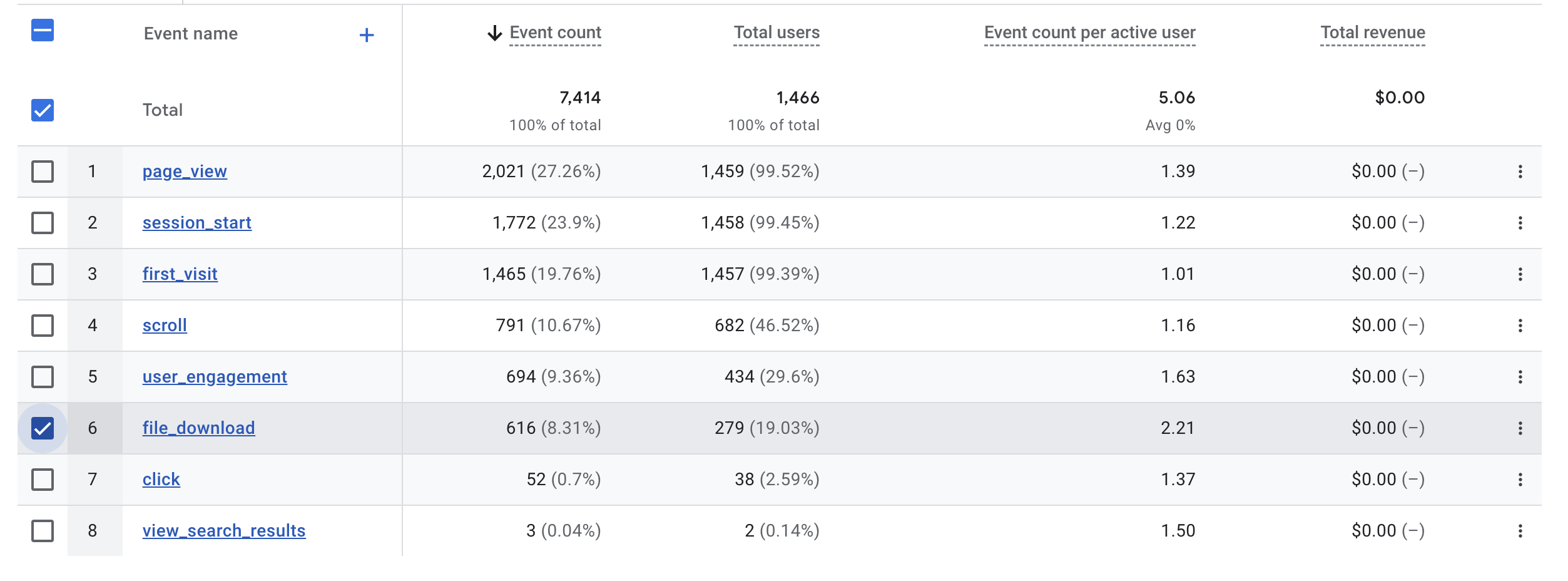
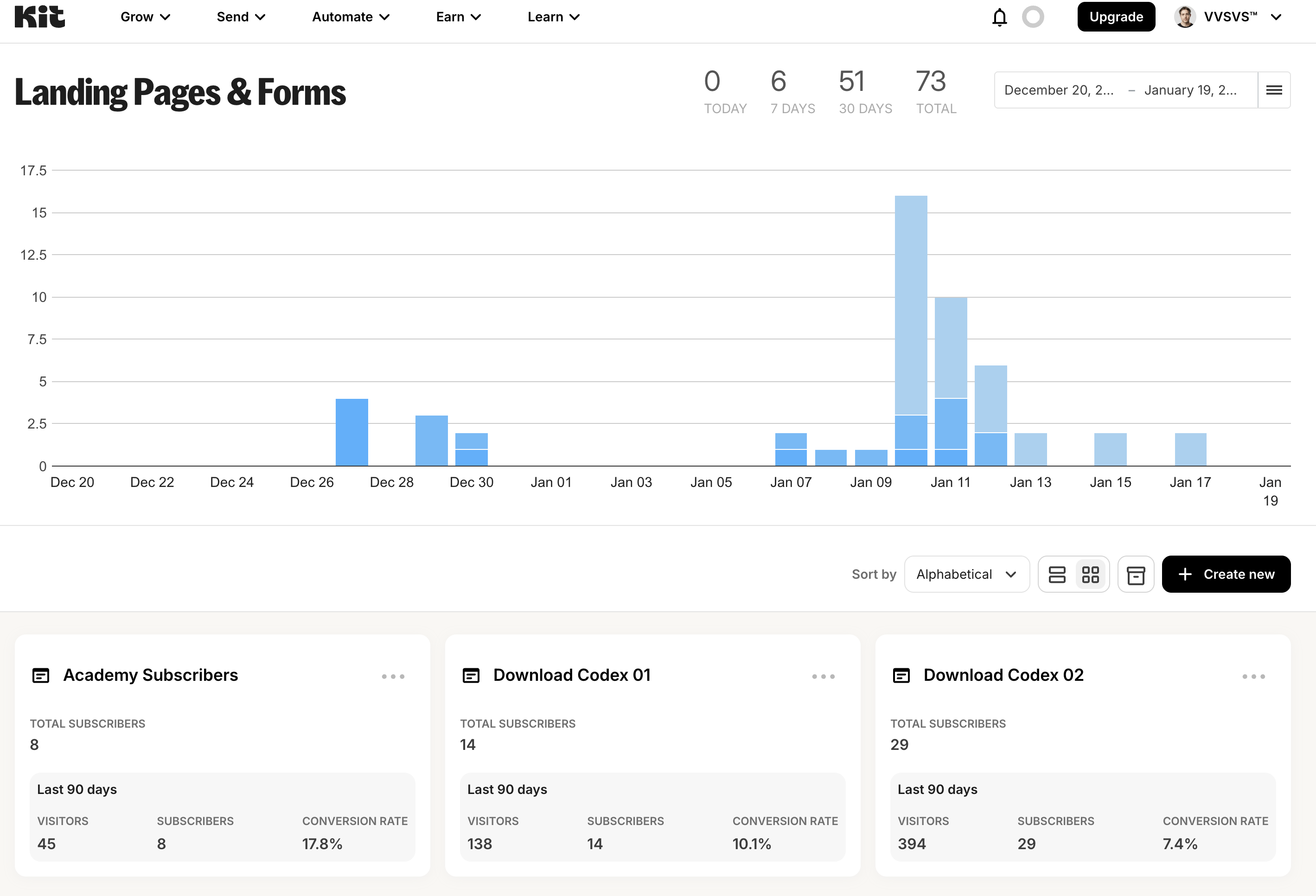
600+ Downloads over 279 Total Users means users clicked it via mobile and came back to download the desktop version immediately.
But if you give them something genuinely valuable—for free, immediately, no strings attached—you've completely shifted the dynamic. You're not trying to extract value from them. You're demonstrating value to them. That's a massive difference.
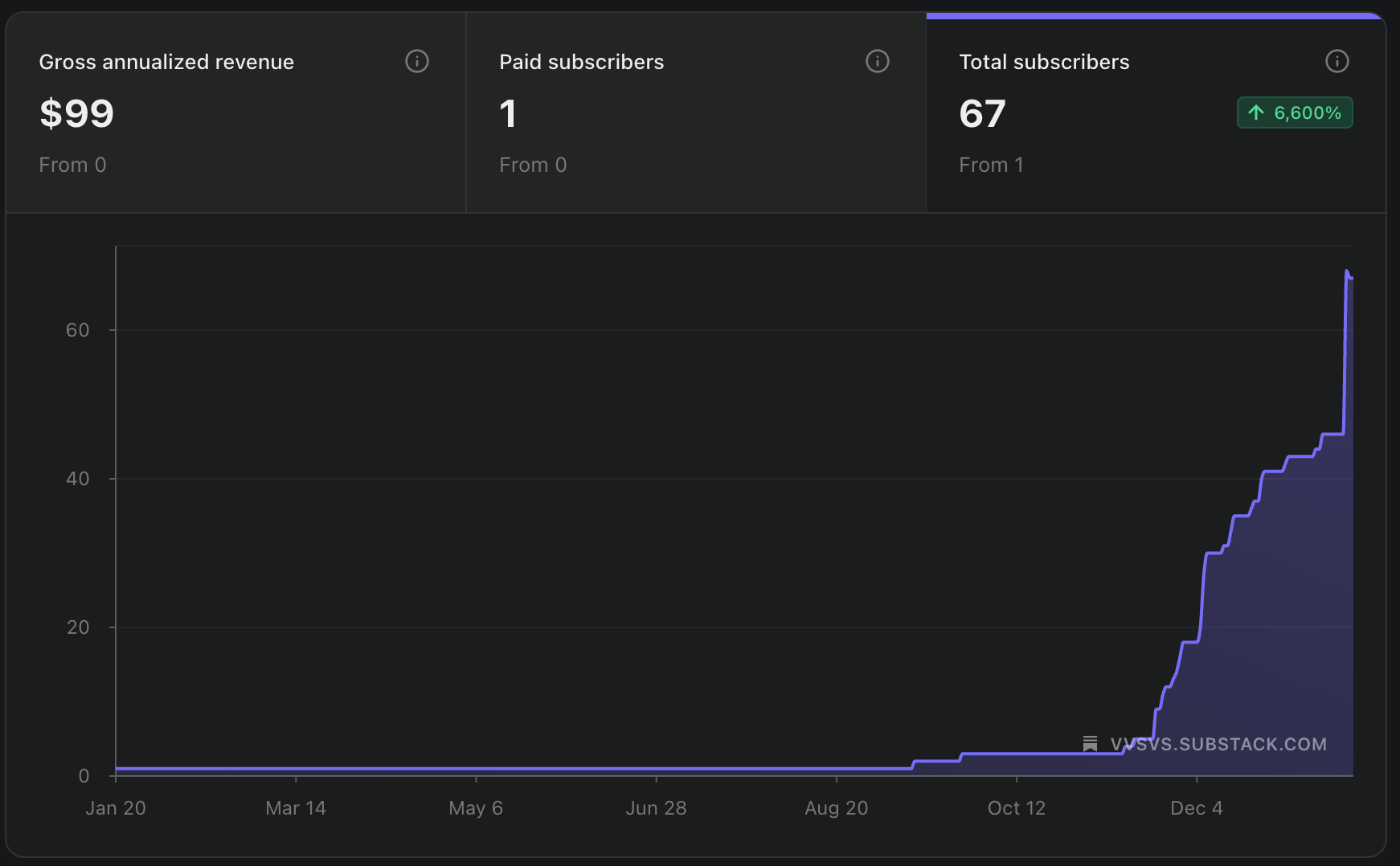
I didn't ask for an email. I didn't make people confirm anything. I just said: "Here are ten World Building styles with lore, stories, and high-end Midjourney codes. Take it."
The results spoke for themselves. Over 600 downloads in the first few weeks. Around 40 people organically signed up for my newsletter just from that link at the bottom of the page. And in the second week, I got my first paid subscription. Someone literally said "I want to support this" and hit the Subscribe button.
> That $8 was proof. Not that my system was perfect—it wasn't. But that the core idea worked: give value first, build trust, then offer more value for money.
The Secret Weapon: Packaging Your Knowledge With Story
Here's what actually separated my launch from the thousands of prompt packs flooding the AI art market—I packaged everything with narrative. Each style in the Codex wasn't just a collection of codes. It was a story.
I gave people the technical breakdown of the aesthetic, sure. But I also gave them the origin story, the emotional context, the philosophy of why this particular style matters for creating meaningful work and also my personal take. And then, yeah, the actual Midjourney prompts.
This took so much longer. I could've just released the codes and been done in a week. But I spent weeks writing lore, crafting narratives, thinking about what each style meant in the context of World Building as a practice. It was almost obsessive. And add the fact that the design of the PDF had to look beautiful.
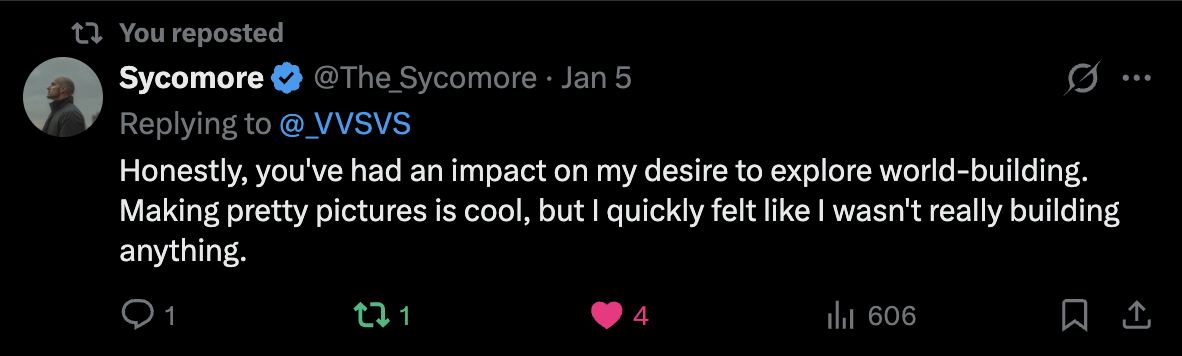
But that's exactly what positioned me as someone who understood the craft, not just the tool. People could feel the difference. They told me in DMs, in comments, in their own work that they created after reading the Codex. They said it made them think differently about what they were making.
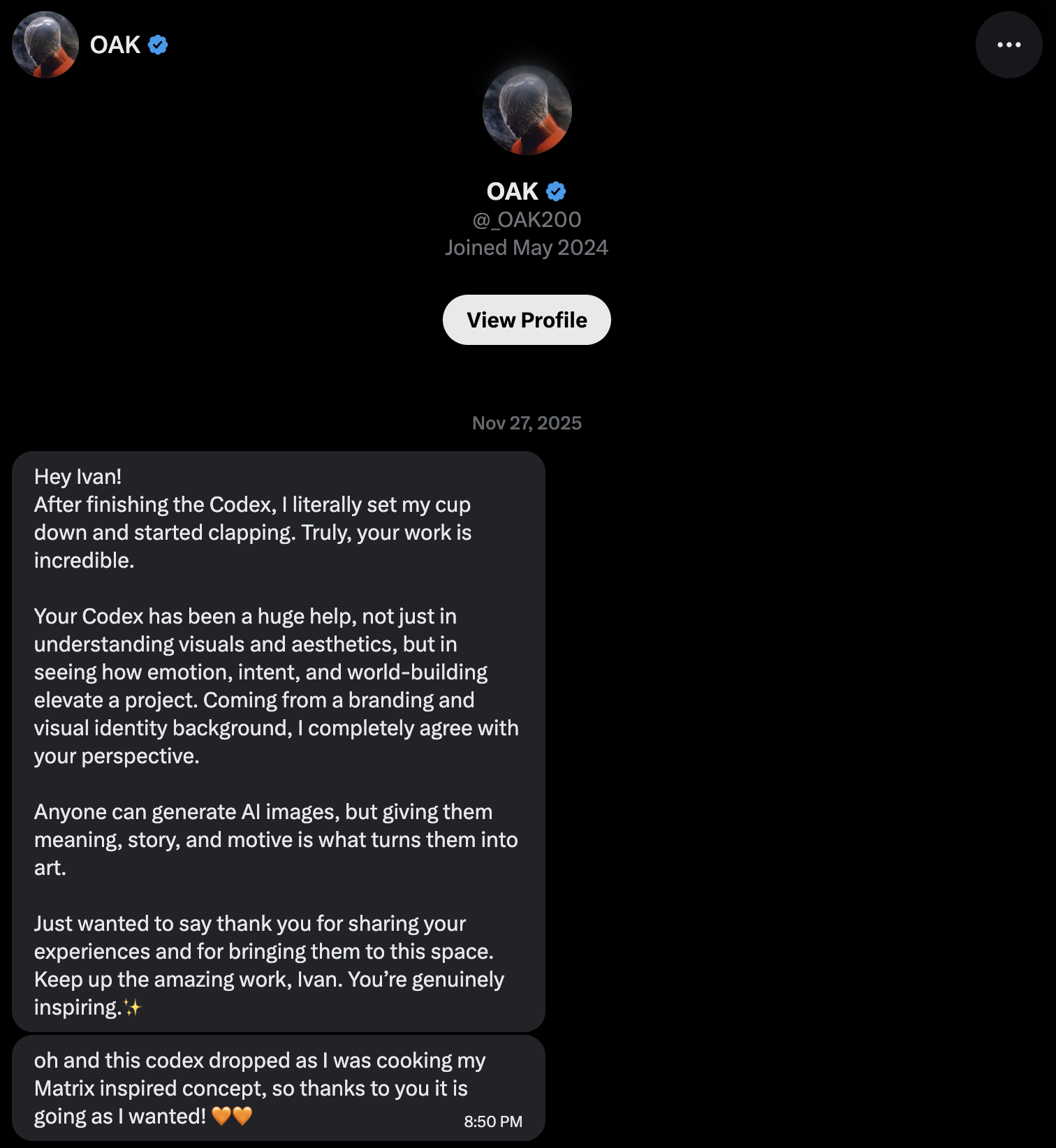
Shoutout to @_OAK
When your free content is that good, people start wondering what your paid content must be like. That's the secret. Your lead magnet needs to be good enough that people would pay for it. Mine was.
Part 2: The Technical Setup (Without the Overwhelm)
How I Actually Built It
Let me walk you through exactly what I did, step by step, because I know the technical side can feel intimidating if you're more creative than technical. But honestly, it's simpler than you think.
My First System (The Simple One That Worked):
``` Step 1: Domain ├─ Bought vvsvs.pro via GoDaddy ($15/year) └─ Could use: Namecheap, Porkbun, any registrar
Step 2: Landing Page ├─ Platform: WordPress (Dreamhost 150$/year) + Semplice (one off $168) ├─ Alternative options: Carrd, Framer or HTML on Netlify └─ Structure: ├─ Hero section with bold hook ├─ Video showing Codex contents ├─ Value proposition (plain language) ├─ Big download button → direct PDF link └─ Text link to Substack
Step 3: Newsletter ├─ Platform: Substack (free) ├─ Setup time: 10 minutes └─ Paid tier enabled but not promoted
Total cost: ~$200/year Total setup time: 2-3 hours
```
First, the domain. I bought vvsvs.pro through GoDaddy. Cost me maybe $15 for the year. You could use Namecheap, Porkbun, whatever. They all work fine. The important thing is having something that's yours, not a subdomain on someone else's platform.
For the landing page, I used WordPress with the Semplice plugin. This was purely because I already knew how to use it (I'd been using WordPress for my personal website). If I were starting today with no existing setup, I'd probably just use Framer or even build a single HTML page and throw it on Netlify. The platform doesn't matter nearly as much as the content on the page.
My landing page was dead simple. At the top, I had this hero section with a bold statement about World Building. Then a video showing actual pages from the Codex (I wanted people to see the quality before downloading). Below that, my value proposition written in plain language. No marketing jargon, just: "Here's what you get and why it matters."
Then the big download button. I uploaded the PDF to my server, created a button in Semplice, and linked it directly to the file. That was it. Click, download, done.
At the bottom of the page, I added a simple to my Substack newsletter box, with something like "Want more? Join the weekly newsletter." I purposely made it low-pressure.
Setting Up the Newsletter (The Part That Actually Matters)
I chose Substack for my newsletter, and this turned out to be one of the best decisions I made. Not because Substack is perfect (it's not), but because it removed every possible barrier to starting.
No technical setup. No payment processing to figure out. No design decisions to agonize over. I just created an account, wrote my first welcome post, and I was live. The whole thing took maybe 10 minutes.
I set up the paid subscription tier right away, even though I had zero intention of promoting it for months. I just wanted it there. Set it at $8/month or $80/year because that felt honest—about the price of two coffees a month for weekly insights I was spending hours crafting.
I never mentioned the paid tier once. I just wrote. Every Sunday, a new newsletter about World Building, AI art, creative process, whatever I was learning that week. I was figuring out my voice, figuring out what people actually wanted to read.
Turns out people love tactical frameworks. They love personal stories with clear lessons. They love behind-the-scenes breakdowns of how I actually do things. What they didn't love was abstract motivational content or pure philosophy without application. I learned this by watching the analytics (which posts got opened, which got replies, which got shared).
After about four weeks of consistent value, I got my first paid subscriber. I didn't even have any paid-only posts yet. Someone just decided my free stuff was valuable enough that they wanted to support it. That's when I knew I'd built something real.
Part 3: What Happened When I Got "Smart"
The Rebuild That Broke Everything
So here's where I fucked up. The first launch was so successful, the feedback from the community was so positive, that I decided to double down. And by double down, I mean I decided to "do it right this time."
My Second System (The "Professional" One That Didn't):
``` Step 1: Custom Website ├─ Built from scratch: Google AI Studio + Cursor ├─ Hosted on: Netlify └─ Features: ├─ Multiple download paths (V1, V2, Academy teaser) ├─ Email capture form (required) └─ Segmentation by interest
Step 2: Email Confirmation Flow ├─ User enters email ├─ Confirmation email sent ├─ User checks inbox (often spam) ├─ User clicks confirmation link ├─ User redirected to site └─ Finally: Download link
Step 3: Dual Newsletter Systems ├─ Substack (editorial content) └─ ConvertKit (automation + segmentation)
Result: 78% drop-off rate Total steps from landing to download: 6 (vs. 1 before)
```
I refactored the entire website. Changed the domain. Vibe-coded the whole thing from scratch using Google AI Studio to get the structure I wanted, then used Cursor to polish all the details. Built exactly the platform I'd been dreaming about. It was beautiful. It was sophisticated. It was everything the first version wasn't.
I moved from simple WordPress to a custom site hosted on Netlify. Added email capture because "everyone knows you need to build an email list." Created different segments for people downloading Codex V1 versus V2. Even teased an academy page for a potential course to see who'd really be interested.
I felt like I was being strategic. Professional. Doing what all the business gurus say you're supposed to do.
The results were... not great.
My conversion rate dropped from around 25% to maybe 5-6%. Where I'd been getting 500+ downloads, I was now getting maybe 40-50. The viral momentum I'd had with the first launch completely disappeared. My second Codex, which I'd spent even more time on, just didn't land the same way.
The Problems I Created By Being "Professional"
The biggest issue was friction. In my original system, someone could go from landing on my page to downloading the Codex in literally one click. In my new system, they had to enter their email, go to their inbox, find the confirmation email (which sometimes went to spam), click the confirmation link, get redirected back to the site, and then finally download the file.
That's six steps instead of one. And at every single step, I lost people. The math is brutal—if you lose 20% of people at each step, by step six you've lost almost everyone.
I also created this problem where I now had two newsletter systems competing with each other. Substack for my editorial content, ConvertKit for automated email sequences and segmentation. Two separate email lists that weren't talking to each other. Classic tool bloat.
And then there was the GDPR compliance anxiety. Operating in Europe meant I needed double opt-in, clear consent, proper data handling. The safe version (the legally compliant version) is the version that converts worse. But it's necessary. I couldn't just ignore it.
The other thing that killed my second launch was my own fatigue. I didn't build network anticipation beforehand the way I had the first time. My audience had already seen my promotion style. The timing was off (right after the holidays when everyone's saturated with content). I didn't leverage new channels or partnerships. I just assumed that because the first launch worked, the second would too.
It's humbling, realizing you can know all the right things and still execute them wrong.
Part 4: The Framework That Actually Matters
Understanding the Friction Formula
I've spent a lot of time thinking about why my first launch worked and my second didn't. And I think it comes down to this simple equation:
Value × Trust - Friction = Conversion
When you're starting out, you have zero trust. Nobody knows who you are. So your only levers are maximizing value and minimizing friction. That's it. That's the whole game.
My first launch: maximum value (a genuinely good free PDF), minimum friction (one click to download), zero trust requirement. It worked because the math worked.
My second launch: same value, but massive friction (six-step email capture flow), still minimal trust because I hadn't been around long enough. The math didn't work anymore.
As you build trust over time—through consistent content, through delivering on promises, through showing up every week—you earn the right to add more friction. You can ask for emails. You can segment your audience. You can introduce paywalls. But not at the beginning. At the beginning, you need to make it stupid easy for people to experience your value.
This seems obvious now, but it wasn't obvious to me when I was in the middle of building my "professional" system. I was so focused on best practices and optimization that I forgot about the actual human experience of landing on my page.
The Value Pyramid (And Why It Works)
I think about my offering like a pyramid. At the bottom, the widest part, is the free lead magnet. This needs to be genuinely valuable (something people would pay for if you asked them to). For me, that's the World Building Codex with all its lore and stories.
Above that is the free newsletter. This is for people who liked the lead magnet and want to follow along with my journey. It's weekly insights, behind-the-scenes process, things I'm learning. Still free, but it requires a bit more commitment, they have to want to see an email from me every week.
Then there's the paid newsletter tier. This is where I go deeper. More tactical frameworks, more personal case studies, more of the stuff that took me years to figure out. It's not for everyone, it's for the people who've been following along and want even more.
And at the top of the pyramid, not built yet, but I'm thinking about it, would be premium offerings. A course. One-on-one consulting. Something high-touch and high-value.
The key is that each level builds on the trust and value of the level below it. You can't skip steps. You can't start at the top and expect people to buy in. You have to prove yourself at each level before moving up.
Part 5: What I'd Do If I Started Today
The Real-World Playbook
If I were starting completely from scratch today, knowing everything I know now, here's exactly what I'd do.
The System I'd Build Today:
``` Tech Stack (Keep it Simple): ├─ Domain: Any registrar ($10-15/year) ├─ Landing Page: Framer, Semplice or HTML on Netlify └─ Newsletter: Substack (free + payments built-in)
Setup Time: 3-5 hours
Landing Page Structure: ├─ Hook (speaks to specific pain/desire) ├─ Visual proof (screenshots/video) ├─ Value proposition (plain language) ├─ Big download button → Direct link └─ Simple text link → Newsletter
Content Priority:
- Lead magnet (spend most time here)
- Landing page (use template)
- Newsletter welcome post
- Paid tier setup (enable but don't promote)
Pre-Launch (2 weeks): ├─ Share work-in-progress ├─ Ask for audience input ├─ DM 20-30 people who'd care └─ Build anticipation
Launch Day: ├─ Post across all channels ├─ Pin to profiles ├─ Update bios └─ Be present all day (respond to everything)
Post-Launch (8-10 weeks): ├─ Weekly newsletter (every Sunday) ├─ Learn what resonates ├─ Build trust through consistency └─ Then introduce paid tier
```
First, I'd keep the tech stack absurdly simple. A domain from any registrar (doesn't matter which one, they all work fine). A simple landing page or even just a single HTML file hosted on Netlify. Substack for the newsletter because it handles everything (hosting, email delivery, payment processing) without me having to think about it.
I'd spend most of my time on the lead magnet. Not making it pretty, making it valuable. Really, genuinely valuable. Something that demonstrates I understand the craft, not just the tools. For me, that meant writing lore and narrative around each World Building style. For you, it might be something completely different. But whatever it is, it needs to make people think "damn, if this is free, what's the paid stuff like?"
The landing page would be simple. A hook that speaks to a specific pain point or desire. Visual proof of the value (screenshots, video, whatever shows rather than tells). A clear value proposition in plain language. And a big, obvious download button that requires nothing from them except a click.
Below the download button, a simple link to the newsletter. Not a popup. Not a modal. Not aggressive at all. Just: "Want more? Here's where to follow along."
Then I'd spend two weeks before launch building anticipation. Sharing work-in-progress. Asking for input from my audience. Creating that sense of something coming that people might want to be part of. I'd DM maybe 20-30 people I knew would care about this work.
On launch day, I'd post simultaneously across all channels. Pin it to my Twitter profile. Update my bio with the link. Send a newsletter announcement. And then I'd spend the entire day being present, responding to every comment, sharing user reactions, creating momentum content.
For the first two months, I'd just show up consistently. Weekly newsletter, every Sunday. No paid tier yet, even though I'd have it set up. I'd use this time to figure out what people actually want to read, what resonates, what gets responses. I'd be learning my audience while building trust.
After eight to ten weeks of consistent free value, I'd introduce the paid tier. Not aggressively. Just: "Hey, I'm going deeper on this stuff in a paid tier now. Here's what you get." And I'd make the paid content obviously better (more tactical, more personal, more of what took me years to learn).
That's the whole system. Simple on purpose. No email segmentation. No advanced funnels. No competing platforms. Just: value, trust, consistency.
Part 6: The Metrics That Tell the Truth
What Actually Matters
I used to obsess over vanity metrics. Total followers. Likes on posts. Page views. These numbers feel good when they go up, but they don't tell you anything about whether your business actually works.
The metrics that matter are the ones that measure real engagement and conversion. For the landing page, it's the conversion rate (how many visitors actually download). For the newsletter, it's open rates and click-through rates. For monetization, it's free-to-paid conversion and how many people stick around month after month.
Let me give you the actual numbers from both my launches, because I think transparency is the only way we learn from each other.
Launch #1: The Simple System
``` Landing page visitors: ~2,000 Downloads: 600+ Conversion rate: 25% Organic newsletter signups: 40 Paid conversions: 1 User journey: 1 click from landing to download
```
Launch #2: The "Professional" System
``` Landing page visitors: ~800 Email captures: 180 Confirmed + Downloaded: ~40 Conversion rate: 5-6% Drop-off rate: 78% Newsletter signups: 25 Paid conversions: 0 User journey: 6 steps from landing to download
```
The Comparison:
Metric Simple System Professional System Conversion 25% 5-6% Steps to download 1 6 Total downloads 500+ ~40 Paid conversions 1 0
The lesson is pretty clear: simplicity beats sophistication when you're building trust. You can add complexity later, once you've earned it. But not at the beginning.
The Growing Pains I'm Still Working Through
I'm being honest here, I'm still dealing with the consequences of building too much complexity too fast. I have two email systems that should be one. I have a beautiful custom website that probably didn't need to be custom. I have segmentation set up for an audience that's not big enough to warrant segmentation.
These are growing pains, and I'm working through them. Eventually I'll consolidate. Eventually I'll figure out the right balance between compliance and conversion. Eventually I'll nail the timing and network-building for my next launch.
> But the point is: you don't need to figure all this out before you start. You just need to ship the simple version and learn as you go. That's what I'm doing. That's what everyone who's actually building something is doing.
Part 7: The Mindset Shifts That Made the Difference
From Perfectionist to Practitioner
I've worked in design and tech companies for 20 years. I've been an Executive Creative Director building worlds and experiences across motion, live action, 3D, and immersive work. And for most of that time, I thought success meant waiting for everything to be perfect.
But perfection is the enemy of shipping. My first Codex wasn't perfect. The PDF had some formatting quirks. The landing page was basic as hell. But it was valuable, and people loved it anyway.
The shift I had to make was from "I'll launch when it's perfect" to "I'll launch when it's valuable." Those are completely different standards. Perfect never comes. Valuable is something you can achieve this week.
The other shift was around complexity. For so long, I thought I needed a complex funnel, advanced email sequences, sophisticated segmentation. But what I actually needed was a clear path from discovery to value. The simplest path is usually the best path, at least at the beginning.
And the biggest shift: I stopped thinking "I'll build the audience, then monetize" and started thinking "I'll build value, then offer more value for money." You don't need to wait to introduce paid options. If your free content is genuinely good, people will want to pay for premium access. Trust that.
The $8 That Changed Everything
When I got that notification ("New paid subscription") I just stared at it for a while. It was only $8. Less than I spend on lunch. But it meant everything.
It wasn't about the money. It was proof that someone, somewhere, valued what I created enough to put money behind it. That I could create value repeatedly, consistently, in a way that people would pay to support. That this whole thing, building in public, sharing my process, teaching what I know, could actually work.
That $8 was more motivating than any paycheck I'd ever received as a salaried creative director. Because it was direct validation from someone who believed my work was worth supporting, with no client relationship, no contract, no pitch deck. Just: I like what you're doing, here's money, keep going.
If you've never made a dollar from something you created independently, I can't fully explain what that feels like. But it's transformative. It shifts something in you. You start to believe that maybe, just maybe, you can build the thing you've been dreaming about.
Part 8: Your Action Plan (What to Do This Week)
Start Simple, Ship Fast
Look, I could give you a twelve-month roadmap with quarterly OKRs and detailed milestones. But that's not helpful. What's helpful is telling you what to do this week so you can actually start.
This Week (Total Time: 3-5 hours):
``` Day 1: Domain (30-60 min) └─ Choose name, check availability, buy it
Day 2-3: Lead Magnet (Ongoing) ├─ What do you know that others don't? ├─ Package your knowledge └─ Make it genuinely valuable
Day 4: Landing Page (1-2 hours) ├─ Pick a template (Carrd/HTML) ├─ Write benefit-focused copy ├─ Add direct download link └─ Keep it simple
Day 5: Newsletter (1-2 hours) ├─ Set up Substack (or alternative) ├─ Write first welcome post └─ Enable paid tier (don't promote yet)
Total Cost: $15-35 for year one
```
This week, choose your domain. Spend maybe 30 minutes thinking about your brand, what you want to be known for, what feels right. Check if it's available. Buy it. Done. This shouldn't take more than an hour total, including the decision paralysis.
Then start working on your lead magnet. This is the thing that's going to take the most time, and that's good. This is where the value lives. What's the one thing you know that others don't? What took you years to figure out that you could teach someone in an afternoon? Package that. Make it beautiful. Make it genuinely valuable.
While you're working on that content, set up your landing page. Use a template. Don't design it from scratch. Just pick something clean and simple, write copy that focuses on benefits rather than features, and add your download link. You can make it prettier later. Right now you just need it to exist.
Set up your newsletter. I recommend Substack because it's the simplest, but use whatever feels right to you. Write your first post. Set up your paid tier even if you're not promoting it yet (just have it there, ready). This should take an hour, maybe two if you're being thoughtful about it.
That's your week. Domain, lead magnet work, landing page, newsletter. Nothing complicated. Nothing requiring advanced technical skills. Just the basics, executed well.
This Month: Launch and Learn
Week 1-2: Build Anticipation
``` ✓ Share work-in-progress on social ✓ Post behind-the-scenes content ✓ Ask audience for input ✓ DM 20-30 people who'd care ✓ Create shareable assets
```
Week 3: Launch Day Blitz
``` Hour 0-2: ├─ Post across all channels simultaneously ├─ Pin announcement to profile ├─ Send newsletter blast └─ Update bios with link
Hour 3-24: ├─ Respond to every comment ├─ Share user reactions ├─ Post momentum updates └─ Engage in relevant communities
```
Week 4: Analyze & Iterate
``` What worked? What didn't? Where did people drop off? What surprised you? → Fix obvious friction points (don't rebuild everything)
```
Week one and two, you're building anticipation. Share your process on social media. Post work-in-progress shots. Ask your audience for input. Create that sense of something coming.
Week three is launch week. Post across all your channels simultaneously. Pin it to your profiles. Send the newsletter announcement. Spend the whole day being present in comments and DMs. Track what's working.
Week four, you analyze. What worked? What didn't? Where did people drop off? What surprised you? Use these insights to improve, but don't rebuild everything. Just fix the obvious friction points.
And then you start planning the next thing. Because this isn't a one-time launch. This is the beginning of a system.
Final Thoughts: Ship It
The difference between people who make money from their creative work and people who don't isn't talent. It's not knowledge. It's not even audience size. It's shipping.
I've been in this industry for 20 years. I've seen incredibly talented people never ship anything because they're waiting for the perfect moment, the perfect system, the perfect conditions. And I've seen less talented people build successful businesses because they shipped imperfect work and improved it publicly.
Your first launch will teach you more than this article. Your second launch will be better. Your third will be better still. But you have to ship the first one.
Right now, today, this week, you can:
- Buy a domain
- Create a simple landing page
- Build one valuable lead magnet
- Set up a newsletter
That's enough. That's the whole system. Everything else is optimization that comes later.
The $8 is waiting on the other side. The validation. The proof that you can create value people will pay for. But you have to ship to find out.
So ship it.
Connect with VVSVS:
Author's Note:
This is my first paid article because it contains everything I wish I knew before my first launch. The distilled wisdom of 500+ downloads, two complete rebuilds, and every mistake I made along the way.
If you found value here, consider subscribing to get weekly insights on World Building, AI art, and building creative systems that actually work. But whether you pay or not—go build your system and ship it.
The internet is waiting for what only you can create.
— Ivan / VVSVS™ World Builder™ 20 Years Building Digital Worlds