← Cinematique Genres & Styles · Basic

Vaporwave Aesthetic Prompt for AI Image & Video

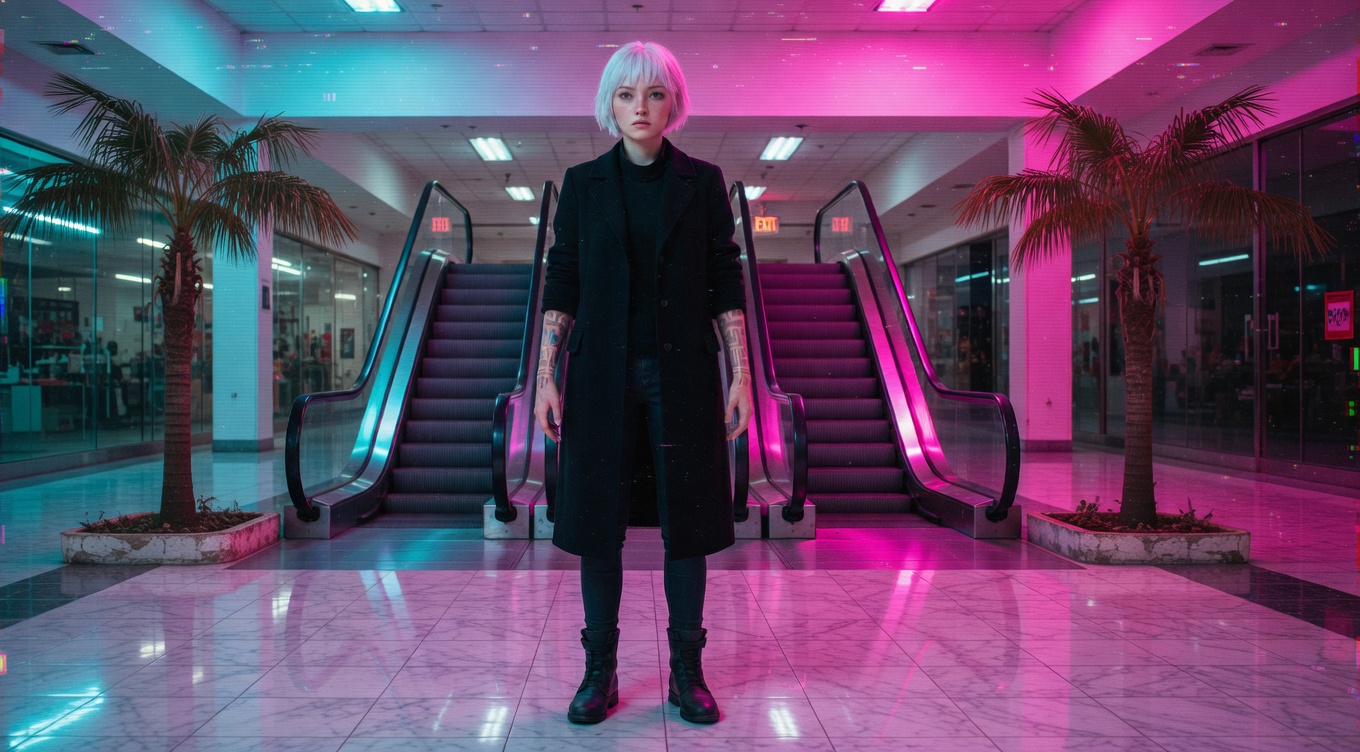
Vaporwave Aesthetic cinematic example

A visual style born from internet culture that repurposes 1980s and 90s commercial aesthetics — glitch art, neon pink and cyan gradients, retro computer interfaces, marble busts, Japanese text, and VHS degradation — into a nostalgic critique of consumer capitalism. While originating as a music genre, the visual language has been widely adopted in film, advertising, and AI generation. Nicolas Winding Refn's neon-soaked aesthetics in "The Neon Demon" share DNA with vaporwave. The style is simultaneously ironic and sincere — mourning a future that never arrived.

By Ivan Flugelman · Reviewed 16 July 2026

Prompt template

Vaporwave aesthetic with [Subject] bathed in neon pink and cyan gradient lighting, retro digital artifacts and scan lines overlaid, reflective chrome and glass surfaces, the nostalgic melancholy of a 1990s shopping mall at closing time, VHS color bleeding and tracking errors, palm trees and marble columns, the beauty of obsolete technology, everything slightly too saturated and slightly too perfect

Replace [Subject] with your own character or scene. The prompt is technology-agnostic and works as a starting point for AI image or video generators.

When to use Vaporwave Aesthetic

Use vaporwave when the image should feel nostalgic for a commercial future that never arrived. It suits empty malls, obsolete technology, artificial leisure spaces, retro interfaces, and scenes balancing irony with sincere melancholy. The style is strongest when recognizable 1980s or 1990s consumer imagery feels abandoned or looped. Avoid treating it as a random neon collage; the emotional center is loss, repetition, and obsolete promise.

Directing the AI

Bathe the subject in a pink-to-cyan gradient and place them among reflective chrome, glass, marble columns, palms, or an empty shopping-mall interior. Add scan lines, mild VHS color bleed, tracking errors, and retro interface fragments without covering the composition. Keep surfaces slightly too polished and colors slightly too saturated. Leave generous empty space and late-night stillness so obsolete commercial imagery reads as melancholy rather than energetic cyberpunk spectacle.

Common mistakes

  1. Combining every retro icon at once, turning a coherent nostalgic world into an internet sticker collage.
  2. Using dark aggressive cyberpunk lighting, which loses vaporwave’s pastel commercial emptiness and wistful artificial calm.
  3. Applying severe VHS damage until architecture, text, and the central subject can no longer be read.
Sources and further reading

  1. Genres: Where to Draw the Line? — British Film Institute
  2. BFI Screen Guides — Bloomsbury / BFI

A shot is not a world

Learn the fourteen fundamentals for building consistent characters, environments, visual logic, and stories that expand beyond one beautiful frame. Get World Building Codex 3.0 free, or explore the World Building Academy.

Related techniques

Color Grading

The process of altering and enhancing color in post-production to create a specific mood, era, or visual identity — the final paintbrush of cinema, transforming raw footage into visual art. The Coen Brothers' "O Brother, Where Art Thou?" (2000) was the first major film to be entirely digitally color graded, creating its sepia-toned Depression-era look. David Fincher works obsessively with colorist Stephen Nakamura to achieve the sickly green-yellow palette of "Se7en" and the cold precision of "Zodiac." Steven Soderbergh used radical color grading in "Traffic" — amber for Mexico, blue for the US, natural for Ohio — as a narrative device. Modern colorists like Company 3's Stefan Sonnenfeld and Technicolor's Peter Doyle are as essential to a film's look as the cinematographer.

Film Grain

The visible texture of chemical film stock — random variations in density and color that give analog footage its organic, tactile character, often added digitally for warmth and nostalgia. Christopher Nolan and Quentin Tarantino remain committed to shooting on actual film stock, preserving the authentic grain of celluloid. Steven Soderbergh shot "Traffic" on different film stocks to differentiate storylines. Modern digital films frequently add film grain in post-production — David Fincher, despite shooting digitally, adds carefully calibrated grain to every frame. The resurgence of film grain aesthetics in photography and video reflects a cultural desire for the organic imperfection that digital capture eliminates.

Tech Noir

A hybrid genre fusing film noir aesthetics with science fiction — rain-soaked neon cities, morally ambiguous protagonists navigating high-tech dystopias, and the existential dread of noir transplanted into a technological future. Ridley Scott's "Blade Runner" (1982) defined the genre, combining Raymond Chandler-style detective narrative with a cyberpunk cityscape. James Cameron coined the term as the name of a nightclub in "The Terminator." Alex Proyas's "Dark City" and Denis Villeneuve's "Blade Runner 2049" expanded the visual language. The genre asks noir's eternal question — what does it mean to be human? — through a technological lens.