← Cinematique Genres & Styles · Intermediate

Tech Noir Prompt for AI Image & Video

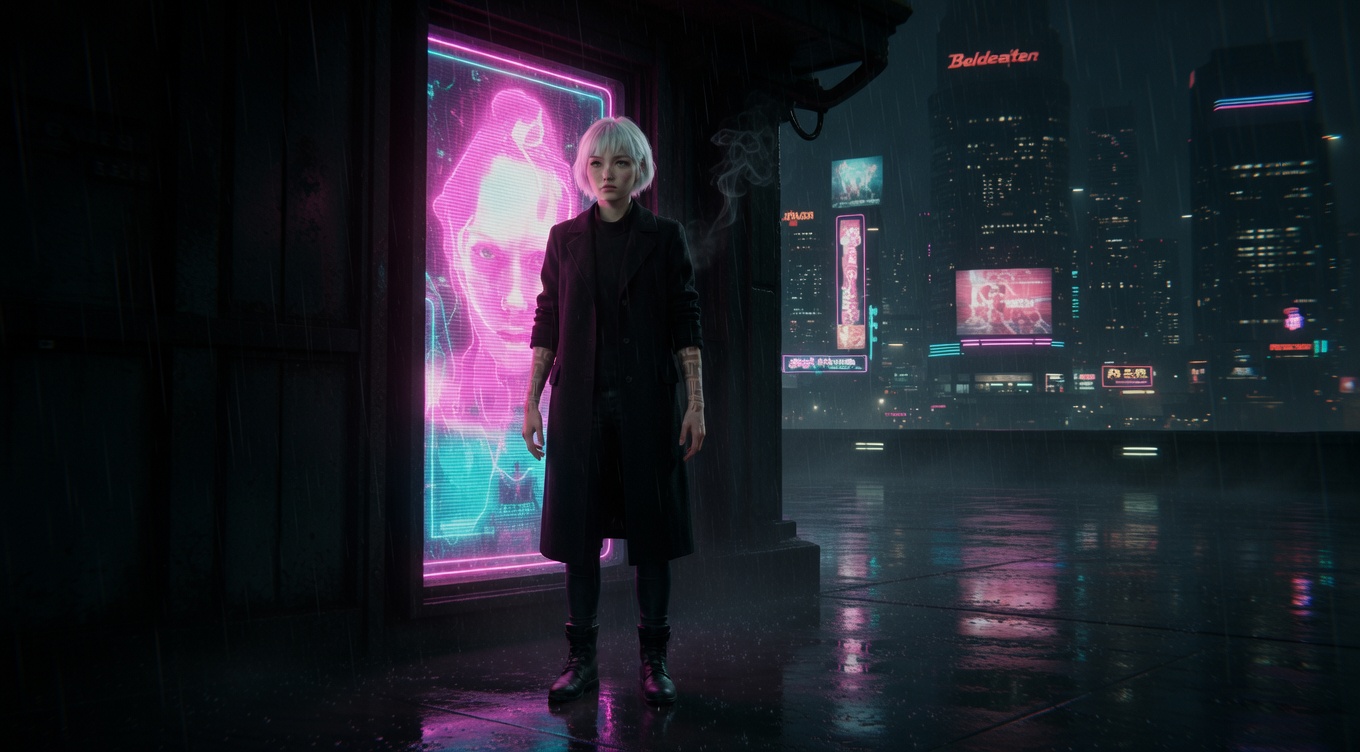
Tech Noir cinematic example

A hybrid genre fusing film noir aesthetics with science fiction — rain-soaked neon cities, morally ambiguous protagonists navigating high-tech dystopias, and the existential dread of noir transplanted into a technological future. Ridley Scott's "Blade Runner" (1982) defined the genre, combining Raymond Chandler-style detective narrative with a cyberpunk cityscape. James Cameron coined the term as the name of a nightclub in "The Terminator." Alex Proyas's "Dark City" and Denis Villeneuve's "Blade Runner 2049" expanded the visual language. The genre asks noir's eternal question — what does it mean to be human? — through a technological lens.

By Ivan Flugelman · Reviewed 16 July 2026

Prompt template

Tech noir scene with [Subject] in a rain-soaked neon-lit dystopia, the hard shadows and moral ambiguity of classic noir transplanted into a high-tech future, reflections of holographic advertisements in wet pavement, the loneliness of Blade Runner, anamorphic lens flares streaking through rain, cold blue and hot orange competing in every frame, smoke and vapor caught in shafts of artificial light

Replace [Subject] with your own character or scene. The prompt is technology-agnostic and works as a starting point for AI image or video generators.

When to use Tech Noir

Use Tech Noir for detective stories, fugitives, artificial identities, surveillance, and moral compromise inside advanced technological worlds. The genre works when noir loneliness and hard shadow remain central beneath futuristic surfaces. Rain, holographic advertising, and machines should intensify alienation rather than advertise spectacle. Give the protagonist a compromised choice or unstable identity; without that human pressure, the image becomes generic neon science fiction.

Directing the AI

Place the subject alone in a rain-soaked night street or shadowed high-tech interior. Mix cold blue environmental light with hot amber practicals, allowing both to streak across wet pavement and reflective glass. Add smoke, vapor, surveillance surfaces, and restrained holographic advertisements. Use hard side light, deep negative space, and anamorphic flare motivated by bright sources. Keep technology worn and embedded in daily life while the character remains morally and visually isolated.

Common mistakes

  1. Filling the frame with neon signs while omitting noir shadow, loneliness, and morally compromised character stakes.
  2. Presenting technology as clean spectacle, which loses the worn dystopian pressure central to the hybrid genre.
  3. Using evenly bright cyberpunk color, leaving no darkness for surveillance, concealment, or existential dread.
Sources and further reading

  1. Genres: Where to Draw the Line? — British Film Institute
  2. BFI Screen Guides — Bloomsbury / BFI

A shot is not a world

Learn the fourteen fundamentals for building consistent characters, environments, visual logic, and stories that expand beyond one beautiful frame. Get World Building Codex 3.0 free, or explore the World Building Academy.

Related techniques

Film Noir

A genre defined by high-contrast black-and-white photography, urban settings, morally ambiguous characters, femme fatales, and a pervasive sense of cynicism and doom. Born from German Expressionist emigrés and American hardboiled fiction, film noir flowered in the 1940s and 50s with Billy Wilder's "Double Indemnity," Orson Welles's "Touch of Evil," and John Huston's "The Maltese Falcon." Cinematographers like John Alton and Nicholas Musuraca defined the visual language of shadows, rain, and venetian blinds. The genre was revived as neo-noir by Roman Polanski's "Chinatown," the Coen Brothers' "Blood Simple," and David Lynch's "Mulholland Drive."

Color Grading

The process of altering and enhancing color in post-production to create a specific mood, era, or visual identity — the final paintbrush of cinema, transforming raw footage into visual art. The Coen Brothers' "O Brother, Where Art Thou?" (2000) was the first major film to be entirely digitally color graded, creating its sepia-toned Depression-era look. David Fincher works obsessively with colorist Stephen Nakamura to achieve the sickly green-yellow palette of "Se7en" and the cold precision of "Zodiac." Steven Soderbergh used radical color grading in "Traffic" — amber for Mexico, blue for the US, natural for Ohio — as a narrative device. Modern colorists like Company 3's Stefan Sonnenfeld and Technicolor's Peter Doyle are as essential to a film's look as the cinematographer.

Lens Distortion

Optical aberrations from specific lenses that bend, stretch, or warp the image — wide-angle barrel distortion, anamorphic oval bokeh, or vintage lens flaring — each lens has a personality. Emmanuel Lubezki exploits wide-angle distortion in his work with Terrence Malick, using ultra-wide lenses that bend the edges of reality. Roger Deakins prefers Arri/Zeiss Master Primes for their clinical precision, while Robert Richardson often chooses older, imperfect glass for its character. The anamorphic distortion of Panavision C-series and E-series lenses — their signature flares, edge softness, and oval bokeh — has become synonymous with the "cinematic look." Modern lens designers at Cooke, Arri, and Zeiss carefully engineer specific amounts of controlled aberration.