← Cinematique Genres & Styles · Intermediate

Film Noir Prompt for AI Image & Video

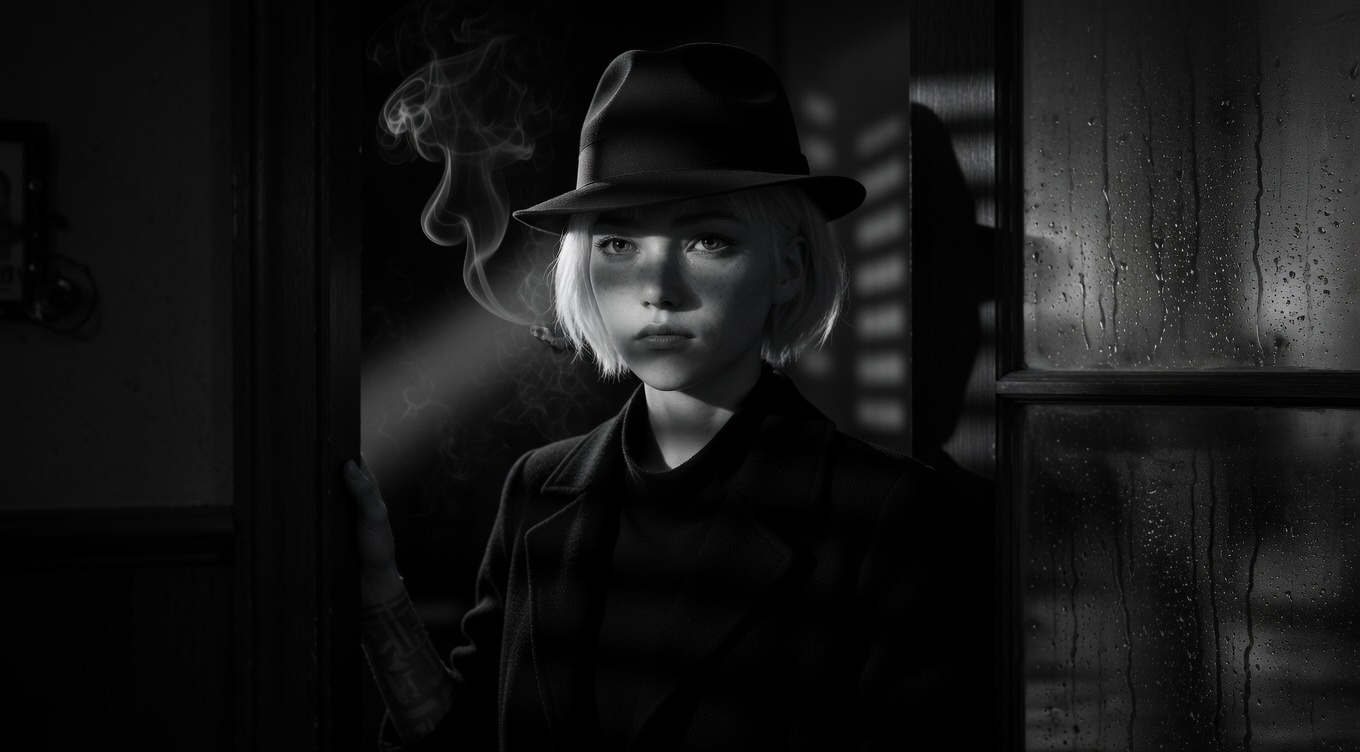
Film Noir cinematic example

A genre defined by high-contrast black-and-white photography, urban settings, morally ambiguous characters, femme fatales, and a pervasive sense of cynicism and doom. Born from German Expressionist emigrés and American hardboiled fiction, film noir flowered in the 1940s and 50s with Billy Wilder's "Double Indemnity," Orson Welles's "Touch of Evil," and John Huston's "The Maltese Falcon." Cinematographers like John Alton and Nicholas Musuraca defined the visual language of shadows, rain, and venetian blinds. The genre was revived as neo-noir by Roman Polanski's "Chinatown," the Coen Brothers' "Blood Simple," and David Lynch's "Mulholland Drive."

By Ivan Flugelman · Reviewed 16 July 2026

Prompt template

Film noir aesthetic with [Subject] in high-contrast black and white, deep blacks and silvery highlights, venetian blind shadow patterns, neon signs reflected in rain puddles, shot on Kodak Double-X black and white stock with hard lighting creating razor shadows, the John Alton visual language of moral ambiguity expressed through the war between light and darkness

Replace [Subject] with your own character or scene. The prompt is technology-agnostic and works as a starting point for AI image or video generators.

When to use Film Noir

Use film noir for crime, betrayal, investigation, fatal attraction, or any story built on compromised choices and approaching doom. Its visual language turns light into moral pressure: characters are divided by shadow, streets become traps, and interiors conceal more than they reveal. The genre is strongest when cinematography and character conflict agree. Venetian blinds alone cannot create noir without ambiguity, danger, and isolation.

Directing the AI

Work in high-contrast black and white with deep blacks, silvery highlights, and limited midtones. Place the subject in an urban interior or rain-dark street, then rake hard light through blinds, doorways, or smoke to create sharp patterned shadows. Use low or oblique angles and leave portions of faces concealed. Add wet reflections and restrained practical neon translated into tonal brightness. Compose every light source as pressure, surveillance, or temptation.

Common mistakes

  1. Adding venetian-blind shadows to a bright neutral scene without noir conflict, danger, or moral ambiguity.
  2. Crushing every dark area to featureless black, erasing the location and the subject’s readable silhouette.
  3. Using soft flattering portrait light, which removes the hard visual conflict central to noir imagery.
Sources and further reading

  1. Genres: Where to Draw the Line? — British Film Institute
  2. BFI Screen Guides — Bloomsbury / BFI

A shot is not a world

Learn the fourteen fundamentals for building consistent characters, environments, visual logic, and stories that expand beyond one beautiful frame. Get World Building Codex 3.0 free, or explore the World Building Academy.

Related techniques

Low-Key Lighting

A dramatic lighting style dominated by deep shadows and high contrast where only select areas are illuminated, creating mystery, tension, and a noir-like atmosphere. John Alton literally wrote the book — "Painting with Light" — and defined low-key noir cinematography in films like "The Big Combo" and "T-Men." Gordon Willis pushed low-key to its extreme in "The Godfather," with Marlon Brando's eyes often invisible in shadow. Bradford Young's low-key work in "Arrival" and "Selma" brought a moody, naturalistic darkness to modern cinema, and Robert Richardson uses low-key lighting in Tarantino's "The Hateful Eight" to make a single-room Western feel like a horror film.

Chiaroscuro

An extreme contrast between light and dark, inspired by Renaissance painting, creating deeply sculpted, painterly images with rich shadows and selective illumination. Directly descended from Caravaggio's revolutionary use of tenebrism in paintings like "The Calling of Saint Matthew," chiaroscuro entered cinema through German Expressionism and was perfected by Gordon Willis in "The Godfather" — his overhead toplight leaving Brando's eye sockets in impenetrable shadow became one of the most imitated looks in film history. Vittorio Storaro brought painterly chiaroscuro to "Apocalypse Now," and Barry Jenkins' cinematographer James Laxton uses it to sculpt Black skin with luminous beauty in "Moonlight."

Tech Noir

A hybrid genre fusing film noir aesthetics with science fiction — rain-soaked neon cities, morally ambiguous protagonists navigating high-tech dystopias, and the existential dread of noir transplanted into a technological future. Ridley Scott's "Blade Runner" (1982) defined the genre, combining Raymond Chandler-style detective narrative with a cyberpunk cityscape. James Cameron coined the term as the name of a nightclub in "The Terminator." Alex Proyas's "Dark City" and Denis Villeneuve's "Blade Runner 2049" expanded the visual language. The genre asks noir's eternal question — what does it mean to be human? — through a technological lens.