← Cinematique Lighting · Basic

Silhouette Prompt for AI Image & Video

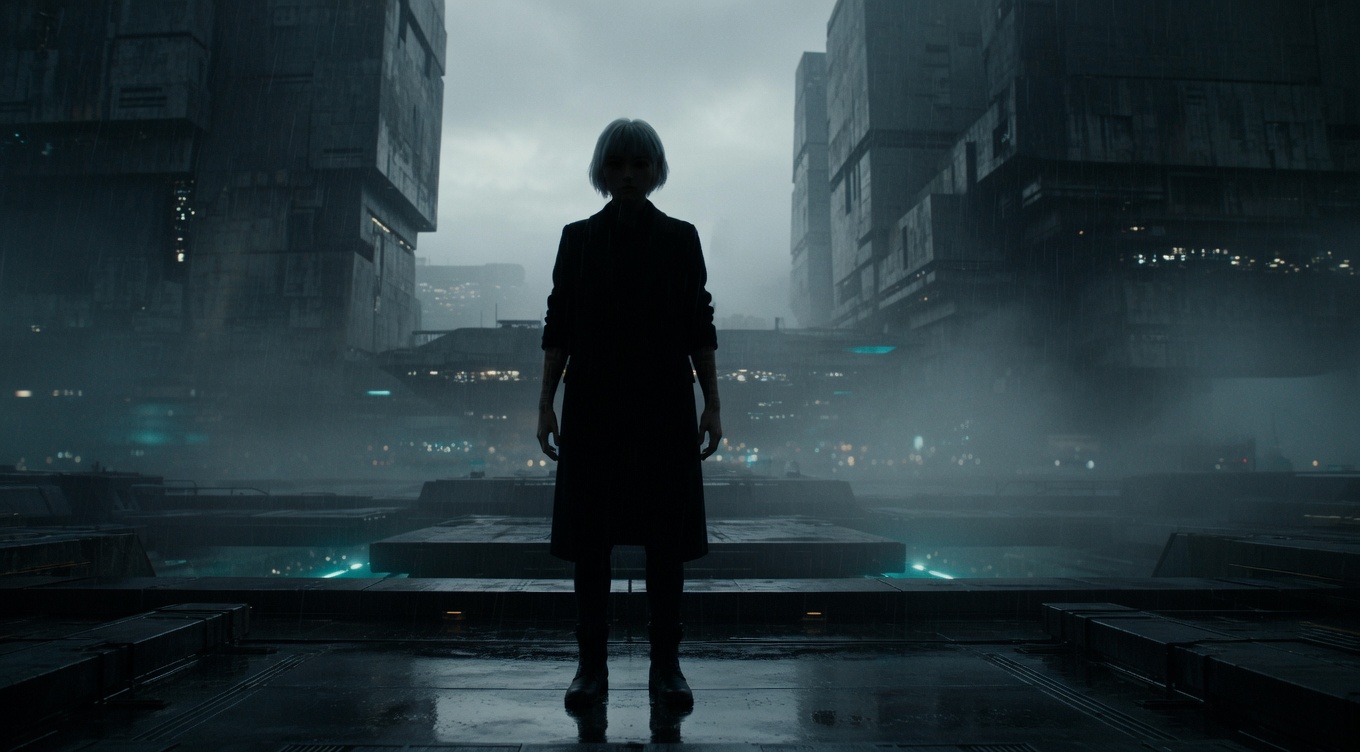
Silhouette cinematic example

Subject appears as a dark shape against a bright background, with all surface detail eliminated, reducing characters to pure form and creating iconic, mythic, or anonymous images. David Lean created one of cinema's most recognizable silhouettes with Peter O'Toole against the desert sun in "Lawrence of Arabia." Steven Spielberg's E.T. bicycle silhouette against the moon became one of the most iconic images in film history. Terrence Malick uses human silhouettes against twilight skies throughout "The Thin Red Line" and "Days of Heaven" to reduce characters to archetypal figures against an indifferent natural world.

By Ivan Flugelman · Reviewed 16 July 2026

Prompt template

[Subject] reduced to a pure dark silhouette against an intensely bright backlight source, all surface detail eliminated leaving only iconic form and outline, strong rim light tracing edges, high contrast, Kodak Double-X black and white stock

Replace [Subject] with your own character or scene. The prompt is technology-agnostic and works as a starting point for AI image or video generators.

When to use Silhouette

Use a silhouette when identity should give way to shape, gesture, or archetype. It can make a figure mythic, anonymous, romantic, threatening, or small against a bright world. The outline must communicate the action because interior detail disappears. Choose distinctive profiles and separated limbs. Avoid silhouettes for moments that depend on facial performance, costume texture, or subtle information inside the subject.

Directing the AI

Place the strongest light source directly behind the subject and expose for the bright sky, doorway, moon, or screen. Reduce the figure to near-black with no visible facial or surface detail. Separate arms, legs, props, and profile so the outline reads instantly, then add only a thin edge trace if needed. Keep the background simple and luminous. In video, choreograph lateral movement that preserves the silhouette instead of merging body parts together.

Common mistakes

  1. Lifting shadow detail inside the figure, weakening the graphic reduction that makes a silhouette instantly recognizable.
  2. Overlapping limbs and props against the torso, creating an unreadable dark mass instead of expressive outline.
  3. Using a cluttered bright background whose shapes compete with the subject's edge and destroy figure-ground clarity.
Sources and further reading

  1. Film Lighting — The Ultimate Guide — StudioBinder
  2. Film Lighting Techniques — How to Get a Cinematic Look — StudioBinder

A shot is not a world

Learn the fourteen fundamentals for building consistent characters, environments, visual logic, and stories that expand beyond one beautiful frame. Get World Building Codex 3.0 free, or explore the World Building Academy.

Related techniques

Backlight

Light positioned behind the subject, creating a rim of light around their edges that separates the subject from the background and adds a halo-like, ethereal quality. Emmanuel Lubezki is the modern master of backlighting, using natural backlight in "The Revenant" and "The Tree of Life" to create an almost divine luminosity around his subjects. Vittorio Storaro's backlighting in "The Last Emperor" gives Pu Yi a godlike glow, and Janusz Kamiński's aggressive backlighting in "Schindler's List" and "Saving Private Ryan" — sometimes called the "Kamiński look" — adds an otherworldly haze to traumatic events.

Figure-Ground Relationship

The perceptual relationship between a subject (figure) and its background (ground) — strong figure-ground separation makes subjects pop, while ambiguous relationships create artistic tension. Film noir deliberately plays with figure-ground by merging characters into shadows, while Spielberg ensures crisp separation for visual clarity. Kubrick uses monochromatic figure-ground merging in "Full Metal Jacket" to show soldiers losing individuality. Roger Deakins creates separation through subtle lighting rather than color contrast, and cinematographer James Laxton uses luminous skin against dark backgrounds in "Moonlight" and "If Beale Street Could Talk" to celebrate Black skin tones.

Golden Hour

The warm, soft, directional light that occurs shortly after sunrise or before sunset, casting long shadows and bathing everything in a warm amber glow that flatters skin and landscapes. Terrence Malick is the supreme poet of golden hour — "Days of Heaven," shot almost entirely in magic hour by Néstor Almendros and Haskell Wexler, remains the gold standard. Emmanuel Lubezki captured breathtaking golden hour light in "The Revenant" and "The New World" using only natural illumination. Ridley Scott's golden hour battle sequences in "Gladiator" lend warmth to violence, and Sofia Coppola bathes "The Virgin Suicides" in nostalgic golden light.