← Cinematique Camera Work · Intermediate

Pull Out Prompt for AI Image & Video

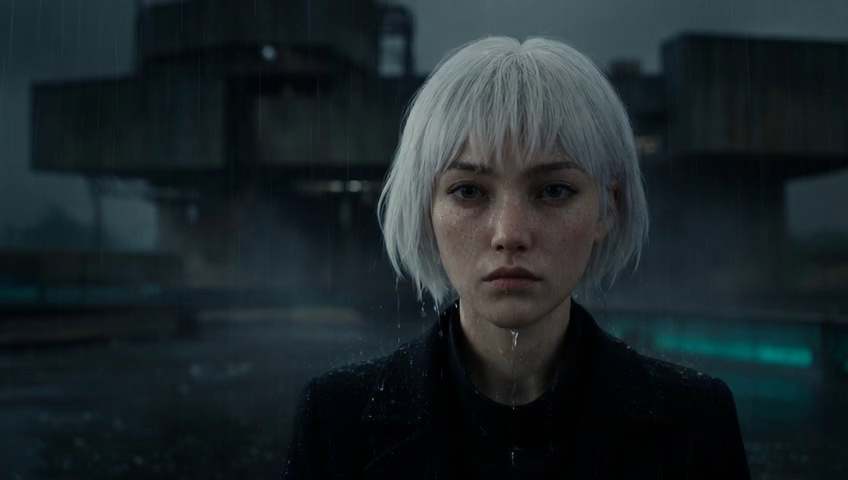
Pull Out cinematic example

The camera physically moves away from the subject, revealing more of the environment, often used to create a sense of isolation, revelation, or to transition from intimate to epic scale. The final pull-out of "The Truman Show" — revealing that Truman's entire world is a television set — is a defining use of the technique. Steven Spielberg's pull-out in "Schindler's List" from Oskar Schindler to reveal the enormous line of saved workers is emotionally devastating. The famous opening of Robert Altman's "The Player" pulls out from an office window to reveal the entire studio lot in one continuous movement.

By Ivan Flugelman · Reviewed 16 July 2026

Prompt template

Pull-out shot beginning tight on [Subject] then slowly withdrawing to reveal the true scale of their surroundings, the shot transitioning from intimacy to cosmic isolation in one continuous movement, shot on 24mm wide-angle lens mounted on a telescoping jib arm, the scale expanding to swallow the individual

Replace [Subject] with your own character or scene. The prompt is technology-agnostic and works as a starting point for AI image or video generators.

When to use Pull Out

Choose a pull-out when new context should reframe an intimate moment. Moving away can reveal a crowd, set, landscape, aftermath, or barrier that changes the subject's meaning and makes them feel isolated. It works for endings, revelations, and transitions from personal to epic scale. The wider information must matter; withdrawing only to show more empty room rarely earns the emotional shift.

Directing the AI

Start tightly enough to read the subject's expression, then move the camera physically backward in one continuous path. Let foreground objects enter and background architecture expand through visible parallax, gradually reducing the person inside the composition. Use a wide perspective only as space opens, not as a sudden lens jump. Specify the final revealed element and maintain the subject's screen position so viewers can track them as the environment begins to swallow the frame.

Common mistakes

  1. Revealing nothing consequential beyond the original frame, so the withdrawal changes size but not meaning.
  2. Shrinking the subject through a zoom alone, missing the foreground parallax that makes physical retreat convincing.
  3. Losing the subject behind newly revealed objects before the audience can compare them with the larger environment.
Sources and further reading

  1. 50+ Types of Camera Shots, Angles, and Techniques — StudioBinder
  2. Types of Camera Movements in Film Explained — StudioBinder

A shot is not a world

Learn the fourteen fundamentals for building consistent characters, environments, visual logic, and stories that expand beyond one beautiful frame. Get World Building Codex 3.0 free, or explore the World Building Academy.

Related techniques

Crane Shot

Camera mounted on a mechanical crane arm that sweeps upward, downward, or across a scene with majestic, controlled movement, often used for dramatic reveals or grand establishing moments. Orson Welles opened "Touch of Evil" with one of cinema's most famous crane shots — a continuous three-minute take following a car bomb through a Mexican border town. The final crane shot of "Gone with the Wind" pulling back to reveal hundreds of wounded soldiers remains one of Hollywood's most iconic images. Brian De Palma used elaborate crane work in "The Untouchables" for the Union Station staircase sequence, and Steven Spielberg's crane shots in "Schindler's List" shift from intimate to devastating in scale.

Extreme Long Shot

A very wide shot where the subject appears small against a vast environment, emphasizing scale, isolation, or the overwhelming nature of the surroundings. David Lean defined the technique in "Lawrence of Arabia," where Peter O'Toole becomes a speck against infinite desert horizons, communicating both the grandeur and the punishing emptiness of the landscape. Terrence Malick uses extreme long shots in "The Thin Red Line" to dwarf soldiers against indifferent nature, and Chloé Zhao employed them throughout "Nomadland" to place Frances McDormand's van as a tiny vessel adrift in the American West.

Dolly Shot

A smooth camera movement where the entire camera physically moves toward, away from, or alongside the subject on a wheeled platform or track, creating an immersive sense of movement through space. Orson Welles used dolly shots to navigate the deep-focus interiors of "Citizen Kane," while Spike Lee invented his signature double-dolly shot — mounting both actor and camera on the same platform — to create a floating, surreal glide seen in "Do the Right Thing" and "25th Hour." Martin Scorsese's famous Copacabana shot in "Goodfellas" tracks Henry Hill through the back entrance of a nightclub in one fluid dolly movement.