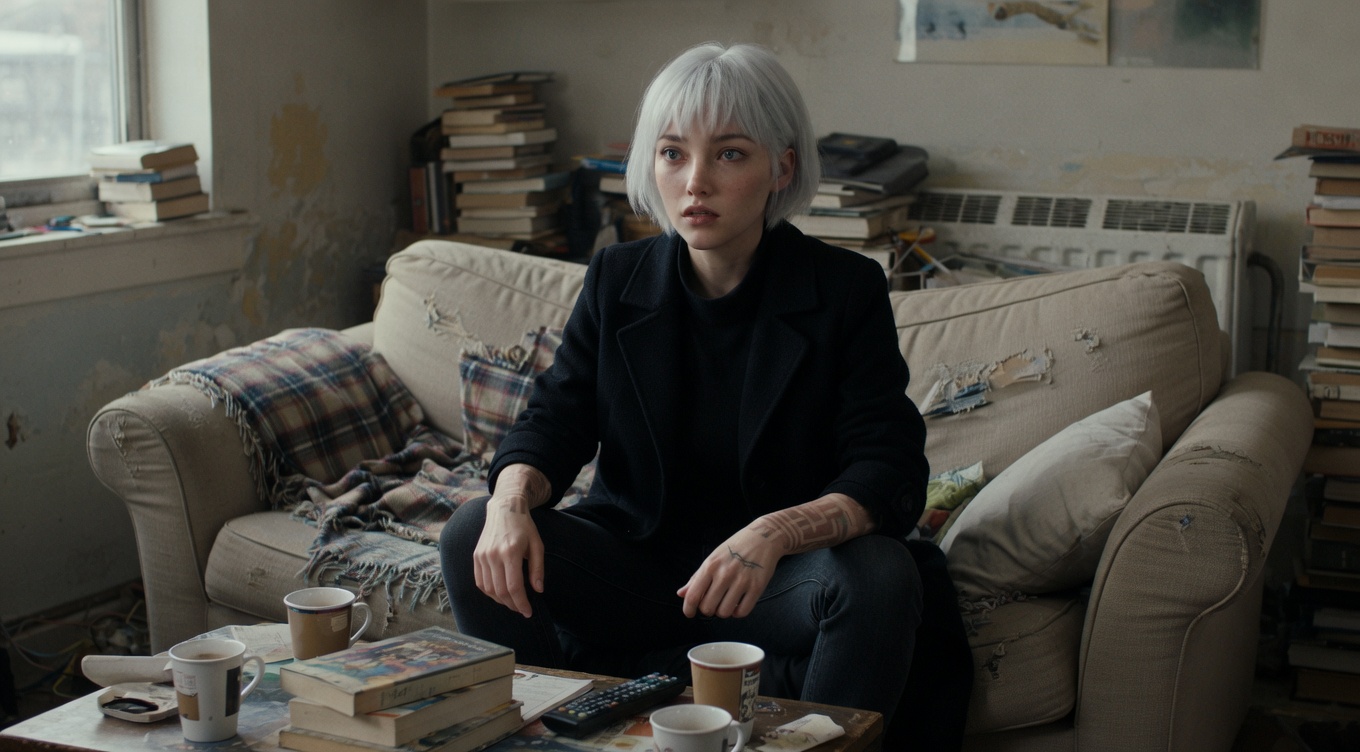
Ultra-low-budget indie filmmaking focused on naturalistic dialogue, improvisation, and the awkwardness of young adult relationships — micro-budget intimacy as aesthetic. Andrew Bujalski's "Funny Ha Ha" (2002) is considered mumblecore's founding film, followed by the Duplass Brothers' "The Puffy Chair," Joe Swanberg's "Hannah Takes the Stairs," and Greta Gerwig's early acting work in the movement. The aesthetic defined by its limitations — consumer cameras, available light, non-professional audio — turned zero-budget necessity into a deliberate creative philosophy. Many mumblecore alumni went on to major careers: Gerwig directed "Lady Bird" and "Barbie," and the Duplass Brothers produce for HBO.
By Ivan Flugelman · Reviewed 16 July 2026
Prompt template
Mumblecore scene with [Subject] shot on what appears to be a consumer DSLR with available window light, the dialogue clearly improvised with interrupted sentences and awkward pauses, the framing functional rather than composed, the sound ambient and slightly echoey, the Bujalski-Swanberg aesthetic where lack of budget becomes the honesty of the image, naturalistic window light
Replace [Subject] with your own character or scene. The prompt is technology-agnostic and works as a starting point for AI image or video generators.
When to use Mumblecore
Use mumblecore for low-stakes situations carrying high emotional discomfort: uncertain relationships, stalled adulthood, shared apartments, and conversations where people interrupt, retreat, or say the wrong thing. Its modest visual scale keeps attention on behavior and pauses. The style suits small casts and real spaces. Avoid adding polished coverage or dramatic plot machinery that overwhelms the fragile honesty of ordinary interaction.
Directing the AI
Stage two or three people in a real apartment, kitchen, car, or neighborhood space with available window light and functional framing. Keep the camera handheld but calm, adjusting late when someone shifts position. Let dialogue overlap, sentences trail off, and pauses remain visible in posture and eye lines. Retain room echo and ambient sound. Avoid glamour lighting and perfect shot-reverse-shot symmetry. The scene should feel discovered around the performers, not engineered before them.
Common mistakes
Writing polished speeches for every character, removing the interruption, hesitation, and uncertainty central to the style.
Using aggressive handheld shake during quiet conversation, which competes with subtle behavior rather than observing it.
Lighting the room like a prestige drama, erasing the practical intimacy of available windows and fixtures.