← Cinematique Lighting · Basic

Key Light Prompt for AI Image & Video

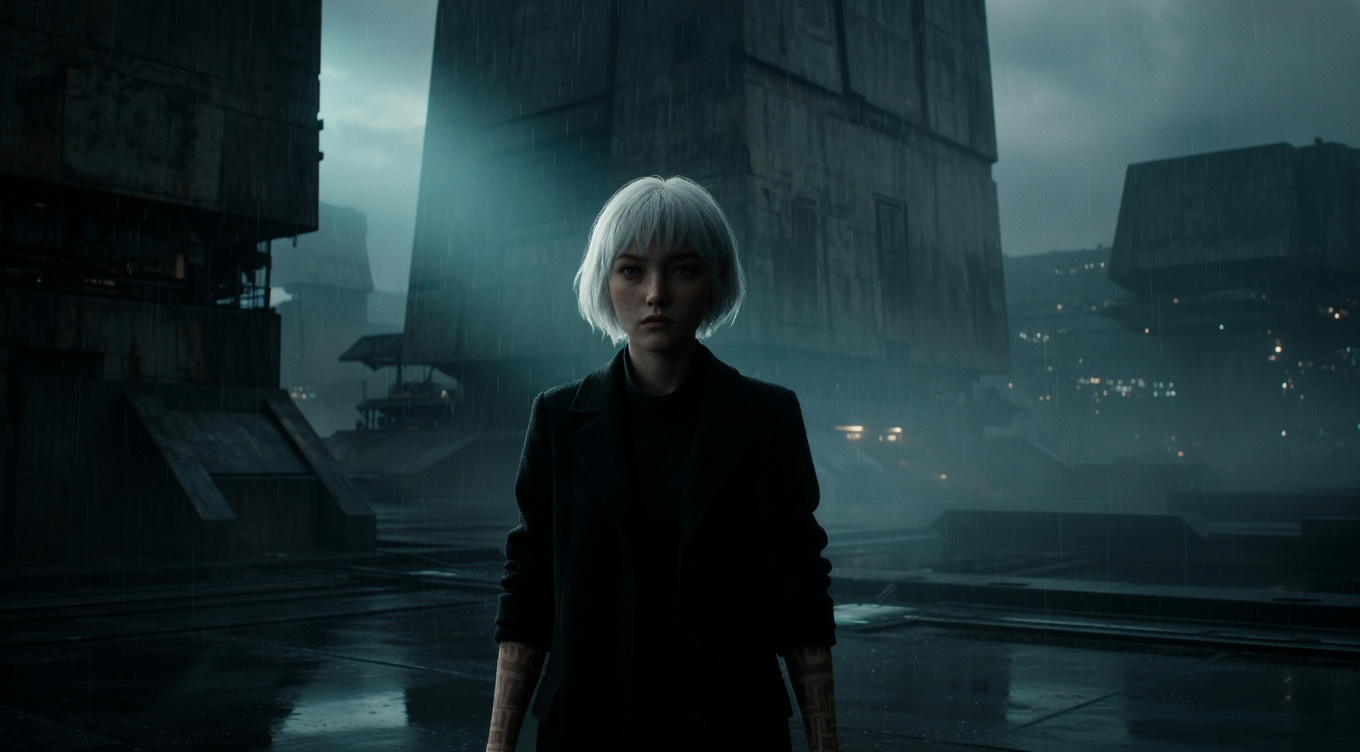
Key Light cinematic example

The primary and brightest light source in a scene, whose position, intensity, and quality define the overall mood and establish the dominant direction of light and shadow. Gordon Willis, "the Prince of Darkness," used deliberately underexposed key lights in "The Godfather" to create the shadowy world of the Corleone family. Vittorio Storaro sculpted light as pure emotion in "Apocalypse Now" and "Last Tango in Paris." The placement and quality of the key light is the single most important creative decision in any lighting setup, shaping everything from film noir's harsh side-key to Lubezki's soft naturalistic sources.

By Ivan Flugelman · Reviewed 16 July 2026

Prompt template

Strong directional key light from a single source illuminating [Subject], the light carving sharp shadows that define every contour, dust motes floating in the visible beam, the single-source authority establishing the entire mood, a Fresnel spotlight quality with defined beam edge, warm tungsten color temperature at 3200K against cool blue ambient shadow

Replace [Subject] with your own character or scene. The prompt is technology-agnostic and works as a starting point for AI image or video generators.

When to use Key Light

Define the key light whenever one source must establish the scene's dominant visual logic. Its angle and hardness can make a face open, guarded, glamorous, threatening, or exhausted before secondary lights do anything. A clear key is vital in portraits and narrative scenes where viewers should understand where illumination comes from. It can stand alone or anchor a larger setup, but should never feel directionless.

Directing the AI

Name the key as the brightest source and place it precisely relative to the subject, such as 45 degrees camera-left and slightly high. Describe whether its beam is hard or soft, where the nose and cheek shadows fall, and how rapidly illumination drops across the scene. A warm tungsten key against cooler ambient shadow creates readable color separation. Keep every secondary source dim enough that the key retains authority over form and mood.

Common mistakes

  1. Calling several sources the key, which destroys the single dominant direction needed to sculpt the scene coherently.
  2. Specifying brightness without angle or quality, leaving facial shadows and material texture entirely uncontrolled.
  3. Allowing ambient illumination to overpower the key, making the stated primary source visually irrelevant.
Sources and further reading

  1. Film Lighting — The Ultimate Guide — StudioBinder
  2. Film Lighting Techniques — How to Get a Cinematic Look — StudioBinder

A shot is not a world

Learn the fourteen fundamentals for building consistent characters, environments, visual logic, and stories that expand beyond one beautiful frame. Get World Building Codex 3.0 free, or explore the World Building Academy.

Related techniques

Three-Point Lighting

The foundational lighting setup using three sources: a key light as the primary source, a fill light to soften shadows, and a backlight to separate the subject from the background. Developed during Hollywood's Golden Age by cinematographers like James Wong Howe and Gregg Toland, three-point lighting became the grammar of classical Hollywood cinema. It defined the glamorous look of stars from Garbo to Monroe and remains the starting point for all narrative lighting. Modern cinematographers like Roger Deakins and Janusz Kamiński build upon and deconstruct this foundation in every film they shoot.

Hard Light

Light from a small or distant source that creates sharp, well-defined shadows, adding texture, drama, and graphic quality that can be harsh and unflattering or strikingly bold. Film noir cinematographers like John Alton and Nicholas Musuraca built entire visual worlds from hard light, creating the razor-sharp shadows of venetian blinds and fedora brims. David Fincher and Darius Khondji used hard light sources in "Se7en" to create the grimy, punishing atmosphere of a city drowning in sin. The direct sunlight in Sergio Leone's Westerns functions as nature's hard light, carving faces into dramatic relief.

Soft Light

Diffused light from a large source that wraps around the subject, creating gentle shadow transitions that are flattering for skin and create a dreamy or intimate quality. Sven Nykvist, Ingmar Bergman's cinematographer, was legendary for his soft, natural light in films like "Cries and Whispers" and "Fanny and Alexander," often bouncing light off white walls and ceilings. Emmanuel Lubezki creates ethereal soft light in Terrence Malick's "The Tree of Life" using large diffusion frames and natural overcast skies. Robert Richardson's soft light work in "The Aviator" recreated the luminous quality of Golden Age Hollywood glamour photography.