← Cinematique Lighting · Basic

Hard Light Prompt for AI Image & Video

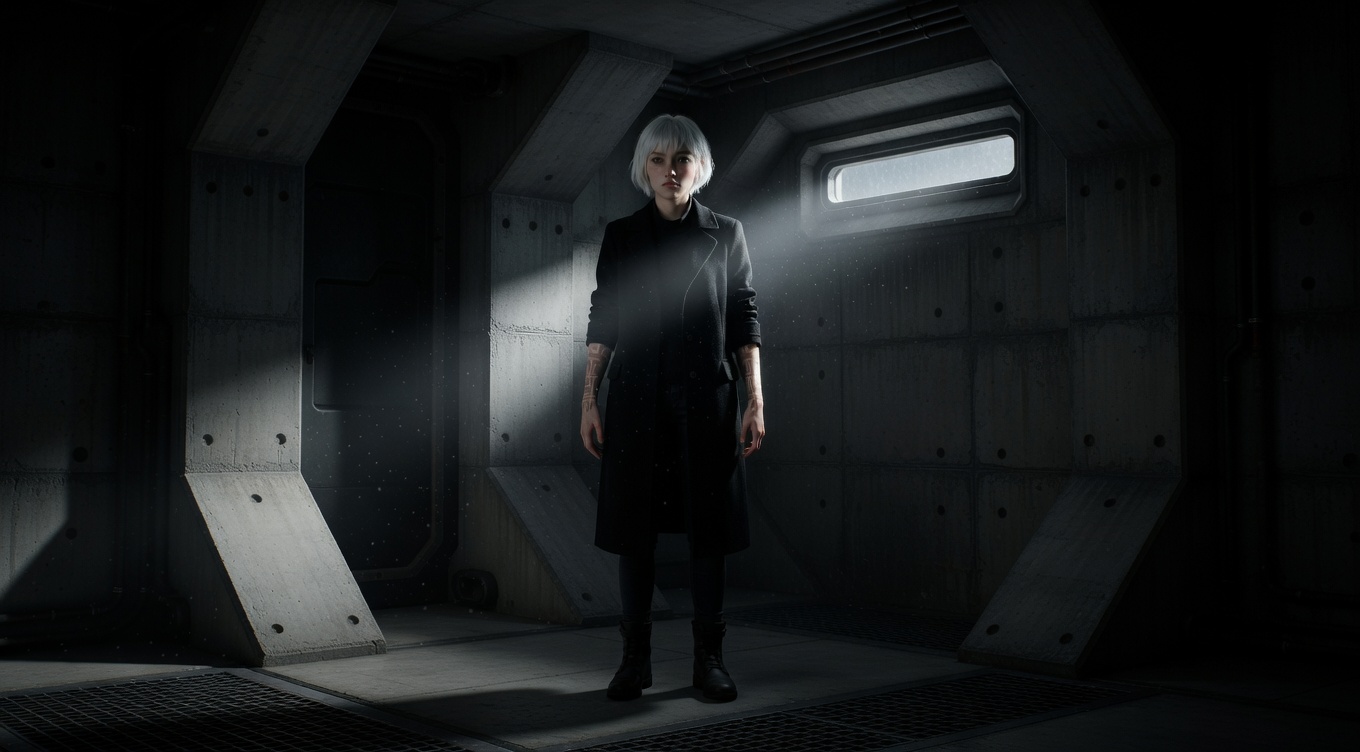
Hard Light cinematic example

Light from a small or distant source that creates sharp, well-defined shadows, adding texture, drama, and graphic quality that can be harsh and unflattering or strikingly bold. Film noir cinematographers like John Alton and Nicholas Musuraca built entire visual worlds from hard light, creating the razor-sharp shadows of venetian blinds and fedora brims. David Fincher and Darius Khondji used hard light sources in "Se7en" to create the grimy, punishing atmosphere of a city drowning in sin. The direct sunlight in Sergio Leone's Westerns functions as nature's hard light, carving faces into dramatic relief.

By Ivan Flugelman · Reviewed 16 July 2026

Prompt template

Hard light from a bare overhead source casting razor-sharp shadows on [Subject], defined shadow edges so crisp they look cut with a knife, every surface texture amplified by the raking illumination, shot on Kodak Double-X black and white stock for maximum contrast, a 35mm Zeiss Planar lens, the graphic severity of film noir where light itself becomes an instrument of pressure

Replace [Subject] with your own character or scene. The prompt is technology-agnostic and works as a starting point for AI image or video generators.

When to use Hard Light

Use hard light when sharp shadows and exposed texture should create pressure, heat, severity, or graphic style. A small source can carve faces, project window patterns, define dust, or make architecture feel unforgiving. It suits noir, Westerns, interrogation, and harsh daylight. Because it reveals every surface irregularity, choose it deliberately for skin and products rather than assuming stronger contrast always looks more cinematic.

Directing the AI

Place a small bare or distant source at a defined angle and demand crisp, clearly shaped shadow edges. Let raking light reveal pores, fabric, dust, walls, and metal while keeping the contrast strong. A monochrome or restrained palette can make the geometry more forceful. Name any projected shape, such as blinds, and align it with the source. Avoid broad diffusion, ambient fill, or several competing directions that would soften the graphic result.

Common mistakes

  1. Adding large diffusion to the source, softening the edges until the defining hard-shadow quality disappears.
  2. Using several hard lights from unrelated angles, producing crossed shadows that make the scene visually incoherent.
  3. Ignoring how raking light reveals skin and surface flaws, creating harsh detail where the subject needed restraint.
Sources and further reading

  1. Film Lighting — The Ultimate Guide — StudioBinder
  2. Film Lighting Techniques — How to Get a Cinematic Look — StudioBinder

A shot is not a world

Learn the fourteen fundamentals for building consistent characters, environments, visual logic, and stories that expand beyond one beautiful frame. Get World Building Codex 3.0 free, or explore the World Building Academy.

Related techniques

Soft Light

Diffused light from a large source that wraps around the subject, creating gentle shadow transitions that are flattering for skin and create a dreamy or intimate quality. Sven Nykvist, Ingmar Bergman's cinematographer, was legendary for his soft, natural light in films like "Cries and Whispers" and "Fanny and Alexander," often bouncing light off white walls and ceilings. Emmanuel Lubezki creates ethereal soft light in Terrence Malick's "The Tree of Life" using large diffusion frames and natural overcast skies. Robert Richardson's soft light work in "The Aviator" recreated the luminous quality of Golden Age Hollywood glamour photography.

Low-Key Lighting

A dramatic lighting style dominated by deep shadows and high contrast where only select areas are illuminated, creating mystery, tension, and a noir-like atmosphere. John Alton literally wrote the book — "Painting with Light" — and defined low-key noir cinematography in films like "The Big Combo" and "T-Men." Gordon Willis pushed low-key to its extreme in "The Godfather," with Marlon Brando's eyes often invisible in shadow. Bradford Young's low-key work in "Arrival" and "Selma" brought a moody, naturalistic darkness to modern cinema, and Robert Richardson uses low-key lighting in Tarantino's "The Hateful Eight" to make a single-room Western feel like a horror film.

Gobo Lighting

Light shaped by a template (gobo) placed in front of the source, casting patterned shadows — window frames, venetian blinds, branches — adding narrative texture without physical set pieces. Film noir cinematography relied heavily on gobo lighting; John Alton's venetian blind shadows in "The Big Combo" became the genre's visual shorthand. Dean Cundey used gobo patterns in John Carpenter's "Halloween" to cast ominous branch shadows across interiors. Roger Deakins uses subtle gobo patterns in "Skyfall" to create the impression of light filtering through unseen architectural elements, adding visual complexity without visible source.