LOG 007: The Latent Prison
Latent space meets liminal space: why AI-generated worlds feel hollow, and how to escape the high-fidelity trap of frictionless digital art.
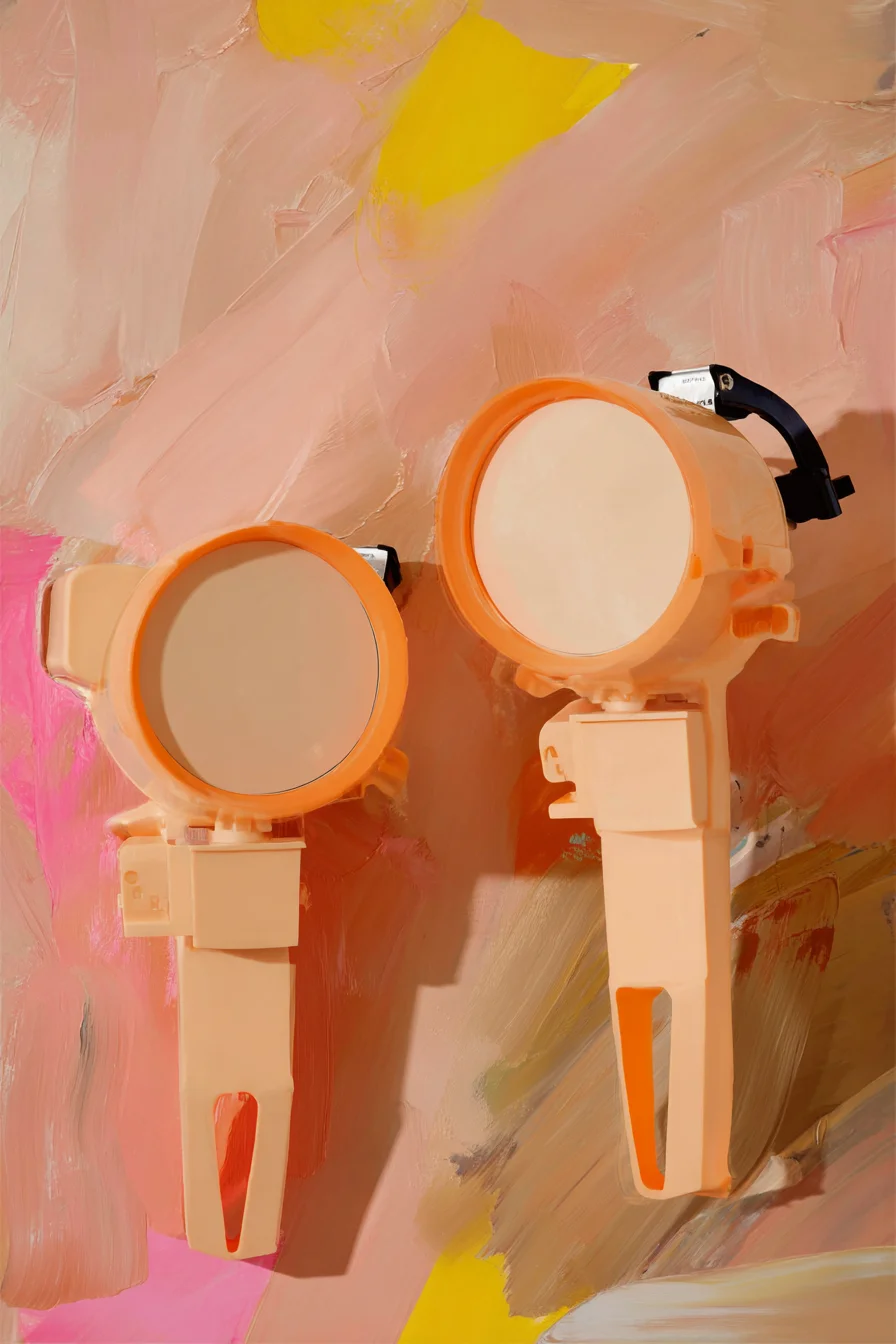
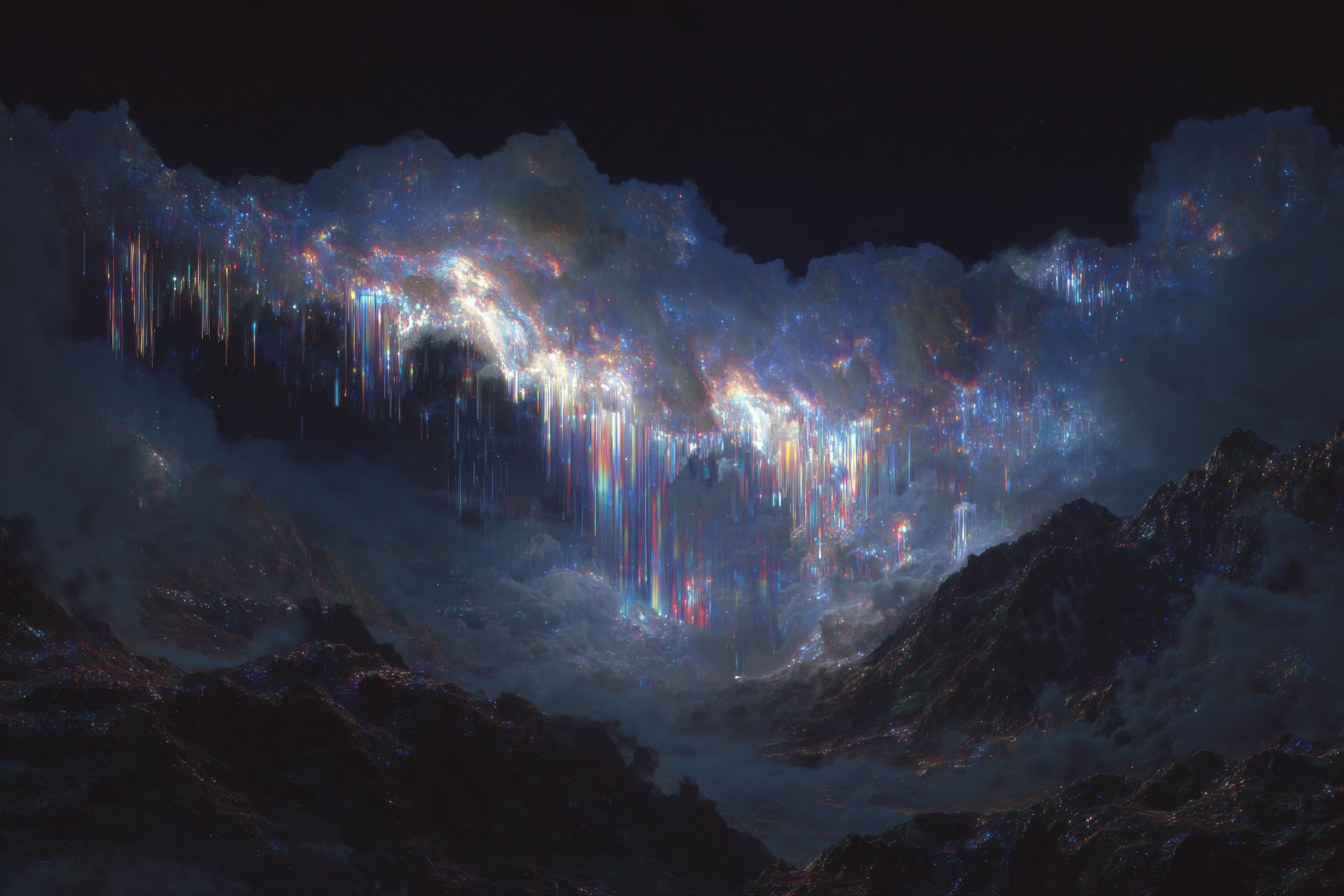
I often confuse Liminal Space with Latent Space. Maybe it is just semantics, or maybe my brain is trying to tell me that they are actually the same thing.
To understand the trap we are building for ourselves, we have to understand the architectural differences of these two voids.
The Coordinate System (Latent Space)
Latent Space is a mathematical concept. It is the hidden, high-dimensional map where an AI stores its understanding of the world. Imagine a vast, liquid coordinate system. 3D Artists might get this faster. At coordinate [0,0,1], the machine holds the concept of "Apple." At coordinate [0,0,10], it holds "Orange." The space between them—[0,0,5]—is a ghost. It is a mathematical hybrid, a "fruit" that does not exist in our reality but is mathematically valid in the machine's mind.
> It is a library of infinite potential, containing every image that has ever been created and every image that could be created.
The Waiting Room (Liminal Space)
Liminal Space, on the other hand, is psychological. It is a threshold. The empty airport terminal at 3 AM. The fog-covered suburb. The school hallway during summer break. These are spaces of transition. They feel eerie because they are architectural "waiting rooms".
> Spaces designed for people who are not currently there.
Here is why I confuse them: AI Art is inherently liminal. When you generate an image, you are pulling a concept out of the Latent void. But because the AI has no history, no memory, and no life, the spaces it generates often feel empty, hollow, and suspended in time. It creates perfect rooms where no one has ever lived.
It creates a reality that looks real but lacks the entropy of life.
The Hallucination (Vilém Flusser)
The philosopher Vilém Flusser warned us about this decades before Midjourney existed. He argued that initially, images were "Maps" meant to help us understand the world (like cave paintings or diagrams).
> But eventually, the images became so complex and seductive that they stopped being maps of the world and became screens that stand in front of the world.
Flusser called this the "hallucination." We stop looking at reality and start living entirely inside the projected image. We prefer the map to the territory because the map is cleaner. The map doesn't hurt.
The Painted Prison
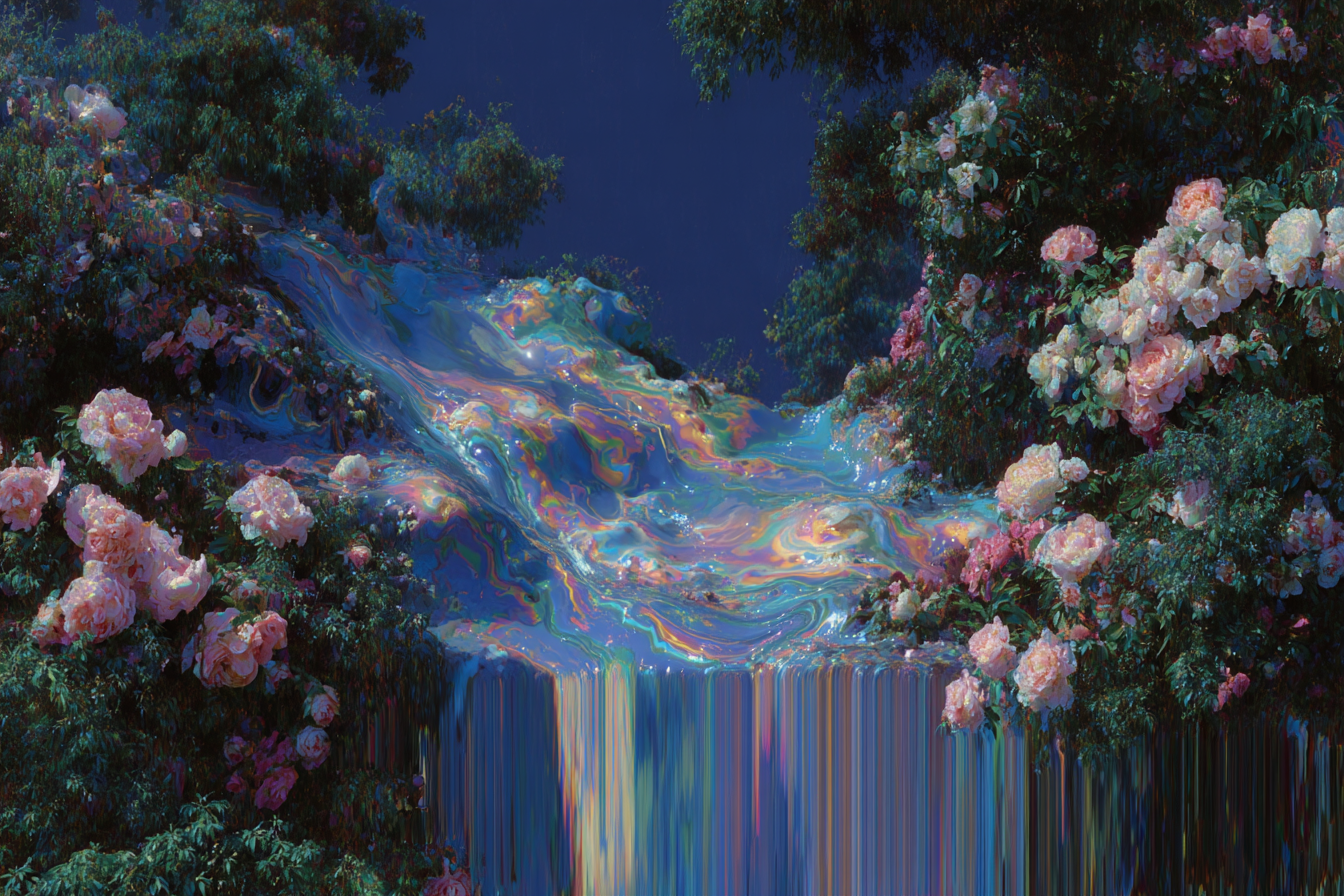
This is where the "Mind Photography" becomes dangerous. We use AI not to explore the unknown, but to sanitize the known. We over-specify. We remove the grain. We are so terrified of ambiguity that we become decorators of our own cells.
The Scene He spends a lifetime mixing the perfect shade of azure. He feathers the clouds until they look soft enough to breathe. He renders the light so convincingly that he feels warmth on his face. But it is a static noon. The sun never sets, the wind never blows, and when he tries to walk into that perfect distance, he only breaks his hand against the cold, hard plaster.
The Warning We cover the concrete with high-definition frescoes. We mistake a beautiful view for an open door. And the better we get at the illusion—the higher the fidelity of the lie—the less likely we are to ever leave.
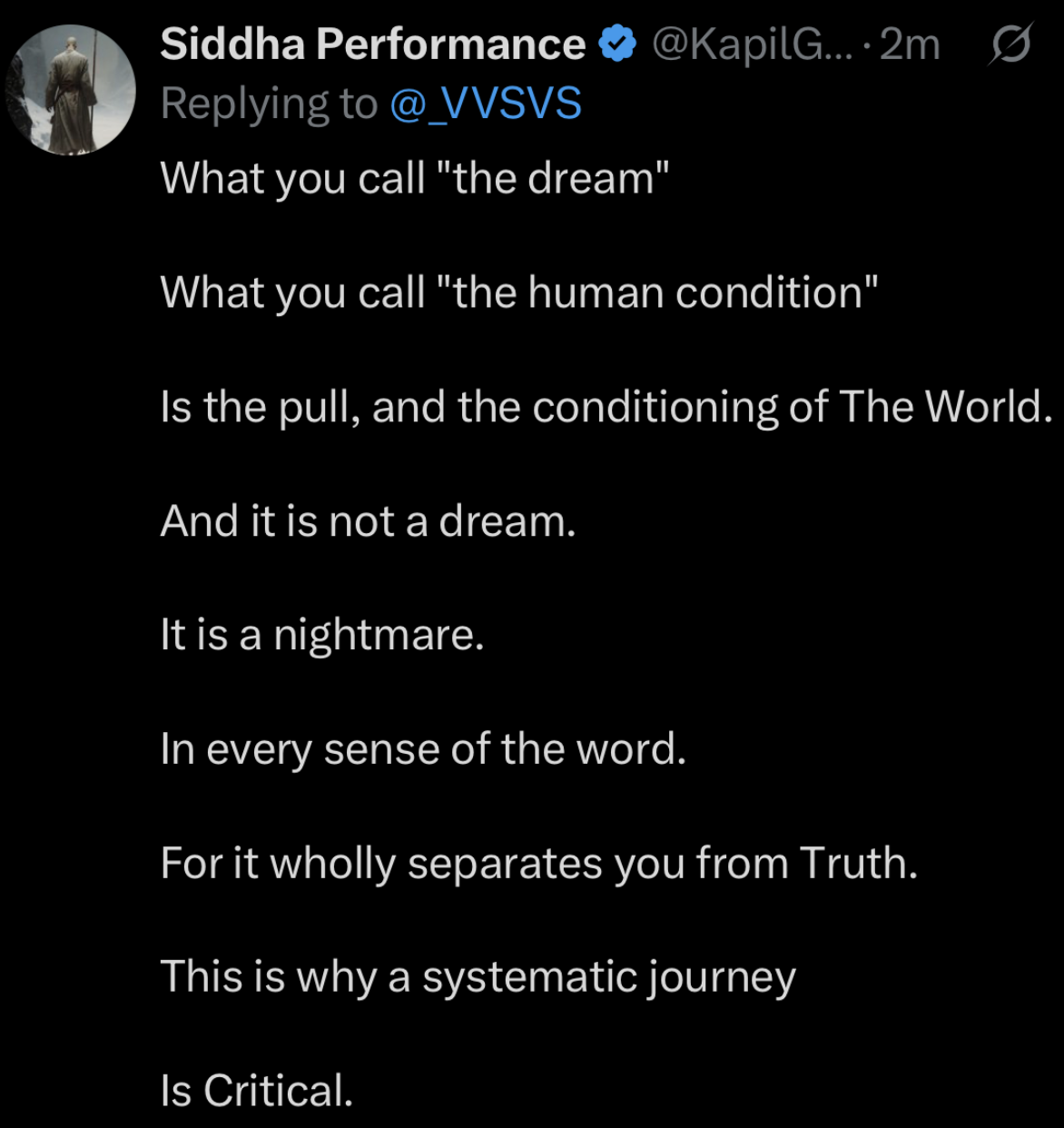
We are living in a dream that is actually a nightmare of stasis.
Wake-Up
How do you break a wall you painted yourself? You need to become hyper aware of "the Truth".
The hallmark of the simulation is that it is frictionless. It is too smooth. To "wake up," you must actively seek the texture of reality.
1. The Entropy Check Look at your work and feel it. Is there dirt? Is there mistake? Is there decay? Most importantly, is it yours? If everything is pristine, you are in the prison. Real worlds have entropy. They rot. They rust.
2. The Ambiguity Tolerance Allow the Latent Space to give you something ugly, something wrong, something that scares you. That "glitch" is the only fresh air entering the room. Do not follow the goon-trends, you will end up like everyone else. Trapped in a loop chasing numbers.
3. Touch Grass (The Physical Anchor) This is not a meme; it is a neurological necessity. You cannot judge the "realism" of a rendered image if you haven't looked at a real shadow. Your brain adapts to the screen (Troxler Effect). You must physically reset your baseline to see the falseness of the render.
Conclusion
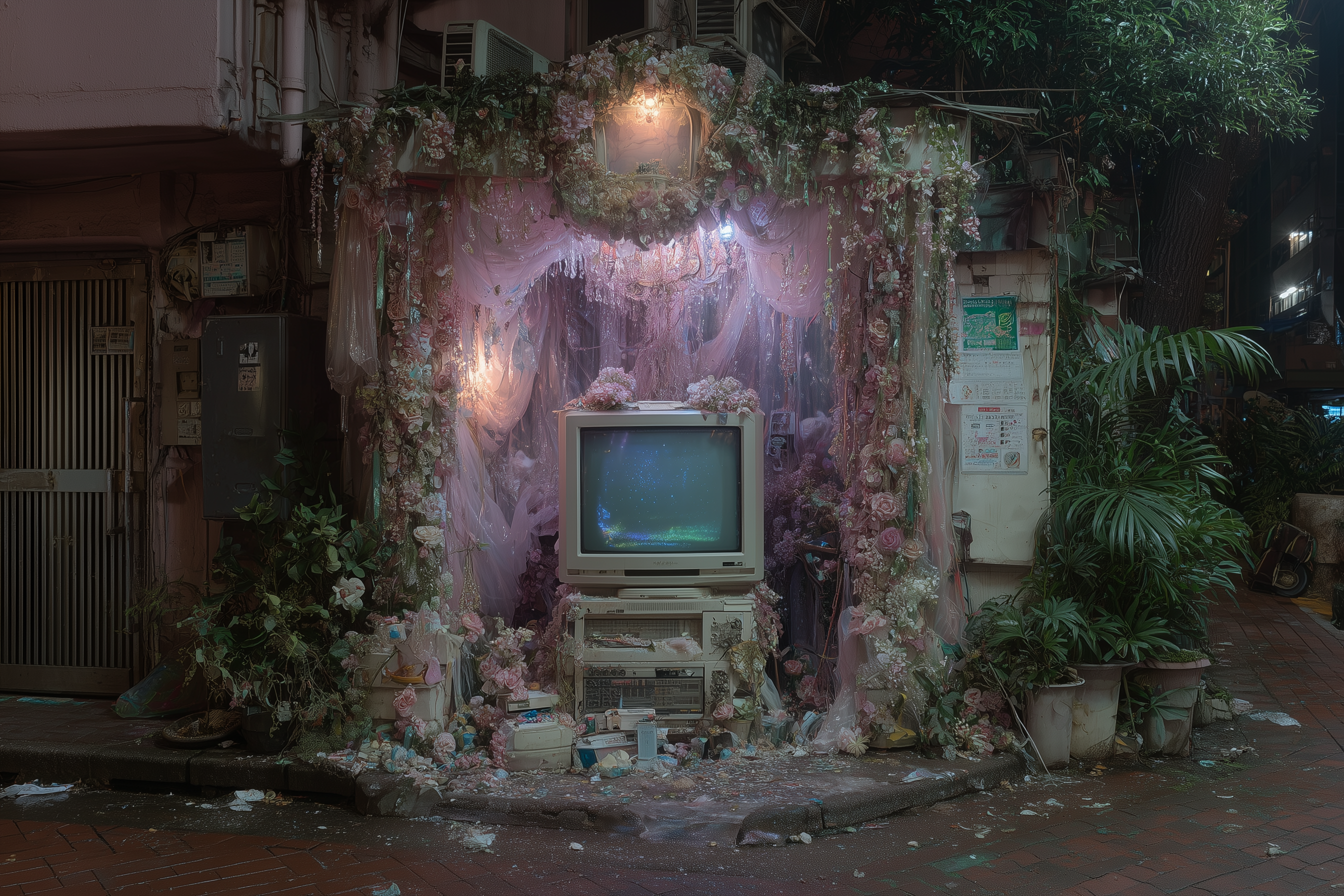
We must ultimately reconcile these two voids.
Latent Space is the infinite library of concepts—a mathematical universe where everything is connected but nothing is alive. Liminal Space is the emotional result of visiting that library—the eerie feeling of standing in a room that was generated, not built.
The danger of the "AI Revolution" is not that the machine will become sentient and destroy us. The danger is that the machine will remain hollow, and we will choose to live inside it anyway.
We are building a massive, infinite Liminal Space—a high-fidelity waiting room that stretches on forever. It is seductive because it is safe. In the Latent Space, there is no decay, no aging, and no heartbreak. It is a perfect, frictionless vacuum.
But humans are not designed for vacuums. We are designed for friction.
The Final Calibration You must treat these images as blueprints, not destinations. Use the Latent Space to architect new ideas, to visualize the impossible, and to expand your taste. But do not mistake the render for the reality. Do not confuse the map with the territory.
The moment you start preferring the smoothness of the generated world to the friction of the real one, you have locked the door from the inside.
We must remember the difference between nutrition and artifice. Otherwise, the epitaph of the modern creative will be simple:
"He starved to death in front of a banquet he painted himself."
Thank you for reading! I have been busy, I finished the Codex V002 and will be releasing next week! All along yet another massive upgrade to my website. If you haven't got the World Building Codex V001, grab it here!
— Ivan