← Cinematique Storytelling · Intermediate

Motif Prompt for AI Image & Video

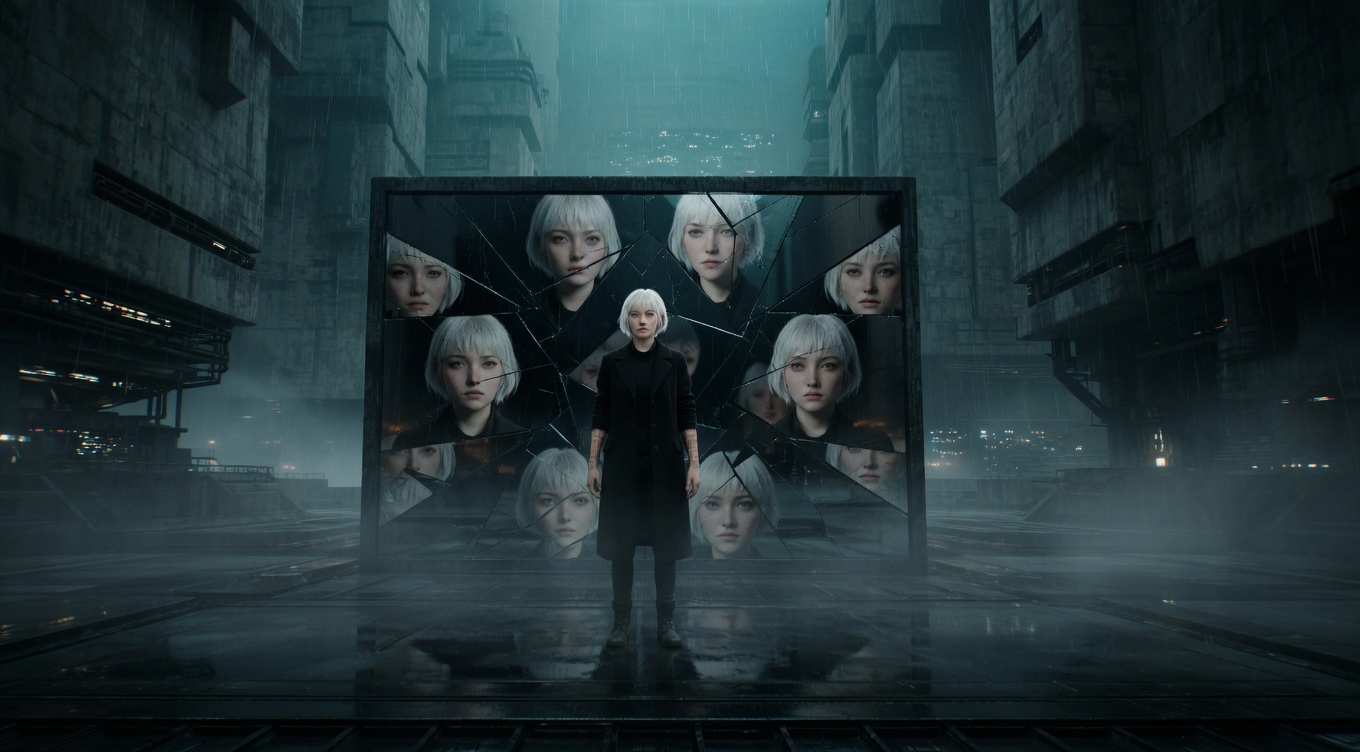
Motif cinematic example

A recurring visual, audio, or narrative element that accumulates meaning through repetition — oranges in "The Godfather," mirrors in "Black Swan," water in "The Shape of Water" — patterns that become the story's visual language. Francis Ford Coppola's oranges appear before every death in the Godfather trilogy, creating an association the viewer feels before consciously understanding it. Kubrick uses the color red as a motif in "The Shining." Darren Aronofsky uses mirrors and doubles throughout "Black Swan." Denis Villeneuve uses circular shapes as a motif in "Arrival" reflecting the film's themes of time and language. The motif is cinema's equivalent of a musical refrain — each recurrence deepens the meaning.

By Ivan Flugelman · Reviewed 16 July 2026

Prompt template

Recurring visual motif with [Subject] appearing for the nth time in the narrative, the viewer now conditioned to feel a specific emotion at the sight, the seemingly mundane detail having accumulated devastating associative weight through repetition, the Coppola technique of training the audience to read a visual symbol through consistent placement, the motif's power residing in the accumulated pattern of meaning

Replace [Subject] with your own character or scene. The prompt is technology-agnostic and works as a starting point for AI image or video generators.

When to use Motif

Use a motif when a recurring object, color, sound, shape, or gesture can become the story’s private vocabulary. Repeat it before related events, around one character, or at emotional turning points so association grows without explanation. A motif should remain recognizable while its context changes. It is especially useful in long-form narratives where viewers can feel a pattern before they consciously name it.

Directing the AI

Choose one simple, unmistakable element and define its color, shape, material, and typical frame position. Introduce it in a neutral context, then repeat it across later scenes with consistent identity but changing emotional surroundings. Do not isolate it every time; sometimes let it sit naturally in production design. Increase its prominence only when the accumulated meaning should surface. Preserve enough visual continuity that every recurrence feels intentional rather than like a similar substitute.

Common mistakes

  1. Changing the motif’s shape or color between scenes until viewers cannot recognize the repeated element.
  2. Explaining the motif in dialogue, removing the pleasure of association built through visual recurrence.
  3. Repeating the element in every scene, turning a meaningful pattern into obvious decoration and visual noise.
Sources and further reading

  1. How to Make a Short Film: An Introduction to Filmmaking — BFI / FutureLearn
  2. Filmmaking Resources for Teachers — British Film Institute

A shot is not a world

Learn the fourteen fundamentals for building consistent characters, environments, visual logic, and stories that expand beyond one beautiful frame. Get World Building Codex 3.0 free, or explore the World Building Academy.

Related techniques

Symbolism

Using concrete visual elements to represent abstract ideas or themes — a cage for imprisonment, water for rebirth, red for passion or danger — the visual poetry of cinema. Andrei Tarkovsky filled his films with water, fire, and earth symbolism in "Stalker," "Mirror," and "Nostalghia." Kubrick encoded "2001: A Space Odyssey" with evolutionary symbolism from the bone weapon to the star child. Guillermo del Toro uses fantasy creatures as symbols for fascism in "Pan's Labyrinth." The floating plastic bag in "American Beauty" became a cultural symbol, and Spike Lee's floating bed in "She's Gotta Have It" and "Do the Right Thing" uses physical impossibility as symbolic expression.

Foreshadowing

Planting subtle hints of events to come — a cracked mirror, a line of dialogue, a color choice — details that seem innocuous on first viewing but become devastating on rewatch. Stanley Kubrick embedded foreshadowing details so densely in "The Shining" that the documentary "Room 237" is dedicated entirely to analyzing them. M. Night Shyamalan structures "The Sixth Sense" so that every scene contains foreshadowing of the twist ending. The Coen Brothers plant narrative seeds early — the wood chipper glimpsed in the first act of "Fargo" becomes the instrument of horror in the third. Denis Villeneuve's "Arrival" hides its entire twist in plain sight through carefully constructed visual foreshadowing.

Repetition and Pattern

Using recurring visual elements — shapes, colors, objects — to create rhythm and unity in the frame, where breaking a pattern draws immediate attention to the disruption. Kubrick's symmetrical corridors in "The Shining" use pattern repetition to create hypnotic unease, and any break in the pattern (the twins at the end of a hallway) becomes terrifying. Wes Anderson builds frames from repeated elements — rows of identical doors, matching uniforms, symmetrical windows. Zhang Yimou uses massive pattern compositions of soldiers, lanterns, and fabric in "Hero" and "House of Flying Daggers" where a single disruption in the array carries narrative weight.