← CinematiqueVisual Effects & Promptable FX · Advanced
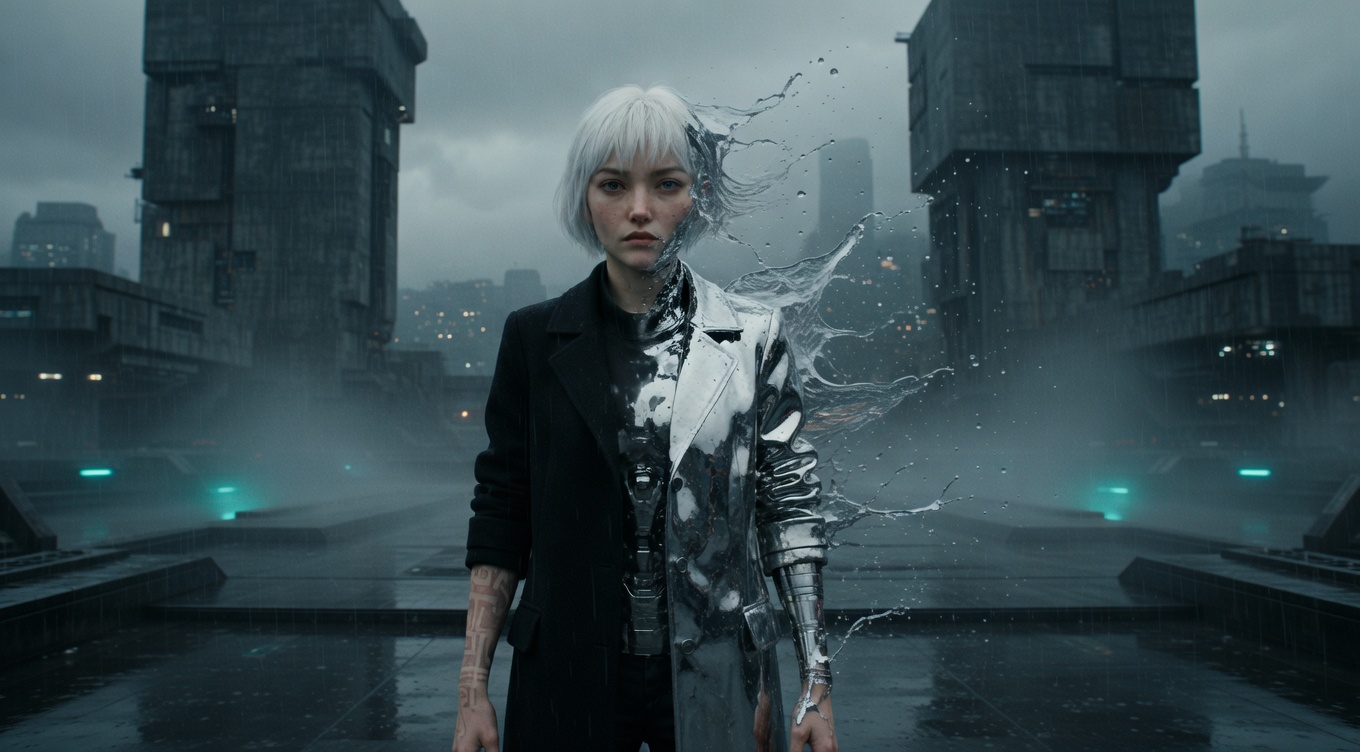
Morphing / Dissolve Effect Prompt for AI Image & Video
A digital transformation effect where one form smoothly dissolves, transmutes, or reshapes into another — character dissolving into particles, liquid metal transformation, ethereal dissolution, matter transmutation. Originally pioneered by ILM for the T-1000 in "Terminator 2," morphing has evolved from face-to-face blending into a rich vocabulary of transformation effects. In AI image and video generation, morphing and dissolve effects are among the most promptable visual transformations, allowing creators to depict characters dissolving into elements, reforming from abstract matter, or undergoing surreal metamorphosis.
By Ivan Flugelman · Reviewed 16 July 2026
Prompt template
[Subject] caught mid-transformation, the form dissolving into particles or liquid or light, features simultaneously present and absent in a liminal state between two identities, the mathematical smoothness of digital morphing applied to the human form, even lighting ensuring the transformation reads cleanly, the unsettling beauty of identity in flux and matter in transition
Replace [Subject] with your own character or scene. The prompt is technology-agnostic and works as a starting point for AI image or video generators.
When to use Morphing / Dissolve Effect
Use morphing when transformation itself is the dramatic event: a body changing identity, matter dissolving into particles, a face becoming another face, or an object reforming from liquid or light. It suits surreal, magical, technological, and body-horror moments. Define the source, destination, and transition material clearly. The effect fails when every feature changes independently without a readable progression between the two states.
Directing the AI
Show the subject midway between two defined forms, with landmarks from both identities visible in corresponding positions. Choose one transition behavior, such as particles, liquid, or light, and move it progressively across the body rather than everywhere at once. Keep the camera steady and illumination even so changing contours read cleanly. Preserve mass and directional flow. End with a stable destination form, allowing no leftover fragments or unexplained features from the source.
Common mistakes
Mixing particles, smoke, liquid, and fire in one change, obscuring the transformation’s governing visual rule.
Losing facial or structural landmarks midway, so the source and destination no longer feel connected.
Changing lighting and camera angle during the morph, making continuity errors compete with the intended transformation.