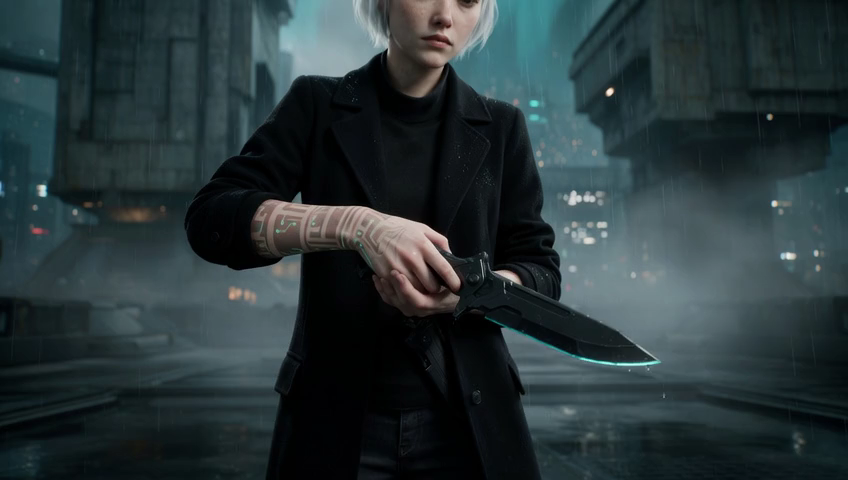
A close-up cut to a specific detail within a scene — a ticking clock, a letter, a weapon being drawn — directing audience attention to a crucial narrative element. Hitchcock was the supreme master of the insert shot, using close-ups of keys, glasses of milk, and scissors in films like "Dial M for Murder" and "Notorious" to build unbearable suspense from ordinary objects. Quentin Tarantino uses stylized insert shots of food, weapons, and car details as a rhythmic signature, while Edgar Wright employs rapid-fire inserts for comedic punctuation in "Shaun of the Dead" and "Hot Fuzz."
By Ivan Flugelman · Reviewed 16 July 2026
Prompt template
Insert shot of [Subject] isolated in tight framing, warm lamplight casting a golden glow while the surrounding space falls into shadow, shot with a macro lens at f/2 creating razor-thin focus, Kodak 5219 500T film stock warmth, the weight of consequence concentrated in a single object
Replace [Subject] with your own character or scene. The prompt is technology-agnostic and works as a starting point for AI image or video generators.
When to use Insert Shot
Use an insert when the audience must notice a detail that changes how the scene is understood. A key turning, clock ticking, letter opening, weapon clearing a holster, or hand hesitating can carry plot and tension in a compact frame. The object should already belong to the scene. Insert shots are strongest as punctuation; too many make the sequence feel mechanically illustrated.
Directing the AI
Identify one object or action and frame it tightly enough that nothing competes for attention. Light it with a motivated warm lamp or practical source while the surrounding area falls into shadow. Use macro-like proximity, a narrow focus plane, and tactile material detail to give the object consequence. For video, define the exact event within the insert, such as a second hand advancing or a thumb releasing a safety, then cut away promptly.
Common mistakes
Choosing an object with no later consequence, training viewers to search for meaning that the sequence never pays off.
Including too much of the surrounding scene, so attention remains divided instead of landing on the narrative detail.
Rendering the insert in a mismatched lighting style that disconnects it from the space established around it.