← Cinematique Editing · Basic

Fade In/Out Prompt for AI Image & Video

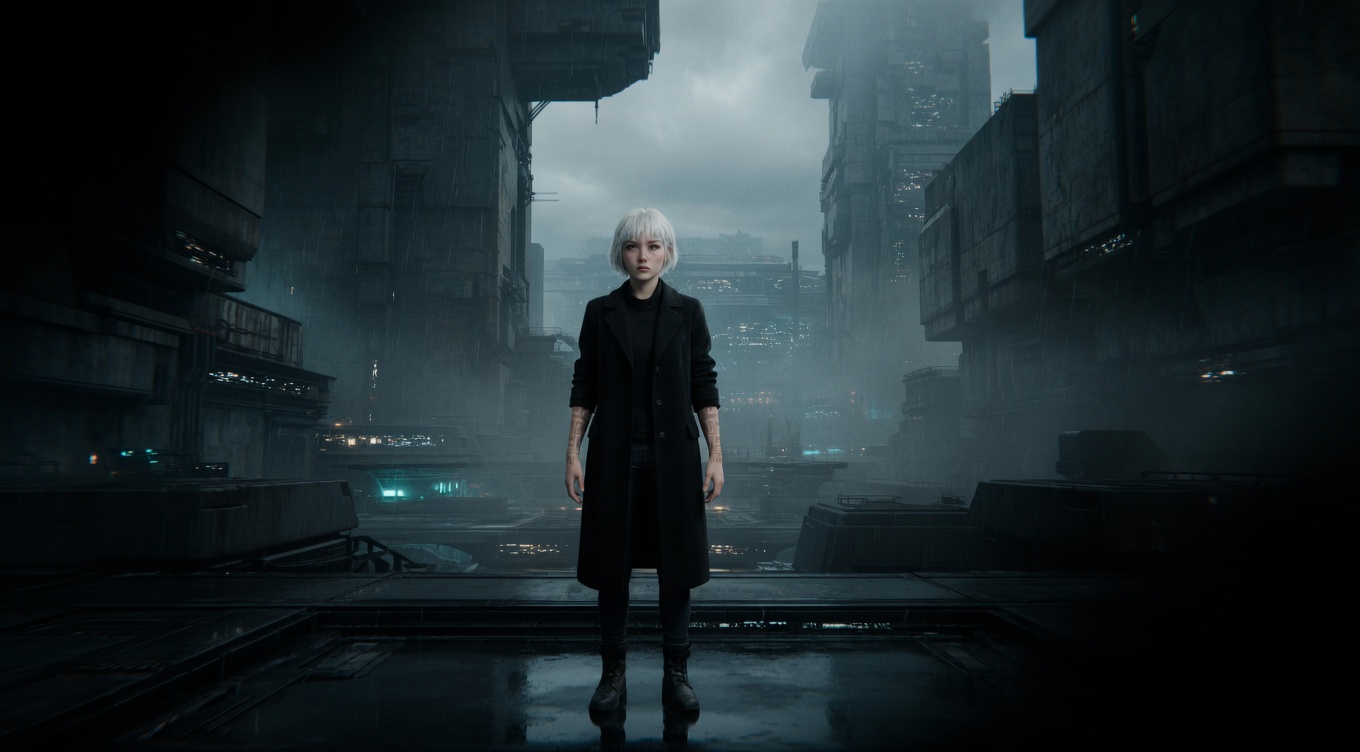
Fade In/Out cinematic example

The image gradually appears from or disappears to black (or white) — fade to black signals an ending or major time passage while fade from black signals a new beginning or chapter. The Coen Brothers use long, slow fades to black as chapter markers in "No Country for Old Men," each fade feeling like a door closing permanently. Kubrick's fade to white at the end of "2001" suggests transcendence. Martin Scorsese uses the fade to black at the end of "Goodfellas" and "The Irishman" with devastating finality. The pace of the fade itself communicates meaning — a quick fade feels like a curtain dropping while a slow fade feels like consciousness dimming.

By Ivan Flugelman · Reviewed 16 July 2026

Prompt template

Fade to black from [Subject], the image gradually losing luminance over six seconds as the figure becomes shadow and the shadow becomes part of the darkness, the fade so gradual that the exact moment of disappearance is unidentifiable, the emotional weight of permanent conclusion, the visual equivalent of a long exhale

Replace [Subject] with your own character or scene. The prompt is technology-agnostic and works as a starting point for AI image or video generators.

When to use Fade In/Out

Fade in or out when the story needs a clear boundary rather than a direct visual connection between shots. A fade to black can close a chapter, suggest long passage, or let consciousness recede; a fade from black can establish a beginning or return. The duration carries meaning. Use a fast fade for decisive closure and a slow one for exhaustion, grief, or gradual disappearance.

Directing the AI

Choose whether the image enters from black, leaves into black, or uses white for a distinctly brighter transition. Set an exact duration and preserve the shot's composition while luminance changes evenly. For a slow fade, let details disappear in tonal order until the subject merges with darkness; for a fade in, reverse that emergence cleanly. Keep the final black or white hold long enough to register. Do not change subject shape or camera position during the transition unless separately directed.

Common mistakes

  1. Treating a fade as a default scene change, weakening the strong sense of chapter, ending, or passage it communicates.
  2. Changing exposure unevenly across objects, making the transition look like lighting failure rather than the entire image receding.
  3. Cutting away before full black has time to register, reducing the emotional closure and structural pause.
Sources and further reading

  1. What Is Film Editing? — StudioBinder
  2. Types of Editing Transitions in Film — StudioBinder

A shot is not a world

Learn the fourteen fundamentals for building consistent characters, environments, visual logic, and stories that expand beyond one beautiful frame. Get World Building Codex 3.0 free, or explore the World Building Academy.

Related techniques

Dissolve

One image gradually fades out as the next fades in, both visible simultaneously during the transition, suggesting the passage of time, a dream state, or a thematic connection. Ingmar Bergman used dissolves as emotional bridges in "Wild Strawberries," where the overlap between present and memory becomes the film's central visual metaphor. Terrence Malick uses extended dissolves in "The Tree of Life" to blend cosmic and domestic imagery. Stanley Kubrick's dissolve from the star gate sequence to the neoclassical bedroom in "2001" is one of cinema's most disorienting transitions. Wong Kar-wai layers dissolves in "In the Mood for Love" to make time itself feel fluid and unreliable.

Iris

A circular aperture opens or closes on the frame, focusing attention on a specific point — an early cinema technique that has seen a modern revival for its charming, self-aware quality. D.W. Griffith and Buster Keaton used iris shots extensively in the silent era to direct attention and create transitions. The technique fell out of favor with the arrival of sound but has been revived by directors like the Coen Brothers in "The Hudsucker Proxy," Wes Anderson in "The Grand Budapest Hotel," and Martin Scorsese in "Hugo" as an affectionate nod to cinema's origins. The iris closing on a character's face is one of the most recognizable images from early film history.

Flashback

A scene that takes the audience back to an earlier point in time, revealing backstory, providing context for present behavior, or recontextualizing what we thought we knew. "Citizen Kane" is structured entirely around flashbacks as reporters investigate Charles Foster Kane's life. Francis Ford Coppola's "The Godfather Part II" masterfully interweaves flashbacks of young Vito Corleone with the present-day story of his son Michael. Christopher Nolan uses fragmented flashbacks as a structural principle in "Memento," where the reversed chronology makes every flashback a revelation. Terrence Malick's "The Tree of Life" uses flashback as pure sensory memory, evoking childhood through images rather than plot.