← Cinematique Editing · Intermediate

Cross-Cutting Prompt for AI Image & Video

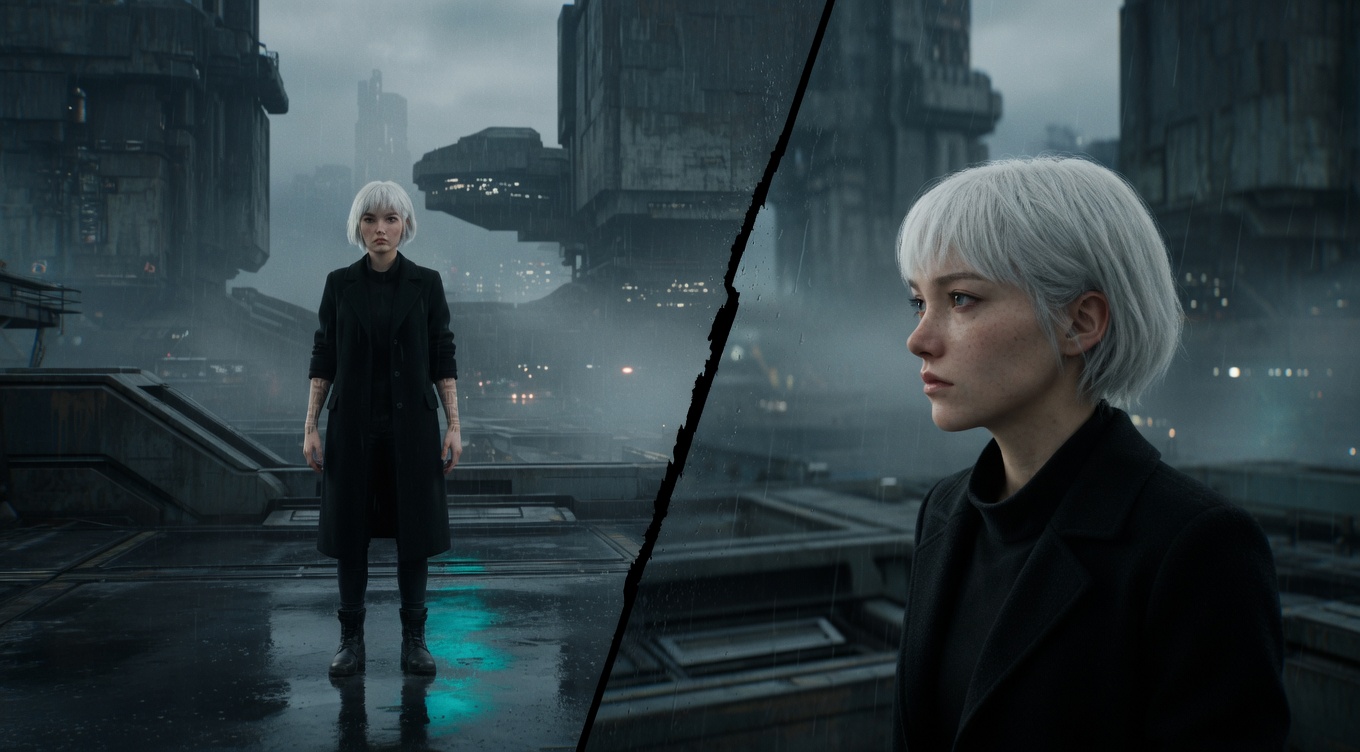
Cross-Cutting cinematic example

Alternating between two or more scenes happening simultaneously in different locations, building tension by implying convergence and creating dramatic parallels between storylines. D.W. Griffith pioneered cross-cutting in "Intolerance" (1916), intercutting between four historical periods. Christopher Nolan elevated cross-cutting to structural principle in "Inception" and "Dunkirk," weaving three timelines with different tempos. Francis Ford Coppola's baptism sequence in "The Godfather" — cross-cutting between the church ceremony and the simultaneous murders — remains one of cinema's most powerful uses of the technique.

By Ivan Flugelman · Reviewed 16 July 2026

Prompt template

Cross-cutting between two simultaneous scenes involving [Subject], the alternation between warm and cold tones accelerating in rhythm as both events build toward climax, the visual contrast intensifying the irony, each cut creating a collision of meaning that neither scene could generate alone, warm Kodak tones on one side against cold pushed processing on the other

Replace [Subject] with your own character or scene. The prompt is technology-agnostic and works as a starting point for AI image or video generators.

When to use Cross-Cutting

Cross-cutting is the right structure when separate events happen at the same time and gain force by being compared. Use it for rescues, pursuits, rituals against violence, parallel decisions, or storylines moving toward collision. Each return should add information or tighten the temporal relationship. The technique fails when the scenes merely alternate without escalation, thematic contrast, or a credible sense that their rhythms belong to one dramatic clock.

Directing the AI

Define two distinct locations, visual palettes, and actions occurring simultaneously. Begin with longer sections in each scene, then shorten the alternation as pressure rises. Match gestures, sounds, shapes, or emotional beats across cuts where a collision of meaning helps. Preserve wardrobe, geography, and action continuity within both strands. End at a shared climax, direct convergence, or purposeful separation. Do not let one storyline advance in time while the other appears frozen between returns.

Common mistakes

  1. Alternating locations at a fixed pace without raising stakes, shortening intervals, or revealing a stronger temporal connection.
  2. Losing continuity inside one strand, so objects, positions, or actions reset each time the edit returns there.
  3. Pairing scenes with no thematic or causal relationship, making the structure feel arbitrary rather than mutually intensifying.
Sources and further reading

  1. What Is Film Editing? — StudioBinder
  2. Types of Editing Transitions in Film — StudioBinder

A shot is not a world

Learn the fourteen fundamentals for building consistent characters, environments, visual logic, and stories that expand beyond one beautiful frame. Get World Building Codex 3.0 free, or explore the World Building Academy.

Related techniques

Parallel Storylines

Multiple narrative threads running simultaneously, often converging at key moments, creating thematic parallels and enriching the story by showing how different characters experience the same world. Robert Altman pioneered the multi-storyline film with "Nashville" and "Short Cuts," weaving dozens of characters into tapestries of intersecting lives. Paul Thomas Anderson followed with "Magnolia," where parallel storylines converge in a climax of biblical surrealism. Alejandro González Iñárritu's "Babel" weaves four storylines across three continents. Christopher Nolan's "Dunkirk" runs three parallel timelines at different temporal speeds — one week, one day, one hour — that converge at the climax.

Split Screen

The frame is divided into two or more sections, each showing a different angle, location, or timeline simultaneously, showing parallel action, phone conversations, or multiple perspectives at once. Brian De Palma made split screen his signature, using it in "Carrie," "Dressed to Kill," and "Snake Eyes" to create impossible simultaneity. Ang Lee used complex multi-panel split screens in "Hulk" to emulate comic book layouts. Denis Villeneuve employed split screen in "Enemy" to visualize duality, and the technique has experienced a revival in television through shows like "24" where real-time parallel action demanded simultaneous visual presentation.

Montage

A sequence of short shots edited together to compress time, convey information, or build emotional momentum — from training sequences to falling-in-love sequences, montage is cinema's time machine. Sergei Eisenstein theorized montage as cinema's unique art form in the 1920s, and his Odessa Steps sequence in "Battleship Potemkin" remains the most studied montage in film history. Rocky Balboa's training montage set to "Gonna Fly Now" defined the modern montage for a generation. Martin Scorsese uses montage in "Goodfellas" to compress years of criminal excess into exhilarating minutes, and Edgar Wright creates kinetic comic montages in the Cornetto trilogy.