← Cinematique Camera Work · Intermediate

Bird's Eye View Prompt for AI Image & Video

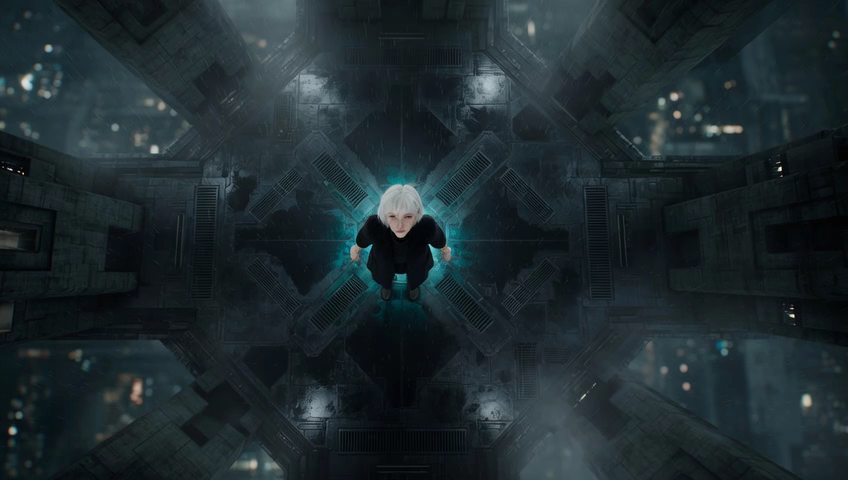
Bird's Eye View cinematic example

A shot taken from directly overhead, looking straight down on the subject, creating a god-like perspective that can make subjects appear small and insignificant or reveal patterns invisible from ground level. Busby Berkeley pioneered the technique in 1930s musicals, choreographing dancers into kaleidoscopic geometric formations seen from directly above. Darren Aronofsky used it extensively in "Requiem for a Dream" to convey psychological detachment, and Wes Anderson frequently employs overhead shots of meticulously arranged objects as a signature compositional device.

By Ivan Flugelman · Reviewed 16 July 2026

Prompt template

Bird's eye view looking straight down on [Subject], the camera positioned directly overhead creating a flattened god-like perspective where depth is eliminated and everything becomes pattern and geometry, long shadows stretching from each element, shot on medium format digital with a 40mm equivalent lens, muted teal and gold color palette, forensic sharpness from edge to edge

Replace [Subject] with your own character or scene. The prompt is technology-agnostic and works as a starting point for AI image or video generators.

When to use Bird's Eye View

Use a bird's eye view when the scene contains a pattern that ground-level framing would hide. Crowds, roads, bodies, tables, and architecture become readable as geometry from directly above. It also makes people appear controlled, observed, or insignificant. This angle works best when spatial design carries meaning; it is less useful when facial expression or normal depth must drive the moment.

Directing the AI

State that the camera looks straight down with its optical axis perpendicular to the ground. Remove the horizon and treat people, objects, roads, and shadows as flat graphic shapes. Arrange the main elements into a deliberate pattern with clean spacing and edge-to-edge sharpness. Use a restrained teal-and-gold palette and long directional shadows to preserve visual separation. For video, keep the camera locked or moving vertically so the top-down geometry does not drift into an oblique aerial angle.

Common mistakes

  1. Using the phrase from above without straight-down camera language, which often produces an ordinary high-angle perspective instead.
  2. Building a scene with no visible pattern, making the unusual viewpoint feel decorative rather than narratively motivated.
  3. Adding shallow focus across the frame, which weakens the forensic clarity and flattened geometry that define the view.
Sources and further reading

  1. 50+ Types of Camera Shots, Angles, and Techniques — StudioBinder
  2. Types of Camera Movements in Film Explained — StudioBinder

A shot is not a world

Learn the fourteen fundamentals for building consistent characters, environments, visual logic, and stories that expand beyond one beautiful frame. Get World Building Codex 3.0 free, or explore the World Building Academy.

Related techniques

Overhead Shot

Camera positioned directly above the scene looking straight down, similar to bird's eye but typically closer, often used for tabletop scenes, maps, or choreographed action. Wes Anderson uses overhead shots of hands and objects obsessively in films like "The Grand Budapest Hotel" and "The French Dispatch," turning tabletop arrangements into graphic design. Martin Scorsese employed the technique in "Goodfellas" for the famous cooking-in-prison scene, looking down on razor-thin garlic slices. Spike Jonze and David Fincher both use close overhead angles to transform mundane actions into visually striking compositions.

Symmetry

A composition where both halves of the frame mirror each other, creating a sense of order, formality, perfection, or unsettling precision. Stanley Kubrick made symmetry his defining visual signature — the one-point-perspective corridor shots of "The Shining" and "A Clockwork Orange" remain the technique's most analyzed examples. Wes Anderson took symmetry to its whimsical extreme, making it the entire visual language of "The Grand Budapest Hotel" and "The French Dispatch." Denis Villeneuve uses cold, imposing symmetry in "Blade Runner 2049" and "Arrival" to convey alien or corporate power structures.

Repetition and Pattern

Using recurring visual elements — shapes, colors, objects — to create rhythm and unity in the frame, where breaking a pattern draws immediate attention to the disruption. Kubrick's symmetrical corridors in "The Shining" use pattern repetition to create hypnotic unease, and any break in the pattern (the twins at the end of a hallway) becomes terrifying. Wes Anderson builds frames from repeated elements — rows of identical doors, matching uniforms, symmetrical windows. Zhang Yimou uses massive pattern compositions of soldiers, lanterns, and fabric in "Hero" and "House of Flying Daggers" where a single disruption in the array carries narrative weight.