← Cinematique Genres & Styles · Advanced

Acid Western Prompt for AI Image & Video

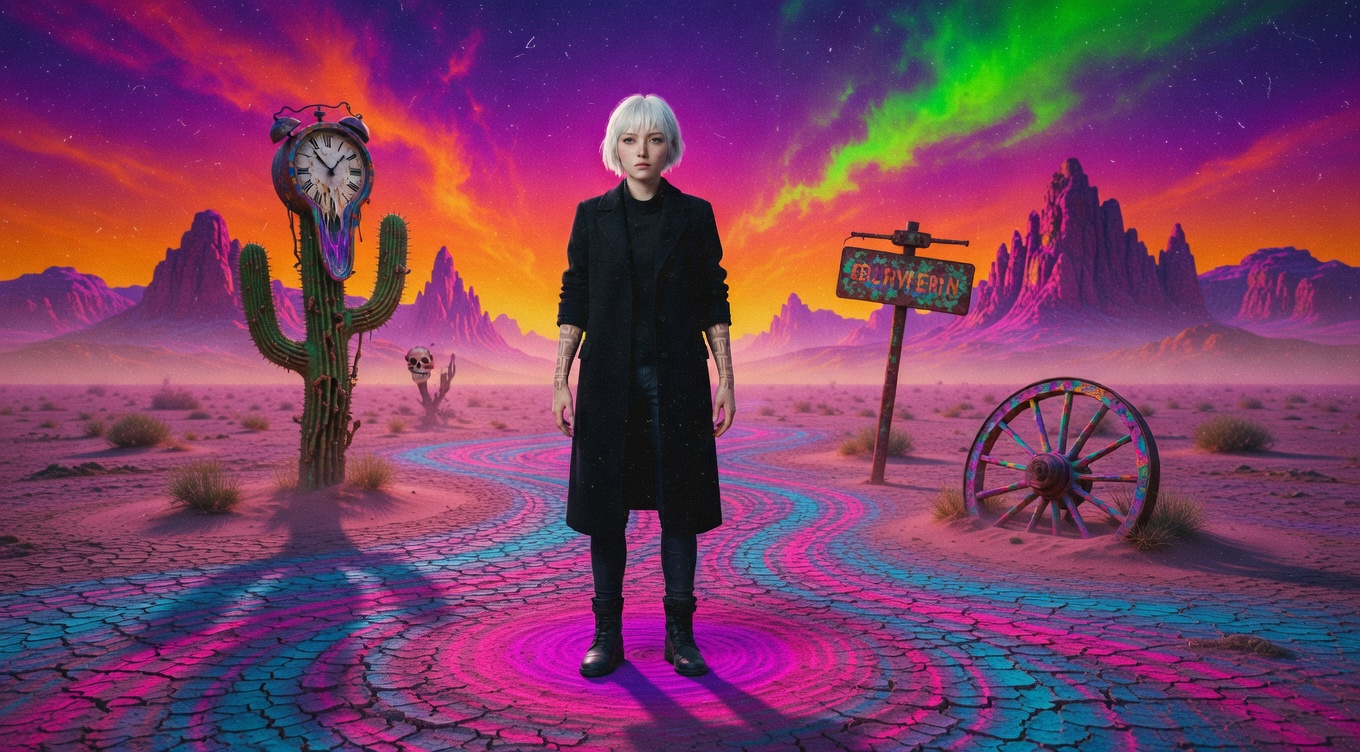
Acid Western cinematic example

A psychedelic subversion of the Western genre that replaces manifest destiny optimism with hallucinatory existentialism. Alejandro Jodorowsky's "El Topo" (1970) invented the form — a mystical gunfighter journey through surreal desert landscapes. Jim Jarmusch's "Dead Man" (1995) deconstructed the genre with a dying accountant guided by a Native American named Nobody. The Coen Brothers' "No Country for Old Men" carries acid western DNA in its nihilistic desert violence. The genre takes the Western's vast landscapes and fills them with dread, absurdity, and metaphysical questioning.

By Ivan Flugelman · Reviewed 16 July 2026

Prompt template

Acid western with [Subject] in a vast surreal desert landscape, the familiar Western iconography distorted through a psychedelic lens, oversaturated sky bleeding unnatural colors, dust and heat haze warping the horizon, Jodorowsky's mysticism meets Jarmusch's deadpan, a lone figure in an existential void that was once the frontier, 16mm film grain, the American myth turned hallucinatory

Replace [Subject] with your own character or scene. The prompt is technology-agnostic and works as a starting point for AI image or video generators.

When to use Acid Western

Use Acid Western style when frontier myths need to dissolve into hallucination, nihilism, absurdity, or metaphysical doubt. A lone rider, desert town, gunfighter, or ritual can remain recognizable while the landscape becomes an existential void. It suits journeys without comforting destiny and violence without heroic certainty. Keep enough Western iconography to establish the genre before distorting it through color, scale, time, or deadpan surrealism.

Directing the AI

Place a solitary subject in a vast desert with familiar Western clothing, weapons, or architecture, then corrupt the myth through oversaturated sky, unnatural horizon color, heat haze, and warped distance. Use gritty grain and long static observation rather than frantic effects. Let one surreal object or action appear without explanation. Keep the figure small against the land, with dread and absurdity sharing the frame. The frontier should feel emptied of promised meaning.

Common mistakes

  1. Removing all recognizable Western elements, leaving psychedelic desert imagery without a genre being subverted.
  2. Using cheerful kaleidoscopic effects, which misses the form’s dread, deadpan absurdity, and existential emptiness.
  3. Packing the landscape with symbols and visions instead of letting one impossible intrusion disturb the familiar myth.
Sources and further reading

  1. Genres: Where to Draw the Line? — British Film Institute
  2. BFI Screen Guides — Bloomsbury / BFI

A shot is not a world

Learn the fourteen fundamentals for building consistent characters, environments, visual logic, and stories that expand beyond one beautiful frame. Get World Building Codex 3.0 free, or explore the World Building Academy.

Related techniques

Spaghetti Western

Italian-produced Westerns characterized by extreme close-ups, sweeping wide shots, Morricone-style scores, morally gray antiheroes, and a stylized, operatic approach to violence. Sergio Leone defined the genre with his Dollars trilogy starring Clint Eastwood and reached its apex with "Once Upon a Time in the West" — a film built entirely from looks, silences, and Ennio Morricone's score. Leone's visual grammar of extreme close-up eyes cutting to extreme wide shots became one of cinema's most imitated styles. Sergio Corbucci's "Django" and "The Great Silence" pushed the genre toward nihilism. Tarantino's "Django Unchained" and "The Hateful Eight" are love letters to the Spaghetti Western tradition.

Surrealism

A movement drawing on dreams, the subconscious, and irrational imagery to create art that defies logic — melting clocks, impossible architecture, dream logic replacing narrative cause-and-effect. Luis Buñuel and Salvador Dalí created cinema's first surrealist film, "Un Chien Andalou" (1929), with its infamous eye-slicing opening. Buñuel continued making surrealist cinema for fifty years through "The Discreet Charm of the Bourgeoisie." David Lynch is surrealism's modern heir — "Eraserhead," "Mulholland Drive," and "Twin Peaks: The Return" operate on dream logic. Alejandro Jodorowsky's "El Topo" and "The Holy Mountain" push surrealism to psychedelic extremes, and Charlie Kaufman's "Eternal Sunshine" and "Synecdoche, New York" bring surrealism into intimate emotional territory.

Extreme Long Shot

A very wide shot where the subject appears small against a vast environment, emphasizing scale, isolation, or the overwhelming nature of the surroundings. David Lean defined the technique in "Lawrence of Arabia," where Peter O'Toole becomes a speck against infinite desert horizons, communicating both the grandeur and the punishing emptiness of the landscape. Terrence Malick uses extreme long shots in "The Thin Red Line" to dwarf soldiers against indifferent nature, and Chloé Zhao employed them throughout "Nomadland" to place Frances McDormand's van as a tiny vessel adrift in the American West.